





A Brief History of Yahaya Bello, Family Lineage, and Rise to Leadership
Due to his growing popularity in Nigeria political landscape, Alh. Yahaya Adoza , Bello, CON, is a masquerade to some people. As a political figure, whenever issues come up about him, they veer onto stories embedded in lies. The recent discussions about his family background, parental heritage, ancestral roots and lineage in some quarters are tissue of lies.
Beyond his political prominence, understanding Yahaya Bello’s story requires looking beyond the offices he had held to examine the family, comm unity and cultural heritage that shaped his identity.
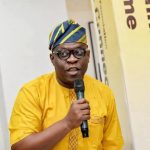
To know his paternal family background and where he comes from, Alh Yahaya Adoza Bello was born on 18 June,1975 in Agassa, Okene Local Government Area of Kogi State. He is an Ebira by tribe, associated with the Ozi-Ehebe clan, within the broader Ebira community. He was the last of six children of Adayi Bello Ipemida Azi Adayi Ochi Agasa Ema’azi Adayi Otaru and Hajiya Hawawu Oziohu Bello.
- Advertisement -


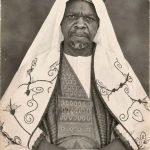
His father’s ancestral identity remains important aspects of his family history, particularly for those seeking to understand the roots of one of Kogi State’s most prominent political figure. His story is not merely that of a man who rose to become governor; it is also the story of a son born into an indigenous Ebira family, raised within a community renowned for its distinctive cultural identity and traditions, and educated to assume responsibilities that would eventually extend beyond his immediate surroundings.
For those asking who Yahaya Bello’s father is, the name presented in this account is Adayi Bello Ipemida Azi Adayi Ochi Ema’azi Adayi Otaru, while his mother is Hajiya Hawawu Oziohu Bello. His identification with the Ozi-Ehebe, Ozi-Okovi and Ozi-Uga of Okengwe-Ehi, as referenced in the family account, situates his ancestry within the wider historical and cultural heritage of Ebiraland.
In Ebira society, lineage represents more than a family name. It connects individuals to their ancestral origins, extended family relationships, community identity and generations that came before them. Consequently, examining Yahaya Bello’s ancestry is not only simply an exercise in identifying his parents, but also an opportunity to appreciate the cultural and familial foundations from which he emerged.
Born and raised in Agassa, Yahaya Bello began his formal education in 1984 at LGEA Primary School, Agassa. He subsequently attended Agassa Community Secondary School and Government Secondary School, Suleja, in Niger State, completing his secondary education in 1994. During his school years, he participated in student leadership, including serving as a class monitor and head boy.
In 1995, he proceeded to Kaduna State Polytechnic for his A-Level studies. The following year, he gained admission to Ahmadu Bello University, Zaria, where he studied Accounting and graduated in 1999. He later obtained a Master of Business Administration degree from the same institution in 2004. His professional qualifications also included recognition as a Chartered Fellow of the Association of National Accountants of Nigeria.
His professional career began in public service after his National Youth Service Corps programme at the Revenue Mobilisation Allocation and Fiscal Commission. Retained as a Revenue Officer II in 2001, he progressed through the ranks to become an Assistant Chief Accountant before leaving the public service to pursue business interests in finance and stock trading.
These experiences formed part of the foundation for his eventual entry into partisan politics. In 2015, under the platform of the All Progressives Congress (APC), Yahaya Bello emerged as the party’s candidate following a governorship primary rerun conducted after the death of Prince Abubakar Audu. He was sworn in as Governor of Kogi State on 27 January 2016, becoming one of Nigeria’s youngest governors at the time.
His eight-year administration, which concluded on 27 January 2024, placed him at the centre of significant political, administrative and developmental discussions in Kogi State. His government pursued initiatives in education, infrastructure, healthcare, and youth and women’s inclusion. Projects associated with his administration included the establishment of Confluence University of Science and Technology, Osara, Kogi State University, Kabba, and the Reference Hospital in Okene, alongside other interventions across the state.
As with many consequential political administrations, his tenure also attracted considerable public debate, criticism and controversy. Nevertheless, his years in office remain an important chapter in the contemporary political history of Kogi State, with supporters and critics continuing to assess his record from different perspectives.
His journey from Agassa to the Government House in Lokoja represents a notable chapter in the story of an Ebira man who rose from his community to occupy one of the state’s highest political offices. Yet, despite the prominence he attained, his public profile has not erased his connection to his roots, his parents, his community and the wider cultural heritage of Ebiraland.
For the Ebira people, ancestral identity remains an important part of cultural continuity. Family histories, traditional affiliations and community relationships help preserve the collective memory of a people across generations. In this context, Yahaya Bello’s connection to Agassa, Okene and the Ebira people forms part of the broader conversation about family heritage and identity within the Ebira Tao community.
.
His supporters also continue to acknowledge his years in office and the initiatives pursued during his administration. For them, the discussion about his political future is connected not only to his experience but also to their assessment of his contributions to Kogi State during his time as governor.
Whether examined through the lens of ancestry, education, professional experience or politics, Yahaya Bello’s story illustrates the importance of understanding public figures beyond the titles they hold. Their histories are shaped by family relationships, cultural environments, educational opportunities and the communities in which their identities first took root.
For those asking about Yahaya Bello’s paternal ancestry, this account identifies his father as Adayi Bello Ipemida Azi Adayi Ochi Ema’azi Adayi Otaru and traces the family narrative through the Ozi-Ehebe, Ozi-Okovi, Ozi-Uga of Okengwe-Ehi, the references associated with his lineage.
The reference to the HRH Odovidi of the Ehebe clan also forms part of their ancestral stool account presented here as free-born whose family is entitled to the Odovidi stool. Such traditional affiliations deserve careful treatment, particularly where they relate to clan identity, hereditary standing and the historical relationships among families within Ebiraland. A well-documented account of these connections can help preserve local history while distinguishing established tradition from claims that require further verification.
Those who are confident about their own ancestral histories are equally encouraged to share their lineages, provided their accounts are grounded in credible family knowledge and oral tradition. Documenting these histories can contribute to a richer understanding of the relationships, migrations and cultural identities that have shaped Agassa, Okene and the wider Ebira Tao community.
Yahaya Bello’s lineage is an important aspect of his identity, just as his political career forms part of his public history. His journey from Agassa to the governorship of Kogi State remains a subject of interest to his supporters, the Ebira people and the wider Nigerian public.
By Prince Muhammed Otaiki
DemocracyNewslineNewspaper October 20th, 2026