

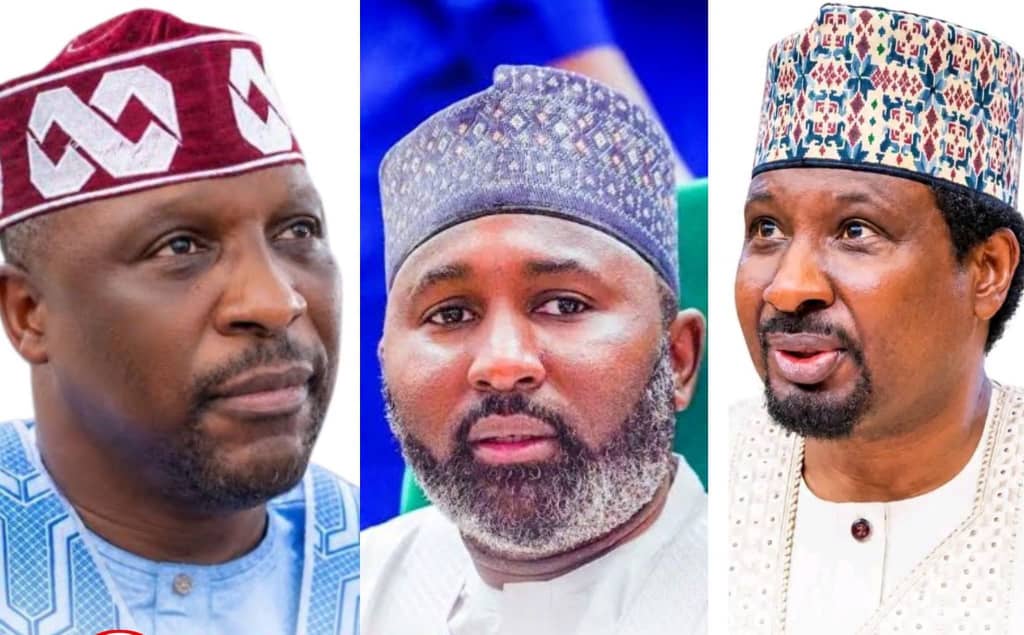

APC’s Kano Unity Crisis Deepens as Barau Jibrin’s Name Goes Missing at Abba Bichi Campaign Rally.
By Bala Salihu Dawakin Kudu
November 23, 2026.
The growing political tension within the All Progressives Congress (APC) in Kano State has raised fresh concerns about the party’s unity and electoral prospects ahead of the 2027 general elections, following an incident at a political rally where the name of Deputy Senate President, Senator Barau I. Jibrin, was conspicuously omitted during the recognition of party candidates.
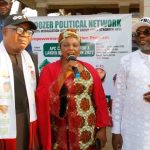
The incident occurred at a political gathering organised in support of Hon. Abba Bichi, the APC candidate for the Bichi Federal Constituency seat. During the event, APC State Chairman, Hon. Umar Haruna Doguwa, led political chants in support of President Bola Ahmed Tinubu, with participants responding, “Sai Tinubu.” Other slogans included “Sai Abba” for Kano State and “Sai Abba Bichi” in support of the Bichi federal constituency candidate.
- Advertisement -
However, political observers were reportedly surprised that Senator Barau I. Jibrin, who represents Kano North in the Senate and is a prominent APC leader, was not mentioned when candidates were being recognised. Instead, Doguwa concluded his remarks with the declaration, “APC from top to bottom.”
The omission has generated questions about the extent of internal disagreements within the Kano APC, particularly given the political importance of Senator Barau, whose influence extends across several local government areas in the state.
Although the omission alone does not establish an official party decision against Barau’s candidacy, the incident has intensified speculation about divisions among influential party stakeholders and the possibility of competing political interests within the APC.
Information available to Democracy Newsline suggests that the disagreement involving Senator Barau Jibrin and Hon. Abba Bichi may be developing into a broader political challenge for the Kano APC.
In an interview with Democracy Newsline Newspaper, a source who requested anonymity and identified with the Abba Bichi political camp expressed disappointment over the growing hostility between the two political camps.
The source reportedly attributed responsibility for escalating the disagreement to Hon. Abba Bichi and Kano State Deputy Governor, His Excellency Murtala Sule Garo.
These allegations, however, remain the source’s personal account and have not been independently established.
The development has also raised concerns about the role of the state party leadership in reconciling aggrieved stakeholders and ensuring that personal political disagreements do not undermine the party’s collective interests.
Barau’s supporters and the 2027 electoral implications
Senator Barau Jibrin remains an influential political figure in Kano North and within the APC’s national political structure. Consequently, any prolonged disagreement involving his supporters could have implications beyond the senatorial district.
The APC’s electoral strength in Kano depends significantly on cooperation among its political leaders, elected officials, grassroots mobilisers and supporters across the state’s 44 local government areas.
If the current disagreements are not addressed, there is a risk that some supporters of the affected political camps could become disengaged, withdraw their mobilisation efforts or support alternative political interests in the 2027 elections.
Such a development could weaken the APC’s ability to consolidate its support base, defend its political interests in the state and mobilise votes for President Bola Ahmed Tinubu.
The situation is particularly significant because Kano remains one of Nigeria’s most politically influential states, with a substantial voting population and considerable importance in determining national electoral outcomes.
Tinubu’s political fortunes also at stake.
The internal disagreements could also have implications for President Tinubu’s re-election ambitions in 2027 if the Kano APC fails to maintain unity.
Political analysts have consistently recognised the importance of strong grassroots structures, effective leadership and cooperation among influential stakeholders in winning elections.
A divided party leadership, competing campaign structures and unresolved grievances could create opportunities for opposition parties to strengthen their positions among voters.
The APC leadership therefore faces the challenge of preventing internal disagreements from developing into an electoral liability.
The unfolding situation calls for urgent intervention by Governor Abba Kabir Yusuf, Senator Barau Jibrin, Hon. Abba Bichi, Deputy Governor Murtala Sule Garo and the APC state leadership.
Rather than allowing political differences to escalate, the stakeholders should embrace dialogue, mutual respect and a common understanding of the party’s collective interests.
The state APC chairman also has an important responsibility to demonstrate impartiality and ensure that every recognised party candidate and stakeholder receives fair treatment at official party functions.
Ultimately, the 2027 elections will test not only the APC’s popularity in Kano but also its ability to manage internal disagreements and maintain a united political structure.
For a party seeking to retain its influence in Kano and deliver substantial votes for President Tinubu, unity cannot merely be a campaign slogan; it must be reflected in its leadership decisions and treatment of all stakeholders.
DemocracyNewslineNewspaper November 24th, 2026