






FUAHSE Makes National Research Breakthrough as Non-Invasive Glucometer, Malaria Diagnostic Technology Attract TETFund and Defence Research Interest in Abuja
***University’s home-grown biomedical innovations gain national prominence at 2026 TETFund Research Fair, opening new frontiers for clinical validation, technology transfer, industrial investment and global research collaboration.
The Federal University of Allied Health Sciences, Enugu (FUAHSE), has recorded a significant milestone in its expanding research and innovation profile following an impressive participation at the Second Tertiary Education Trust Fund (TETFund) National Research Fair and Exhibition in Abuja, where its home-grown biomedical technologies attracted the attention of government officials, military research experts, industry stakeholders and prospective investors.
The University’s participation in the prestigious national research gathering, which brought together some of Nigeria’s most promising research institutions, innovators and technology developers, provided an important platform for showcasing its emerging scientific capabilities and demonstrating how interdisciplinary research can translate into practical healthcare solutions.
- Advertisement -

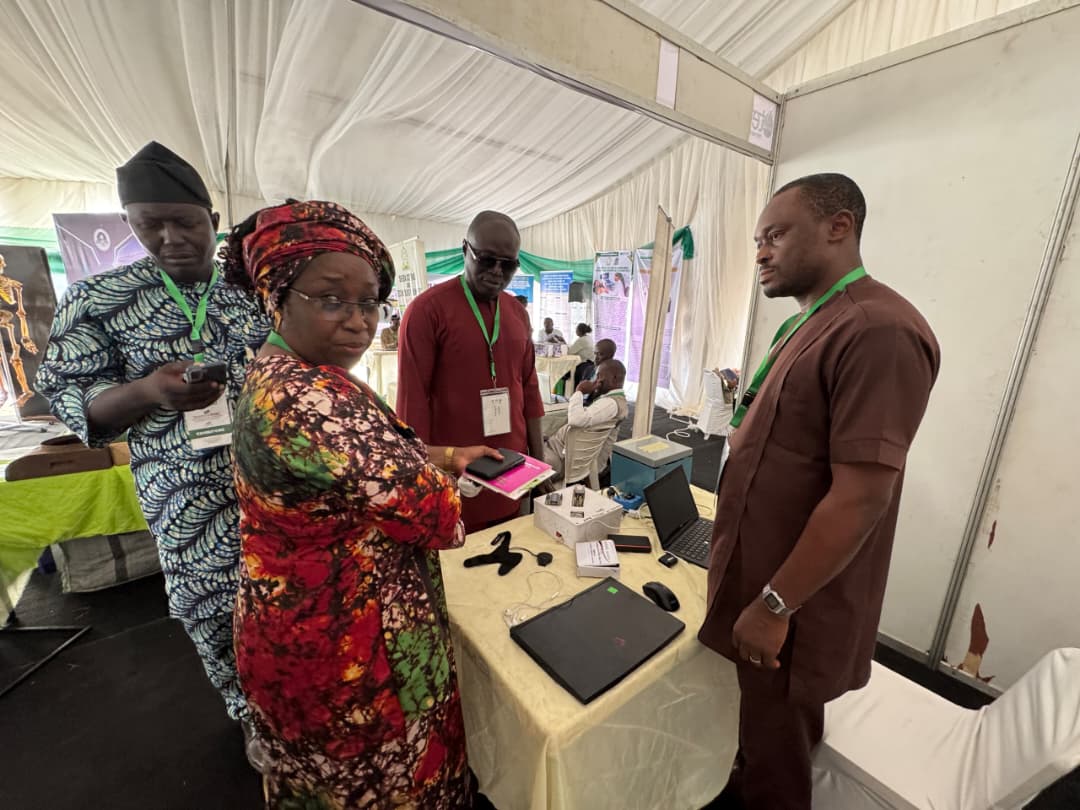
Among the standout innovations presented by FUAHSE was a Glucose Monitoring Prototype for Non-Invasive Blood Glucose Estimation, an emerging biomedical engineering solution designed to investigate blood glucose estimation without the conventional skin-puncturing procedure. The prototype, alongside the University’s malaria rapid-test strip and biotechnology-related research outputs, reinforced FUAHSE’s growing commitment to indigenous technological development, diagnostic innovation and smart healthcare delivery.
The four-day exhibition, held from 24 to 27 November 2026 at the Abuja Trade and Convention Centre of the Abuja Chamber of Commerce and Industry, was organised around the theme, “From Research to Market: Driving Innovation, Enterprise and National Prosperity.”
The event was conceived to bridge the longstanding gap between academic research and commercial application by connecting researchers with manufacturers, financial institutions, investors, government agencies, development partners and technology-transfer organisations.
For FUAHSE, a relatively young specialised institution with an expanding mandate in allied health sciences, the exhibition offered an invaluable opportunity to position its research outputs within Nigeria’s evolving innovation ecosystem and demonstrate the strategic role of biomedical engineering, biotechnology and applied health sciences in addressing contemporary healthcare challenges.
A National Convergence of Research, Innovation and Enterprise
The scale of the 2026 TETFund National Research Fair underscored the growing importance attached to research commercialisation and knowledge-driven economic development in Nigeria.
According to TETFund, more than 7,000 research and innovation entries were received, out of which over 1,200 were selected for exhibition. The impressive participation brought together universities, polytechnics, colleges of education, research institutes, independent inventors, innovation hubs and government establishments from across the country.
The private-sector and financial institutions represented included the Manufacturers Association of Nigeria, Nigerian Association of Small and Medium Enterprises, Nigerian Association of Small-Scale Industrialists, Nigerian Economic Summit Group, Nigeria Employers’ Consultative Association, Bank of Industry and Bank of Agriculture.
The exhibition also featured an International Research and Innovation Symposium on 25 and 26 November, with participation from internationally recognised institutions and development organisations, including the University of Ottawa, Osaka Metropolitan University, German Academic Exchange Service, Japan Society for the Promotion of Science, African Development Bank, World Bank, UNESCO, African Academy of Sciences and National Research Foundation of South Africa.
These engagements created opportunities for knowledge exchange, intellectual property development, international research partnerships, investment readiness and the advancement of indigenous innovations towards globally competitive standards.
Declaring the exhibition open, the Secretary to the Government of the Federation, Senator George Akume, challenged Nigerian researchers and tertiary institutions to develop solutions capable of addressing the country’s pressing social, technological and economic challenges.
The Minister of Education, Dr Maruf Tunji Alausa, also announced the Federal Government’s proposal for a National Research and Innovation Development Fund, with an annual commitment approaching US$500 million, subject to the necessary legislative approval.
Similarly, the Executive Secretary of TETFund, Arc. Sonny S. T. Echono, emphasised the imperative of transforming research discoveries into commercially viable products, sustainable enterprises and employment-generating opportunities.
These policy directions provided an important context for FUAHSE’s participation, particularly as the University continues to develop a research culture focused on practical innovation, indigenous technological capacity and measurable societal impact.
Non-Invasive Glucometer: FUAHSE’s Emerging Biomedical Engineering Innovation
At the centre of the University’s exhibition was its formally approved research entry, the Glucometer Prototype for Non-Invasive Blood Glucose Estimation, registered under submission number SUB-26-RT-003069.
The invention, developed by a research team led by Rev. Sr. Dr Henrietta O. Uzoeto, Principal Investigator, received formal approval from the TETFund Fair Committee following the evaluation of the University’s submission.
The official invitation for the exhibition was extended to Engr. Ifenze Ogochukwu Militus of the Department of Biomedical Engineering, who represented the University and presented the prototype.
The innovation explores an alternative approach to glucose monitoring through a wearable electronic configuration designed to estimate glucose levels without requiring conventional finger-prick blood sampling.
Its hardware architecture incorporates a wrist-mounted electronic unit responsible for signal conditioning, embedded processing and the presentation of information through a circular display interface.
Beyond its wearable configuration, the device incorporates an innovative energy-management concept combining rechargeable power storage with an energy-harvesting mechanism.
The integration of optical modelling, embedded electronics, wearable-device engineering and energy harvesting demonstrates the interdisciplinary character of the research and highlights the potential contribution of biomedical engineering to the future of personalised healthcare technologies.
Visitors to the FUAHSE exhibition stand had the opportunity to inspect the physical glove-and-wrist assembly and engage the research team on its sensing configuration, signal-processing architecture and power-management system.
While the prototype remains at a developmental stage requiring further calibration, clinical validation, performance optimisation and regulatory assessment, its selection for the national exhibition represents an important step towards translating indigenous research into a potentially valuable healthcare technology.
TETFund Signals Further Consideration of FUAHSE Innovation
One of the significant outcomes of FUAHSE’s participation was the indication that its non-invasive glucometer had been selected for further consideration by TETFund.
During the exhibition, teams from TETFund’s monitoring and evaluation function and the Research Fair visited the University’s stand to engage with the displayed innovations.
Towards the closing stages of the exhibition, the fair team collected the University’s stand or exhibition number and informed the researchers that the Glucometer Prototype for Non-Invasive Blood Glucose Estimation, submission SUB-26-RT-003069, had been selected for further consideration.
Although formal documentation is still awaited, the development represents an encouraging progression and a potential opportunity for the University to advance the research through further institutional and technical engagement.
The innovation was also advanced for engagement with industrial investors, creating an avenue for discussions around research financing, product engineering, clinical validation, regulatory compliance and possible local manufacturing.
For FUAHSE, these developments represent more than exhibition visibility. They offer a potential pathway towards strengthening its research-to-market capacity and positioning the institution as an emerging contributor to Nigeria’s medical technology development ecosystem.
Nigerian Defence Academy Delegation Shows Interest in FUAHSE’s Malaria Diagnostic Technology
Another important highlight of the exhibition was the visit of a delegation from the Nigerian Defence Academy (NDA), led by Prof. Modupe Munirat Adeyemi, Director of the Academy’s Centre for Intellectual Property Research Monitoring and Technology Transfer.
The delegation visited the FUAHSE exhibition stand and expressed interest in the malaria rapid-test strip displayed by the University’s research team.
The engagement provided an opening for technical discussions and possible collaboration in research development, intellectual property management and technology transfer.
The interest demonstrated by a specialised defence research institution further underscores the relevance of FUAHSE’s research portfolio and the opportunities available for cross-institutional collaboration in addressing public health and diagnostic challenges.
Such interactions are particularly significant in an innovation environment where research partnerships between universities, specialised research establishments and technology-transfer centres can accelerate the development and application of scientific discoveries.
Blue-Economy Research Opens Development Partnership Possibilities
FUAHSE also utilised the exhibition to present its research involving agar, rose and seaweed to an independent industrial stakeholder, Mr. Olushola, operating within the blue-economy sector.
The presentation attracted interest, with the stakeholder indicating that a potential funding pathway linked to the United Nations Development Programme (UNDP) could be explored.
Although the discussion remains preliminary and subject to identifying the proposed development partner, institutional approval, due diligence and mutually agreed written terms, the engagement represents another avenue for exploring the wider socioeconomic applications of the University’s research activities.
It also demonstrates the University’s interest in extending its research outlook beyond conventional clinical technologies into biotechnology, marine-related resources and sustainable innovation.
The potential intersection of biotechnology, natural-resource utilisation and industrial development presents an important opportunity for FUAHSE to contribute to emerging knowledge economies while exploring research partnerships with development-oriented organisations.
The Research Team Behind the Innovation
The University’s participation was driven by a dedicated research team comprising Rev. Sr. Dr Henrietta O. Uzoeto and Engr. Ifenze Ogochukwu Militus, both of the Federal University of Allied Health Sciences, Enugu.
Rev. Sr. Dr Uzoeto served as the Principal Investigator, providing research leadership and direction for the project.
Engr. Ifenze, of the Department of Biomedical Engineering, was the invited exhibitor and led the on-site presentation of the non-invasive glucometer prototype.
He was supported during the presentation by Mr. Kamile Japhet Suko, a 2025 graduate of the Department of Biomedical Engineering, whose participation reflected the University’s commitment to developing young scientific talents and creating opportunities for graduates to contribute to practical research and technological advancement.
Other members of the University community, including Barr. Miracle Freeman-Njoku and Ms. Lami Sunday, also visited the exhibition stand, providing institutional and moral support to the research team throughout the event.
Their collective participation reflected the collaborative spirit required to build a sustainable research ecosystem in which academic expertise, technical competence, institutional support and emerging professional talent work together towards measurable innovation outcomes.
Prof. John Emaimo’s Administration Advances Research-Driven Institutional Development
FUAHSE’s participation in the national exhibition took place under the leadership of the Vice-Chancellor, Prof. John Emaimo, whose administration continues to position research, innovation and smart healthcare as important components of the University’s developing institutional mandate.
As a specialised institution dedicated to allied health education and professional development, FUAHSE occupies a strategic position at the intersection of healthcare delivery, scientific research, medical technology and human-capital development.
The University’s participation at the TETFund exhibition demonstrated the possibilities inherent in integrating biomedical engineering with clinical sciences, diagnostics, biotechnology and entrepreneurial development.
It also reinforced the importance of creating an institutional environment where research is not confined to academic publications and laboratory experiments but is progressively developed into practical solutions capable of improving healthcare outcomes and stimulating economic opportunities.
For an institution that is steadily consolidating its identity within Nigeria’s tertiary education landscape, national recognition of its research outputs represents an important confidence-building milestone.
The opportunity to engage government officials, industry stakeholders, military research experts and prospective investors further strengthens FUAHSE’s visibility and opens possibilities for future strategic partnerships.
Beyond Exhibition: A New Frontier for Research Commercialisation
The significance of FUAHSE’s appearance at the 2026 TETFund National Research Fair extends beyond the physical display of prototypes and research materials.
It demonstrates the University’s growing capacity to participate in national conversations on scientific innovation, indigenous technology development, research financing and the commercialisation of academic discoveries.
The next phase will require sustained investment in research infrastructure, technical refinement, intellectual property protection, laboratory testing, clinical validation, regulatory engagement and strategic partnerships with manufacturing organisations.
For the non-invasive glucometer, in particular, the transition from prototype to a dependable medical device will require rigorous scientific evaluation to establish measurement accuracy, repeatability, reliability and clinical performance across relevant patient populations.
Such validation will be critical to determining its eventual suitability for clinical application and its prospects within the competitive global medical-device market.
The University will also need to leverage the interest generated at the exhibition to pursue structured partnerships that can support product development, technology transfer and potential commercial production.
These are the practical steps through which research visibility can translate into institutional prestige, technological independence and tangible public-health benefits.
A Defining Moment for FUAHSE’s Emerging Research Identity
The Second TETFund National Research Fair and Exhibition has provided FUAHSE with an important national platform to demonstrate that its academic and scientific ambitions extend beyond conventional classroom instruction into the development of indigenous solutions to real-world healthcare challenges.
From wearable non-invasive glucose-monitoring technology to malaria diagnostics and biotechnology-related research, the University’s exhibition portfolio reflected an expanding culture of innovation driven by scientific inquiry, interdisciplinary collaboration and a commitment to societal relevance.
The interest generated among research institutions, public agencies, industrial stakeholders and prospective investors represents an encouraging foundation upon which further institutional partnerships can be developed.
More importantly, the experience has reinforced the strategic relevance of specialised universities in building Nigeria’s scientific capacity, reducing dependence on imported technologies and nurturing home-grown solutions for emerging healthcare needs.
Under the leadership of Prof. John Emaimo, FUAHSE is steadily projecting an institutional identity defined not only by its contribution to allied health education but also by its potential to become a recognised centre for applied biomedical research, diagnostic innovation and technology-driven healthcare advancement.
From the laboratory to the exhibition floor, and from indigenous ingenuity to the prospect of industrial application, FUAHSE’s Abuja experience represents a compelling statement of institutional ambition: the future of healthcare innovation must not only be taught and studied; it must also be researched, engineered, validated and brought to life.
The Vice-Chancellor, Prof. John Emaimo, expressed particular delight at FUAHSE’s selection for the highly competitive national exhibition, especially as the young University is only commencing its 300-level academic activities. He pledged to accord research and innovation greater institutional attention and strategic support.
Federal University of Allied Health Sciences, Enugu — Advancing Allied Health Education, Transforming Research into Innovation, and Building the Future of Smart Healthcare.
DemocracyNewslineNewspaper November 28th, 2026