






Gov. Nwifuru’s Aide Recounts Four Years Achievements of EBSHIA
By Leo Ekene Oketa, Special Assistant to the Governor
I have tried to make sense of the four-year service utilization data, released by the Ebonyi State Health Insurance Agency (EBSHIA), which tells the story of a health insurance system that has expanded significantly in both coverage and impact.
It is simply magnificent, the data and its meaning. This is courtesy of the impactful leadership of Governor Francis Ogbonna Nwifuru.
- Advertisement -

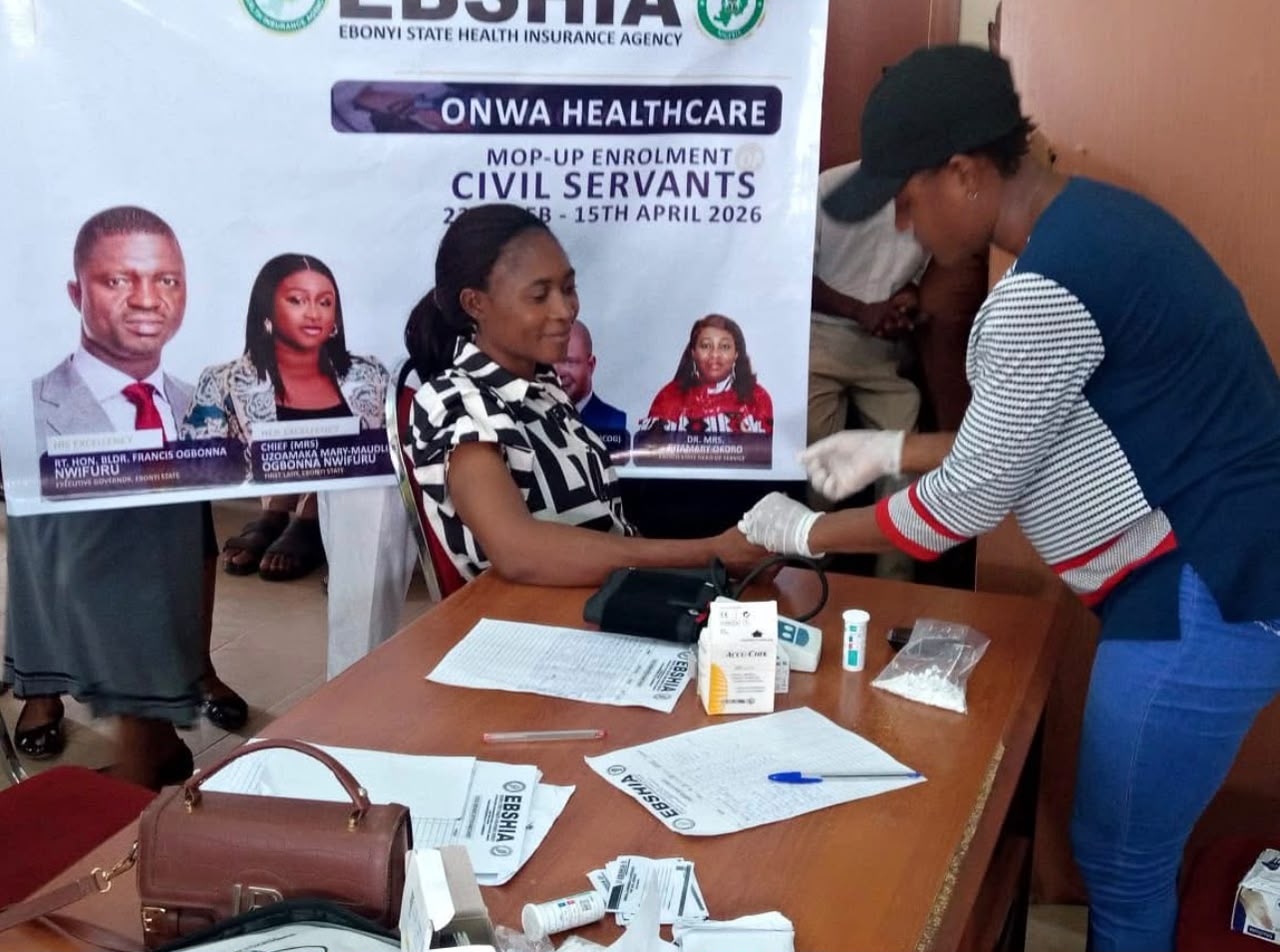
Beyond the impressive figures lies evidence of improved access to healthcare, stronger confidence in public health institutions, and a deliberate effort by the Ebonyi State Government to reduce the financial burden of illness on its citizens. EBSHIA itself was established to expand affordable, quality healthcare and provide financial protection for residents.
– A Remarkable Growth in Health Insurance Coverage
Perhaps the most striking achievement is the growth in enrolment.
The number of enrolled beneficiaries increased from 32,149 in 2022 to 137,133 in 2026, representing an extraordinary 429% increase within four years.
Year-by-year enrolment shows consistent growth:
– 2022: 32,149
– 2023: 48,458
– 2024: 86,175
– 2025: 97,953
– 2026: 137,133
This sustained increase demonstrates that more Ebonyi residents are embracing health insurance as a reliable means of accessing healthcare instead of depending solely on out-of-pocket payments. It also reflects growing public confidence in the scheme and the government’s investment in making healthcare more accessible.
– Nearly Half a Million Health Services Delivered
Between 2023 and 2026:
– 394,387 encounter visits were recorded.
– 478,607 healthcare services were delivered.
– An average of 119,652 services were provided annually.
These figures reveal that enrolment is translating into actual healthcare utilization. People are not merely registering; they are actively accessing medical care when they need it.
The difference between encounter visits and services utilized is equally significant. Since one patient can receive multiple medical services during a single hospital visit, the higher number of services indicates comprehensive care rather than isolated consultations.
– Maternal and Child Health Emerges as a Major Priority
The data shows that maternal and child healthcare remains one of the strongest pillars of the scheme.
From 2023–2026, EBSHIA supported:
– 94,376 antenatal care visits
– 25,945 normal deliveries
– 1,511 Caesarean sections
– 389 assisted deliveries
– 28,502 hypertension screenings
– 9,042 diabetes screenings
The implications are profound.
High antenatal attendance suggests that pregnant women are increasingly seeking professional care before childbirth, reducing maternal and neonatal risks. Thousands of supervised deliveries equally point to improved skilled birth attendance, one of the key indicators for reducing maternal mortality.
Routine screening for hypertension and diabetes also demonstrates a shift from merely treating diseases to preventing complications through early detection.
– Fighting Infectious Diseases at Scale
The disease profile indicates that common infectious illnesses continue to dominate healthcare demand.
Notably:
– 113,791 uncomplicated malaria cases were treated.
– 54,283 uncomplicated upper respiratory tract infections (URTI) were managed.
– 23,064 diarrhoea cases received treatment.
– 7,347 urinary tract infections were treated.
– 8,810 gastroenteritis cases were managed.
Malaria alone accounts for the largest share of treatments, highlighting that it remains the leading public health challenge in the state.
However, the ability of the insurance scheme to finance treatment for over one hundred thousand malaria cases means thousands of families avoided catastrophic medical expenses while receiving prompt care.
– Growth in Surgical Services
Although preventive and primary healthcare dominate utilization, the data also shows expanding access to surgery.
Procedures carried out include:
– 843 hernia surgeries
– 332 fibroid (myomectomy) surgeries
– 238 eye surgeries
– 221 appendectomies
– Brain surgery
– Hip replacement
– Thyroidectomy
– Hysterectomy
– Prostatectomy
– Mastectomy
These interventions demonstrate that the insurance programme extends beyond routine consultations to cover specialized and life-changing procedures that many residents would otherwise struggle to afford.
– Broad Spectrum of Healthcare
The insurance scheme is addressing healthcare beyond maternal and infectious diseases.
Other services include:
– Eye screenings and provision of eyeglasses
– Skin infection management
– Arthritis and rheumatism treatment
– Wound care
– Circumcision
– Ear-related conditions
– Sickle cell care
– Other primary healthcare services
This diversity reflects a comprehensive benefit package capable of addressing preventive, curative and supportive healthcare needs across different age groups.
– Understanding the Utilization Trend
An interesting observation is that service utilization peaked around 2023–2024 before declining gradually through 2026.
This should not necessarily be interpreted as worsening healthcare performance.
Several possible explanations exist:
– Preventive healthcare may be reducing disease burden;
– Earlier diagnosis and treatment may be preventing repeated hospital visits;
– Healthier insured populations may require fewer clinical interventions;
– Health promotion programmes may be reducing avoidable illnesses.
Meanwhile, enrolment continued to rise, indicating that more people are protected even though average service demand per person has moderated.
– The Bigger Picture
Taken together, the statistics portray a health insurance programme moving steadily toward universal health coverage.
The data demonstrates:
– Rapid expansion of insurance coverage.
– Increased public confidence in the scheme.
– Greater financial protection for households.
– Improved maternal and child health services.
– Strong response to communicable diseases.
– Availability of specialized surgical care.
– Increased emphasis on preventive healthcare.
Ultimately, the most important number may not be the 137,133 enrollees, but the fact that these represent 137,133 lives with greater financial protection against illness.
In a clime where healthcare costs often push families into poverty, this level of health insurance coverage means more residents can seek medical attention without the fear of catastrophic expenditure. It also strengthens the state’s healthcare system by promoting regular use of accredited health facilities, encouraging early diagnosis, improving health outcomes, and advancing the broader goal of universal health coverage in Ebonyi State.
Again, thanks to the superlative leadership of Governor Francis Ogbonna Nwifuru. Well done as well, to the Executive Secretary of the Ebonyi State Insurance Agency, Dr-Divine Okemefuna Igwe-jp, the Chairman and members of the EBSHIA board.
(DEMOCRACY NEWSLINE NEWSPAPER 7TH AUGUST, 2026)