




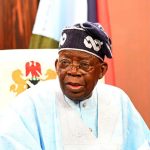
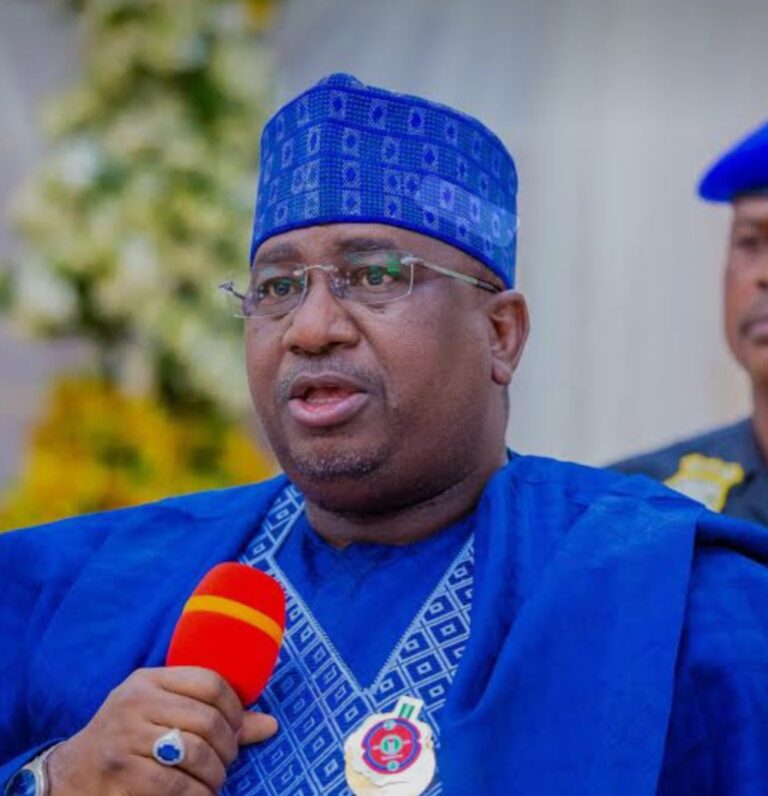

Kebbi 2027: Why Idris Dropped Tafida — Legal Advice, Old Litigation and Questions Over Timing Governor picks former Finance Commissioner Ibrahim Augie as running mate
By Bala Salihu Dawakin Kudu
Northern Bureau Chief, Democracy Newsline
August 18th, 2026.
BIRNIN KEBBI — Kebbi State Governor, Dr Nasir Idris Kauran Gwandu, has replaced his Deputy Governor, Senator Umar Abubakar Tafida, as his running mate for the 2027 governorship election, opting for former Commissioner for Finance, Alhaji Ibrahim Muhammad Augie.
The decision, announced in Birnin Kebbi by the APC National Organising Secretary, Alhaji Suleiman Argungu, was attributed to professional legal advice concerning Tafida’s eligibility and the potential legal implications of retaining him on the 2027 ticket.
Argungu, however, stressed that the decision was not based on Tafida’s performance, adding that there was no disagreement between the governor and his deputy.
- Advertisement -

The development has nevertheless raised questions among political observers over the precise nature of the legal advice and why the issue has emerged more than three years after Tafida contested alongside Governor Idris in the 2023 election.
The 2023 legal battle
Tafida was at the centre of the legal challenge to the 2023 Kebbi governorship election, during which the opposition alleged, among other things, that he presented a forged secondary-school testimonial to INEC.
The case went through the Governorship Election Petition Tribunal and the Court of Appeal before reaching the Supreme Court. The courts ultimately upheld Governor Idris’s election, with the allegations against Tafida failing to dislodge the APC ticket.
If the courts had already resolved the principal 2023 controversy in favour of the APC, the question now being asked is whether the latest legal advice relates to a new legal issue, the possibility of renewed litigation in 2027, or simply the party’s desire to minimise electoral risk.
Neither the governor nor the APC has publicly released the legal opinion said to have influenced the decision.
Another important question is why Tafida remained deputy governor for the greater part of the current administration if his eligibility was considered a serious legal concern.
Tafida became deputy governor in 2023 and has continued to perform official duties, representing the administration at various functions.
It is therefore important to distinguish between eligibility to contest as a running mate in the 2027 election and the constitutional status of a sitting deputy governor.
The decision announced by the APC concerns the 2027 governorship ticket. It should not automatically be interpreted as a declaration that Tafida is currently legally incapable of serving as deputy governor or that he has been removed from office.
The latest development also raises another question: if the legal concerns were known during the 2023 election, why was Tafida selected in the first place and why did the APC defend the ticket through the courts?
One possible explanation is that the present decision is not based on a finding that Tafida was legally disqualified in 2023. Rather, the APC may simply have concluded that another candidate would present a lower legal and political risk for the 2027 contest.
A previous court victory does not necessarily prevent a political party from changing its strategy for a future election. Parties routinely replace candidates because of changing political circumstances, litigation risks, public perception and electoral calculations.
The timing of the change has also generated questions over whether Tafida’s name had already been submitted or processed as part of the APC’s 2027 nomination arrangements.
If his name had already been submitted, when was it submitted? Was the legal concern known before the submission? If so, why was the submission allowed to proceed?
Conversely, if the final ticket had not yet been formally submitted to INEC, the APC should make that clear to the public.
While the APC has emphasised legal advice, political considerations cannot be completely separated from the decision.
Ibrahim Augie is a former Commissioner for Finance under former Governor Atiku Bagudu and brings substantial administrative and political experience to the ticket. His selection also maintains an important political connection with the Argungu area.
For Governor Idris, the new arrangement may therefore serve several purposes: reducing perceived legal exposure, strengthening the political structure of the ticket, maintaining regional balance and improving the party’s electoral prospects ahead of 2027.
Governor Idris has rejected suggestions of a disagreement with Tafida and urged APC members to remain united.
Dispute over consultation
However, the claim that Tafida accepted the decision without disagreement has also attracted attention.
While Argungu reportedly said Tafida understood and consented to the change, Tafida’s Senior Special Assistant on New Media, Yahaya Danjadda, disputed the account, saying the deputy governor was not consulted before Augie was announced.
That contradiction could become politically significant if it develops into a wider disagreement within the administration.
For now, however, the governor’s camp appears determined to present the change as a peaceful political and electoral decision rather than a personal dispute.
The need for transparency
The people of Kebbi State deserve a clear explanation of the legal issue behind such a major political decision.
The APC does not necessarily have to publish privileged legal advice, but it should explain whether the concern involves a new eligibility issue, the previous 2023 litigation, the possibility of fresh legal challenges in 2027, or a technical interpretation of the current electoral framework.
This is particularly necessary because the major allegations surrounding Tafida’s qualification in 2023 were already subjected to judicial scrutiny.
The public therefore deserves to know what has changed, when it changed and why the issue was considered sufficiently serious to warrant replacing an incumbent deputy governor on the 2027 ticket.
Augie takes centre stage
For Augie, the decision places him at the centre of Kebbi’s 2027 political contest.
His experience as a former Finance Commissioner gives him knowledge of government administration, while his political background could help the APC consolidate support ahead of the election.
Governor Idris has endorsed the new arrangement and called for unity and continued support for the APC’s re-election campaign.
Ultimately, the replacement of Tafida raises a broader issue about the relationship between law, politics and electoral strategy.
There is nothing unusual about a governor selecting a different running mate for a second-term bid. What makes the Kebbi case unusual is the explanation that the change was driven by professional legal advice despite the fact that the courts had previously upheld the 2023 APC ticket.
Until the APC provides greater clarity, several questions will remain unanswered: What precisely was the legal risk? Was it a new development or a concern inherited from the 2023 litigation? Why was the issue not addressed earlier? Had Tafida’s name already been submitted to INEC? And does Ibrahim Augie’s selection completely remove the perceived legal risk or merely reduce it?
For now, Governor Nasir Idris has chosen Ibrahim Augie as his running mate for 2027. The APC says the decision followed professional legal advice. But the precise legal reasoning behind that advice remains the central unanswered question — and one that is likely to remain a major subject of political debate in Kebbi as the 2027 election approaches.
(DEMOCRACY NEWSLINE NEWSPAPER 18TH AUGUST, 2026)