





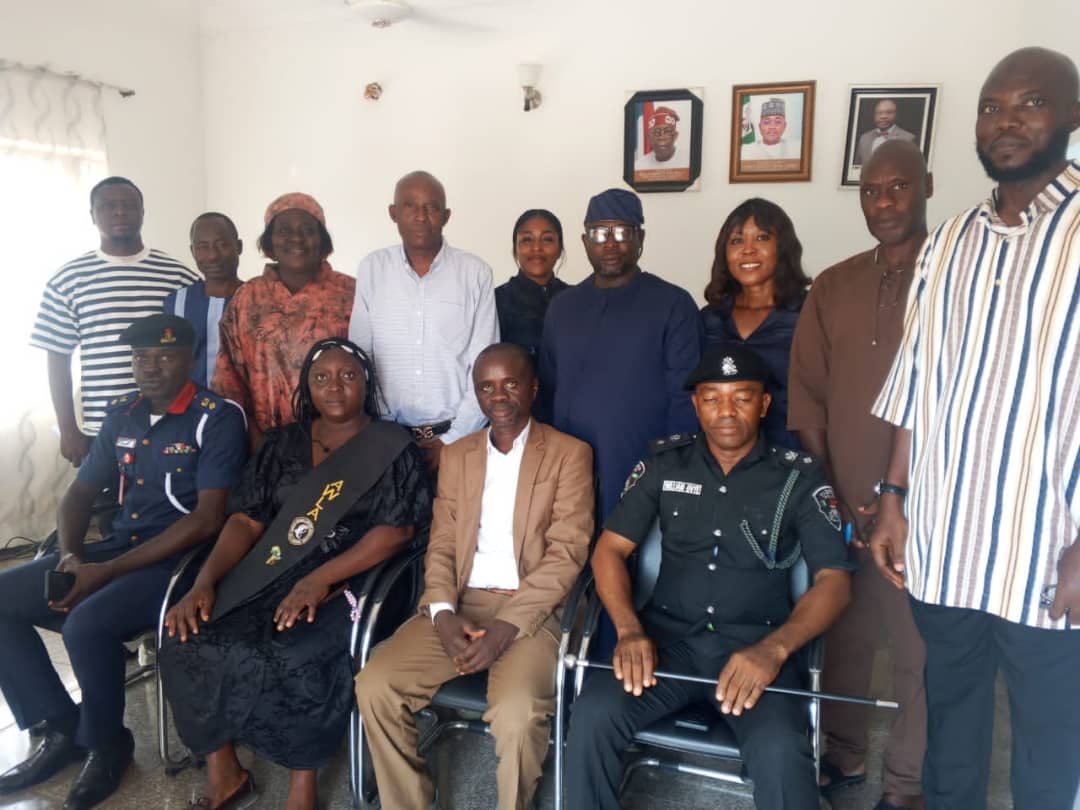

NHRC urges stronger collaboration to address rights violations against vulnerable groups
By Salamat Abu
Lokoja, Nov. 24, 2026 The National Human Rights Commission (NHRC) has called for stronger collaboration among stakeholders to ensure effective emergency response to human rights violations affecting key and vulnerable populations.
Dr Tony Ojukwu, Executive Secretary of NHRC, made the call at a one-day state-level sensitisation programme on Monday in Lokoja.
- Advertisement -
Ojukwu, represented by the Kogi Coordinator of NHRC, Dr Abdul Oyedokun, said key populations remained among groups most exposed to stigma, discrimination and other human rights violations.
He said that the commission recognised the challenges confronting the groups and the need for collaboration to strengthen human rights protection and improve access to justice.
According to him, key and vulnerable populations face exclusion, violence and other challenges that undermine their enjoyment of fundamental human rights.
He said the NHRC, in collaboration with relevant stakeholders and development partners, was committed to addressing structural barriers through targeted interventions.
Ojukwu described the emergency response framework as an important mechanism for ensuring that human rights violations affecting the groups were promptly identified, reported, documented and addressed.
He stressed that the rights of key and vulnerable populations must be respected and protected at all times.
He added that their voices and lived experiences must remain central to the design, implementation and monitoring of interventions aimed at protecting them.
Mr Samuel Musa, a participant representing the Key Population Secretariat, said the training had improved his understanding of appropriate channels for reporting grievances.
Musa said he previously lacked knowledge of where to report cases affecting members of his community, resulting in some complaints being mishandled or downplayed.
He said the training exposed him to a three-tier referral system for handling gender-based violence (GBV) cases at different levels.
He added that he now understood the importance of reporting appropriate cases to the police and other designated authorities.
Musa said members of key populations frequently experienced stigma and discrimination, adding that the designation itself sometimes attracted negative perceptions from society.
He said that collaboration among stakeholders would boost the confidence of affected communities and strengthen their capacity to seek justice for victims of GBV.
“As the Key Population Secretariat, we are ready to work with any agency recommended to us and refer cases through the appropriate channels,” he said.
Also speaking, Mrs Joy Akinola, State Coordinator, African Women Lawyers Association (AWLA), Kogi Branch, called for stronger partnerships among government agencies and civil society organisations (CSOs).
Akinola said collaboration among stakeholders was necessary to improve protection and coordinated responses to emergencies affecting key and vulnerable populations.
She described the engagement as an opportunity to understand the challenges confronting key populations and explore collective approaches to addressing them.
She said AWLA looked forward to sustained engagement with stakeholders to strengthen coordinated emergency responses across the state.
Among the participants were representatives of the Nigeria Police Force (NPF) and the Nigeria Security and Civil Defence Corps (NSCDC) were also present at the sensitisation programme.
End
DemocracyNewslineNewspaper November 24th, 2026