






PLASU: ASUU to Government – Address the Threatening Fragile Harmony in the Universities
The Academic Staff Union of Universities (ASUU), Plateau State University Chapter, under the Bauchi Zone, is calling on both the federal and state governments to fully implement the union’s agreement signed in December 2025.
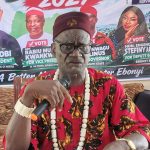
The call was made by the Branch Chairman, Dr. Choji Vincent, in Jos during a press briefing. The chairman, flanked by his officials, past chairmen, and members, frowned at the government’s failure to inaugurate the implementation monitoring committee expected to facilitate the agreement.
According to the chairman, implementation has been hindered and characterised by varying degrees of distortion across federal and state universities in the country. The union has observed with great concern the selective payment of salary components of the agreement, including the Consolidated Academic Allowance. Other allowances include Earned Academic Allowances (EAA), Professional Allowances (PA), and Responsibility Allowances.
- Advertisement -

While some universities have implemented two or three of these allowances, others have yet to commence implementation due to the inability of the federal and state governments to provide funds.
Some state governments argue that the agreement is only between the federal government and ASUU, whereas both federal and state governments participated in the process that culminated in the signing of the agreement.
ASUU commended two state universities in the country for setting the pace in the implementation of the agreement: Sa’adatu Zungur University, Bauchi, and Ekiti State University. The union urged other universities to key into the implementation to avoid industrial disharmony.
On the unilateral decision of the federal government to establish the National Research and Innovation Development Fund (NRIDF), the union stated that its frantic efforts with the government renegotiation team led by Yayali Ahmed to sort out all outstanding entitlements of lecturers before the conclusion of the December 2025 agreement were unsuccessful.
These include the 25/35 percent wage award, arrears of promotion, remittance of third-party deductions, salary shortfall arising from the Integrated Payroll and Personnel Information System (IPPIS) platform, and the three-and-a-half months’ salary arrears during the 2022 strike action. The work the government argued was not done during the strike has since been completed and students have graduated. Lecturers carried out research and community engagements throughout the strike period, and no country can thrive when the welfare of its academics is left unattended.
The chairman further stated that withholding lecturers’ emoluments on account of “no work, no pay” is tantamount to reducing scholars to menial workers whose livelihood is calibrated by physical appearance at their work site.
He also decried the abandonment of retired colleagues, especially from state-owned universities, whose pensions have run into arrears of many years. The union lamented the inhumane treatment of these retired colleagues.
On the mother tongue policy, ASUU condemned in strong terms the Minister of Education’s reversal of the policy in favour of English language instruction in early childhood education.
The union described it as retrogressive and vowed to resist the reversal, insisting that using local languages for instruction is standard practice in technologically advanced nations.
The chairman also expressed concern over the political climate, which is posing an existential threat to Nigeria and Nigerians—from politics to the economy, social welfare to security.
The situation is getting out of hand, with no hope that it will improve. As activities for the 2027 general elections begin, the political atmosphere is becoming increasingly tense, and ordinary citizens are at the mercy of politicians who have reduced them to miserable subjects.
The press briefing included a question-and-answer session, particularly on the timeline the union is giving the government to fully implement the agreement and on peculiar issues and demands from PLASU.
The union is also demanding improved working conditions in the university, such as electricity, water, internet facilities, and security.
The chairman appreciated the management and state government for their efforts toward the development of the university but frowned at the level of communication between the management and the union, especially the query issued to their secretary who delivered the union’s congress resolutions to the management. The management raised 16 charges against the secretary.
“We have confidence in him, and we are solidly behind him,” the ASUU chairman said.
The atmosphere was characterised by solidarity songs from the union.
(DEMOCRACY NEWSLINE NEWSPAPER, MAY 27TH 2026)