




“PROSPERITY BEYOND PAYCHEQUE: RE-IMAGINING THE IDOMA FUTURE”
PRESENTATION AT THE IDOMA CENTENARY LECTURE SERIES ON 30 MAY, 2026
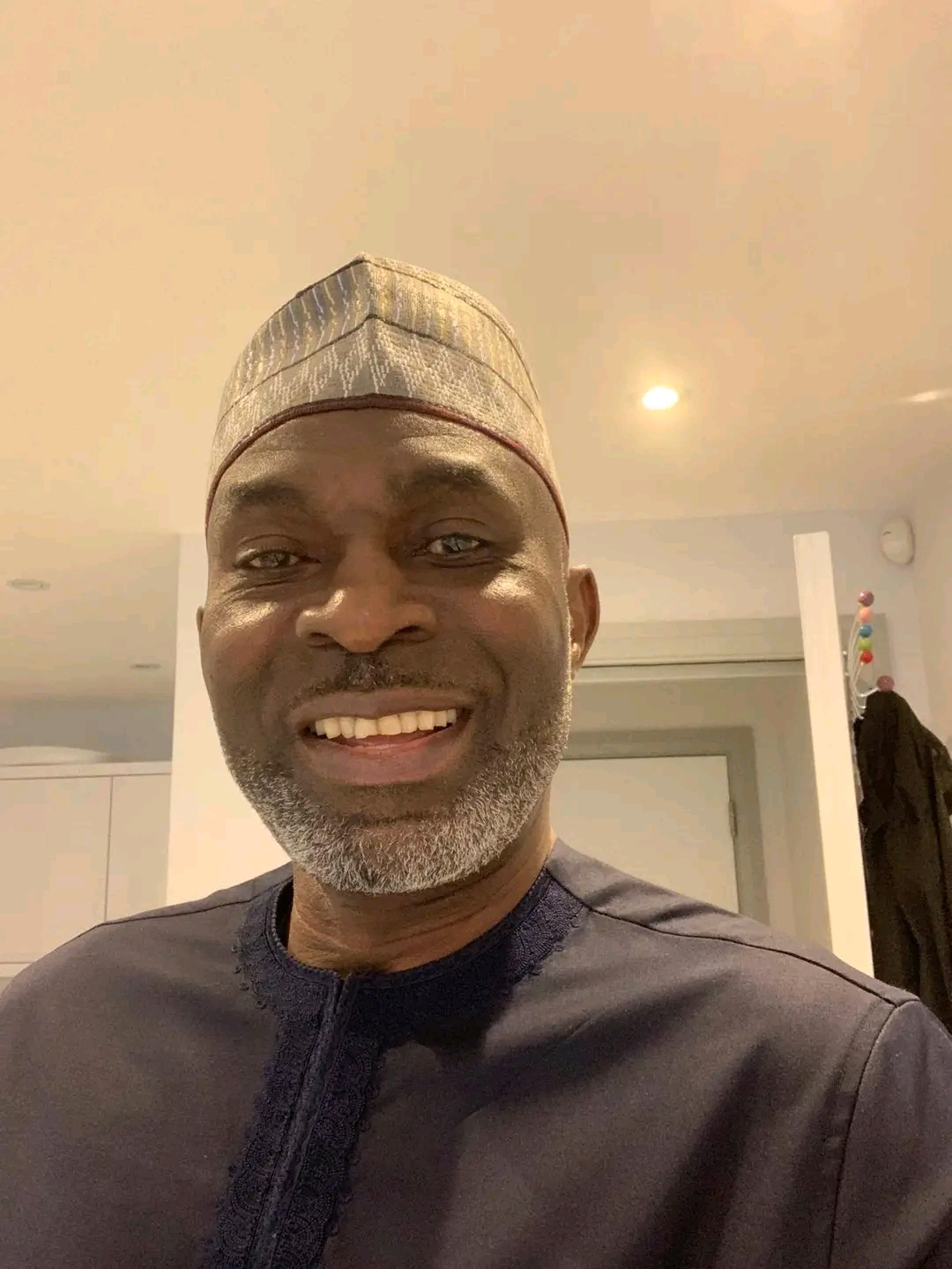
BY JOHN OFUTU, PhD
1. Distinguished elders, respected members of the Idoma community, ladies and gentlemen.
2. Let me begin by expressing my sincere appreciation to the organisers of this event for the honour of having me on this very important panel. I am deeply honoured and humbled at the same time.
3. To be honest, I am not entirely sure how I came to be here – because there are so many other outstanding Idoma sons and daughters with extraordinary achievements in various fields to choose from. So, why me?
- Advertisement -

4. The only answer I can think of is that perhaps my life journey — with all of its struggles, setbacks, reinventions and eventual relative successes — may have caught attention and it is hoped that the story of that journey may help to inspire others. As such, I can think of no better way to contribute to this conversation than to tell my personal story.
5. For this reason, I would hope that our interaction here would be less about theories and more about lived experiences, particularly those experiences that hold out lessons for empowering our younger generation, both at home and in the diaspora.
6. In terms of career, my journey began shortly after graduation in 1983. Like most young people of my generation, I was raised within an educational culture that made us to believe that success followed a predictable path – go to school, obtain good qualifications, secure respectable employment, preferably in the civil service, the military, academia, banking or in any of the professions regarded as prestigious. That was the dream sold to us.
7. Unfortunately, by the time I graduated, Nigeria had started to change. The economy was undergoing difficulties. Merit had begun to compete with influence and patronage. Suddenly, qualifications alone were no longer enough. Many talented and promising young graduates found themselves locked out of opportunities despite doing everything “right.” I was one of those.
8. So, despite my best efforts, I was unable to secure meaningful government employment. Like many young Nigerians of that era, I became trapped in that painful transition. For a young graduate filled with ambition and hope, it was deeply confusing, in fact, frustrating.
9. I did not remain idle. I got myself a job as a secondary school teacher here in Otukpo before moving on shortly after as an Assistant Lecturer at the College of Education in Katsina-Ala. I genuinely loved teaching, and I would have stayed back to make a career in academia, but I found the environment uninspiring. Deep inside me, there was a strong impulse for more.
10. The defining moment came in 1987 with the introduction of the federal government’s Entrepreneurship Development Programme (EDP). This was the initiative by the governmentof the day to address graduate unemployment by providing young graduates with small start-up loans after a two-week intensive entrepreneurship training programme.
11. Looking back, I still believe the idea of the EDP itself was visionary – because, perhaps, for the first time, government was indirectly telling graduates: Do not merely seek employment; create it. That message changed my thinking forever.
12. I threw myself into the programme, becoming elected as the pioneer state Chairman of the Nigerian Association of Small Scale Industrialists (NASSI). Soon, however, my growing involvement in the activities of NASSI started to attract the negative attention of my employers, leading to a formal query. Rather than retreat, I made what was a definitive but profoundly frightening decision: I resigned my appointment.
13. At that point, there was no longer any illusion of security in government job.My future was now entirely in my own hands. I had no choice now but to channel my entire energy into business, and that was how my first business, Futwalk Fashion, was born.
14. Unfortunately, the changing economic climate only got worse. This was the time of the Structural Adjustment Program (SAP) of the IBB regime. The Naira was weakening. Inflation was rising. Access to capital was drying up.
15. Again, I tried my best in those circumstances, even attending an international trade fair all the way in Zambia under the auspices of the Nigeria Export Promotion Council(how I did this is a story for another day). Much as I tried, it became increasingly clear that the unfolding reality demanded financial resources and structural support far beyond my reach. The diaspora beckoned!
16. Drawing upon political economy studies during my undergraduate days, I took a long and sober look into the future and came to the conclusion that if I truly wanted to unlock my potentials, then I needed to leave Nigeria. That was how my diaspora journey was conceived. With the benefit of having been to the U.K. on summer holiday in 1982, the decision of where was easy to make.
17. I emigrated to the U.K. in 1988. On getting to the UK, and against the immediate backdrop of my experience in Nigeria, I chose to go into the hair grooming business, picking up a job as a barber. Yes, barber! Some people might have regarded such a job to be beneath them, especially after university education. But, I had already developed an important liberating principle – that is, no honest work is beneath a determined person.
18. Within a few years, I was able to establish my own barbering business and employ other barbers to the bargain. What began as a modest venture eventually became the foundation upon which I built a much broader entrepreneurial journey.
19. I didn’t stop there. As I got to understand my host environment better, I went back into education. This time, though, it wasn’t just to acquire more qualifications for job purposes. It was to acquire the requisite knowledge and skills to get into an industry I had researched to hold enormous potentials for business – the social care industry.
20. I completed the professional program in social work and went on to complete a doctorate via a studentship I won purely on merit. The early beginning in teaching was still pulling me towards academia, so I got a postdoctoral fellowship thereafter. But, I didn’t stay; I left to set up business in the care industry. Over the years, through perseverance, continuous learning and diversification, my journey evolved into what I am today
21. But, make no mistake. The diaspora is not a walk in the park. Many people think that once you arrive in London, success automatically follows. This is far from the truth. There are many struggles that lie beneath the veneer – the loneliness, the racism, the cold weather, the emotional isolation, the identity struggles, etc. In the diaspora, there is nothing like vicarious success. It’s all about what you can achieve by your own efforts.
22. Notwithstanding, I still think the diaspora offers great opportunity for personal development if approached with diligence and business-like methodology. One of the greatest lessons of the diaspora is perspective. It teaches humility. It teaches discipline. It teaches accountability. It teaches systems and structure. Above all, it teaches that success is earned rather than bestowed.
23. This new perspective can initially be difficult for new immigrants, especially those coming from status driven countries like Nigeria, but it can also be deeply liberating once you understand that value and substance matter more than appearance or form. Once you make this mental and attitudinal adjustment, then the sky becomes only the beginning.
24. Aside offering opportunities for personal development, the diaspora can also be a critical contributor to the home economy. For example, diaspora remittances to Nigeria are said to average $22 billion annually and contributing roughly 10-12% of GDP. To be sure, the Idoma are already a part of this phenomenal remittances, but there is scope for more.
25. Let me be clear. I am not encouraging illegal migration. I am not encouraging the sort of migration that involves dangerous journeys across the Sahara or the Atlantic. Rather, I am talking about well planned and properly funded migration via legal routes.
26. The constraint of space and the occasion has not allowed a more elaborate narrative of my story, but I have used aspects of it to make an important point to our young people -that is, there is dignity and power in enterprise. The young man who once struggled to secure employment in Nigeria eventually became an employer of labour in another country.
27. That transformation did not happen overnight. It came through resilience, humility, sacrifice, adaptability and a willingness to start small without allowing pride to stand in the way. As the Christian scripture says in Job 8:7, “Your beginnings will seem humble, so prosperous will your future be”(NIV)
28. This lesson is particularly important. It teaches that life may not always unfold according to the script society hands to you. You may study hard but still face disappointment. Importantly, though, disappointment is not the end of destiny. Delayed success does not mean failure. Sometimes life is simply redirecting you towards a path you never contemplated initially.
29. Which brings me to the rather troubling subject of how we measure success in contemporary Nigeria. One of the greatest challenges confronting us today is the unhealthy culture we have collectively come to normalise around power, status and success – the culture of what we celebrate, what we reward, and what we define as achievement.
30. Today, when prominent personalities are introduced at public events, they are often primarily identified by the government offices they have held or holding, usually prefixed by a string of titles. Very rarely do we ask deeper questions about what enduring value such people have created for ordinary people. Questions like how many jobs they created; how many young people they mentored; how many families they lifted out of poverty; and what enduring economic structures they left behind for future generations.
31. In the Nigeria of today, political proximity has become the dominant measure of success, amongst other get-rich-quick methods. Genuine wealth creators, innovators and private-sector builders are too often overlooked unless they also hold political office. This inversion of values is dangerous for any society – because young people take on the values that society celebrates.
32. Please don’t get me wrong. I am not saying that politics or public service is bad in itself. No, it’s not. We need honest, competent and visionary leaders in government. Only that government alone cannot develop a people economically. What government does is to provide the right regulatory environment for business to thrive.
33. This is where I believe we need a cultural reset. It is my view that we are too dependent on government and too obsessed with status, titles and power. We need a new thinking; the thinking that will reinvent us into recognising enterprise as the pathway to sustainable economic prosperity.
34. To Idoma young people, I say please do not build your future solely around the hope of political patronage. Do not measure success purely by visibility, convoys or proximity to power. Instead: build capacity; build skills; build integrity; build networks; build discipline; build businesses; build independence.
35. We must stop teaching our children — directly or indirectly — that government is the only place where success lives. Otherwise, we risk creating generations of frustrated young people chasing political access instead of productive endeavour. By so doing, we risk turning them into beggars, bandits or thugs for desperate and unscrupulous politicians.
36. That is the mindset shift I believe the Idoma nation urgently needs if the next hundred years are to be better than the last. The future of our people cannot and should not depend solely on appointments from Abuja or Makurdi. It must increasingly depend on what we are capable of building by ourselves.
37. As we celebrate one hundred years of the Idoma nation, we must honour not only our political and public sector elites, but also our business operators. We must look back to honour the unsung but heroic pioneers of enterprise across Idoma land. Ditto for those now boldly but quietly making us proud at varying levels in various business sectors.
38. To be clear, I am by no means suggesting mutual exclusivity between government employment and business. No, it’s not a binary of either one or the other. Rather, I am making a case for prioritising the latter over the former, not least because, those government jobs that shaped our public sector mentality in the first place have all but disappeared.
39. Nothing in the foregoing should be misconstrued as running down the country of my birth. I am a proud Idoma. Rather, it’s to highlight the enormous benefits of the road so far less traveled – the road of business generally and that of the diaspora in particular. There are vast but untapped resources in various areas to explore – vocational skills, education, agricultural value chain, minerals, music, entertainment, etc.
40. In closing, I return to the starting point. You have heard my story. For me, it’s the story of an ordinary guy who simply refused to give up against the odds. It’s a story of perseverance. I believe it’s that perseverance that gave me the recognition to earn a place on this panel today.
41. I genuinely believe the Idoma have the capacity not merely to survive in this modern world, but to lead in it.
42. Thank you very much, and may God bless the Idoma nation.
*John Ofutu, PhD, lives in the United Kingdom*
DemocracyNewslineNewspaper November 18th, 2026