





Sultan Unveils EasyZakat App as Stakeholders Advocate Technology-Driven Zakat for Poverty Reduction
Abuja, Nigeria.
By Our Reporters
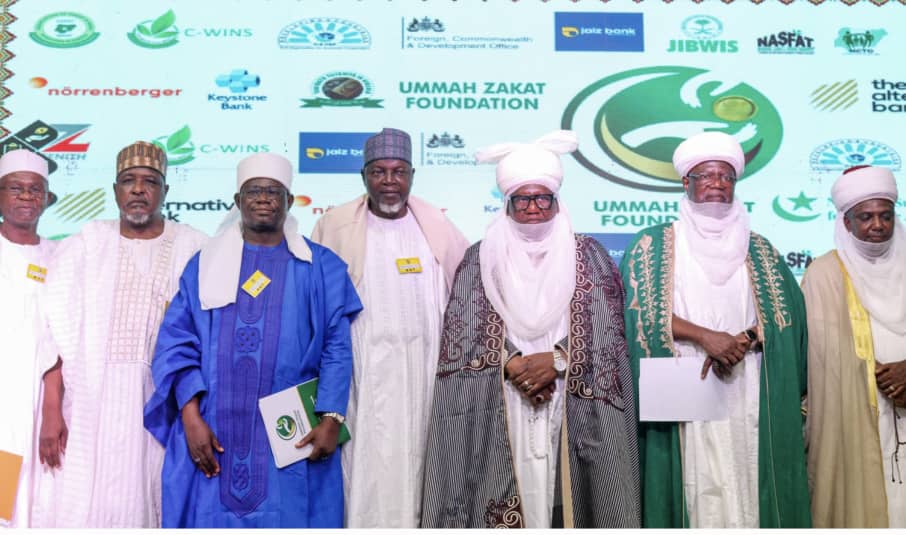
The Ummah Zakat Foundation (UZF) has officially launched the EasyZakat App, a digital platform designed to improve the transparent collection and distribution of Zakat, while inaugurating its Board of Trustees at a ceremony attended by religious leaders, government officials, development partners and representatives of the diplomatic community in Abuja.
The event marked a significant step towards leveraging Islamic social financing to support poverty reduction, improve healthcare, strengthen livelihoods, and contribute to human capital development across Nigeria.
The EasyZakat App was officially unveiled on behalf of the Sultan of Sokoto and President-General of the Nigerian Supreme Council for Islamic Affairs (NSCIA), His Eminence Alhaji Muhammadu Sa’ad Abubakar III, by His Royal Highness, Dr. Shehu Usman Chindo Yamusa III, CON, Emir of Keffi.
Delivering the Sultan’s address, the Emir described Zakat as “not merely an act of charity” but a sacred obligation and a powerful instrument for social justice, wealth redistribution and protection of the vulnerable. He noted that the establishment of the Ummah Zakat Foundation comes at an important time as it aligns Islamic principles with modern technology to improve service delivery.
According to him, the EasyZakat web and mobile platform will enable Muslims to fulfil their religious obligation with greater ease, transparency and confidence that their contributions will reach those who are genuinely entitled to receive them. He further charged the newly inaugurated Board of Trustees to uphold integrity, accountability, sound governance and Shariah compliance in managing the Foundation’s activities, stressing that technology should strengthen, rather than replace, the values of justice and compassion.
The Chairman of the Ummah Zakat Foundation and Emir of Argungu, His Royal Highness Alhaji Samaila Muhammad Mera, CON, described the occasion as an important milestone in strengthening the institution of Zakat in Nigeria.
He explained that while Zakat remains a religious obligation, its impact depends largely on public confidence in how contributions are managed. He said the EasyZakat platform was designed as more than a payment application.
“It is a governance, transparency and accountability platform,” he said.
According to the Chairman, the platform allows donors to securely calculate and pay their Zakat, track every donation from the point of contribution to the beneficiary, access their donation history through a personalised dashboard and retrieve records for institutional reporting or tax purposes where applicable. These features create a clear digital trail that improves accountability and strengthens public confidence in Zakat administration.
He added that the Board would complement the technology with strong governance systems, beneficiary verification, financial oversight, Shariah guidance and regular reporting to ensure every donation entrusted to the Foundation is managed responsibly. He called on Muslims, philanthropists, financial institutions, development partners and government to support the initiative, noting that properly managed Zakat, Sadaqah and Waqf can reduce poverty, empower women and young people, support widows and orphans, improve access to education and healthcare, and help vulnerable families become self-reliant.
In his keynote remarks, the Minister of Budget and Economic Planning, Senator Abubakar Atiku Bagudu, welcomed the initiative and encouraged the Foundation to work closely with existing government poverty alleviation and social protection programmes to maximise impact.
The Minister stressed the importance of expanding implementation beyond urban centres to rural and hard-to-reach communities where poverty remains most severe. He noted that integrating the Foundation’s work with government programmes would strengthen national efforts to improve the welfare of vulnerable Nigerians and ensure that Zakat reaches those who need it most.
Earlier, the Global Director of the D-8 Health and Social Protection Programme, Dr. Ado Jimada Gana Muhammad, OON, said the vision behind the Ummah Zakat Foundation is to leverage innovative Islamic financing mechanisms, particularly Zakat, to improve the health, wellbeing and livelihoods of poor and vulnerable Nigerians.
He explained that the Foundation seeks to draw lessons from D-8 member countries, including Malaysia, where organised Zakat administration has become an effective tool for poverty alleviation, social protection and sustainable development. According to him, Nigeria has the opportunity to adapt similar models by combining technology, accountability and strong partnerships to unlock the full development potential of Islamic social financing.
A major highlight of the event was the inauguration of the Foundation’s Board of Trustees, who were formally inaugurated to provide strategic leadership, governance, oversight, transparency and accountability for the Foundation.
The Board comprises:
HRH Alh. Samaila Muhammad Mera, CON – Chairman
Dr. Nihinlola Mabogunje – Member
Sheikh Dr. Ibrahim Jalo Jalingo – Member
Honourable Mustapha Umar Kunshe – Member
HRH Alh. Isiaq Ayorinde Ajibola – Member
Mrs. Umma Ayuba Musa – Member
Dr. Jibril Abdullahi Salaudeen – Member
Dr. Ado Jimada Gana Muhammad, OON – Member
Professor Mahfouz A. Adedimeji – Member
Dr. Mahmud Mustapha Zubair serves as Secretary to the Board.
The ceremony concluded with the official unveiling of the EasyZakat App, an innovative digital platform developed to provide secure, transparent and seamless collection, management and distribution of Zakat. The platform enables donors to calculate their Zakat obligations, make secure payments, monitor the utilisation of their contributions and strengthen accountability in Zakat administration.
Stakeholders at the event expressed optimism that the initiative would contribute significantly to expanding access to Islamic social financing, supporting vulnerable households and strengthening national efforts to reduce poverty while improving health, education and livelihoods across Nigeria.
- Advertisement -
(DEMOCRACY NEWSLINE NEWSPAPER 7TH AUGUST, 2026)