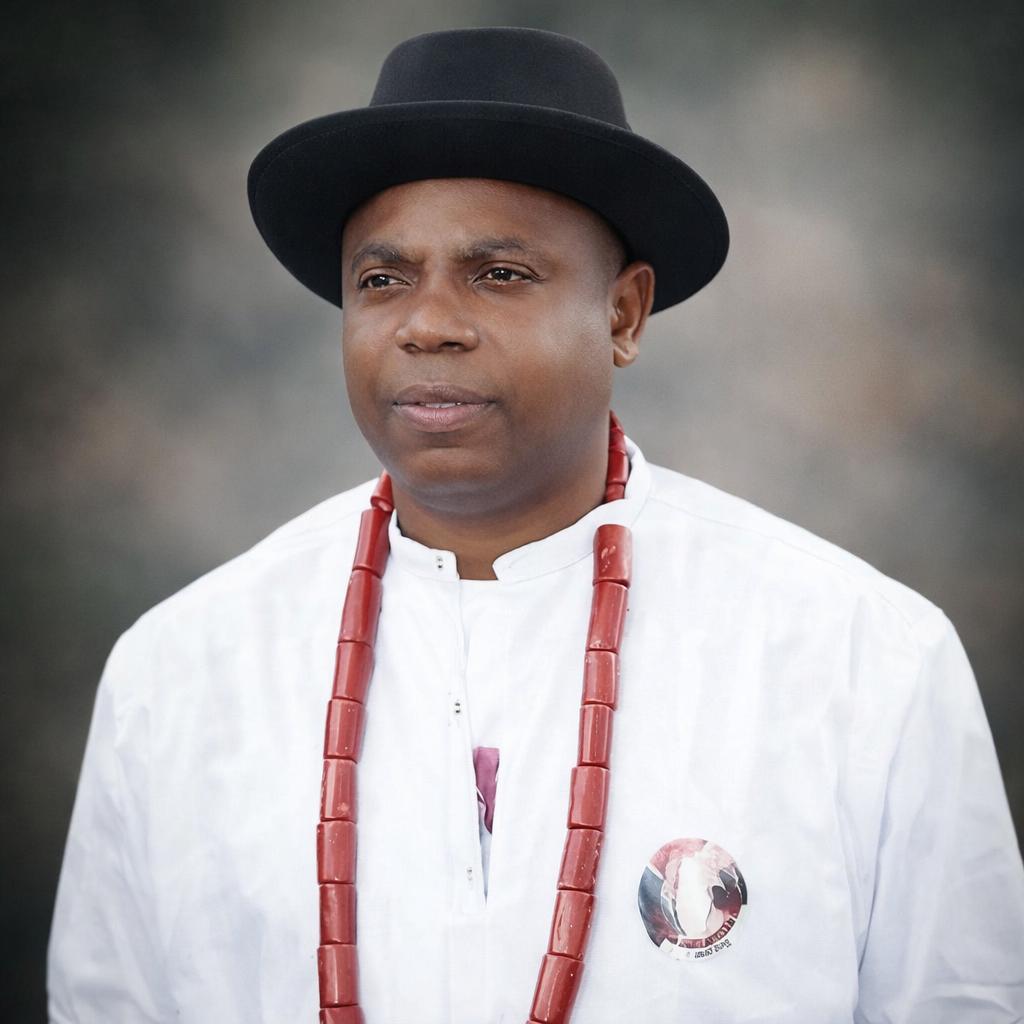

THE LAW OF UNINTENDED CONSEQUENCES BY DR. AUSTIN ORETTE
There comes a point in the life of a nation when citizens stop asking whether the government has good intentions and begin asking a much more fundamental question:
What are the consequences of the decisions being made in our name? That question is becoming increasingly urgent in Nigeria.
The price of petrol is rising. The cost of transportation follows. The cost of moving food follows. The cost of running businesses follows. And eventually, the ordinary family discovers that almost everything has become more expensive.
- Advertisement -
This is the Law of Unintended Consequences. A decision may begin in one sector, but its consequences travel through the entire economy. And this is precisely why policy reversal—such as the removal of fuel subsidy—must be carefully calibrated, properly sequenced and responsibly modulated so that the cure does not become another source of economic devastation.
Reforms may be necessary. But reform without a cushion for those who bear its immediate cost can become an economic tsunami.
Before any major policy is implemented, the government must ask a simple but profound question: Who will be affected, and what protection will be put in place for them? That is the essence of responsible governance.
You cannot claim to be saving Nigeria through policies that leave millions of Nigerians unable to afford food, transportation, healthcare and other basic necessities.
Without Nigerians, there can be no Nigeria. The purpose of economic reform must therefore be to strengthen the Nigerian people and the Nigerian economy—not to preserve abstract economic targets at the expense of human survival.
Leadership must develop empathy for those most affected by economic decisions. The government must not merely calculate revenue. The government must calculate human consequences.
When fuel rises, everything moves. Petrol is not merely something that goes into a vehicle. It moves people. It moves food. It powers businesses. It affects agriculture, transportation, logistics and the informal economy.
When the price rises dramatically, the trader pays more to transport goods. The farmer pays more to move produce. The manufacturer pays more for logistics. The commuter pays more to get to work. And the consumer ultimately pays for all of it. That is why the debate about petrol pricing cannot be reduced to economics on paper.
Behind every price increase is a Nigerian family trying to survive. The government must therefore look beyond the immediate policy objective and confront the wider consequences.
If a government removes a subsidy or reverses a major economic policy, it must simultaneously examine the likely impact on food prices, transportation, wages, small businesses, farmers, manufacturers and vulnerable households.
Reform must come with relief. Where the government knows that a policy will impose immediate hardship, it must build mechanisms that cushion the shock. Otherwise, the policy itself risks creating the very instability it was supposed to prevent.
Nigeria must also begin to demilitarize its approach to economic governance. For decades, Nigerians have sometimes been treated as subjects who must simply obey economic directives handed down from above. That mentality must change.
A democratic government must listen. It must consult the people. It must explain things to the people. It must measure consequences. And, where necessary, it must adjust.
Economic policy cannot be driven by command-and-control thinking alone. The Nigerian people are not numbers on a spreadsheet. They are workers, farmers, traders, entrepreneurs, parents, students, pensioners and young people trying to build a future.
Policies that affect their livelihoods must therefore be designed with human beings—not merely economic indicators—in mind.
We must move from economic coercion to economic consultation; from policy imposition to policy engagement; from punishment to protection; and from abstract statistics to measurable improvement in the lives of citizens.
We must also reject what can only be described as malnourished economic thinking—the belief that increasing taxes, charges and financial burdens automatically amounts to sound economic management.
Taxation has a legitimate place in every functioning economy. But taxation must be considered alongside the ability of citizens and businesses to pay.
When households are already struggling with high food prices, transportation costs, energy costs, school fees and medical expenses, imposing additional burdens without corresponding improvements in income, productivity and public services can deepen economic hardship.
A government should not simply ask: “How much more can we collect?” It should also ask: “How much more can Nigerians realistically carry?”
The objective should be to broaden economic activity, create jobs, encourage enterprise, increase productivity and expand the tax base—not simply to squeeze an already struggling population.
A productive economy produces more taxpayers. A distressed economy produces more desperation. There is perhaps no clearer example of a system producing devastating consequences than Nigeria’s healthcare financing.
The World Health Organization reported that household out-of-pocket spending accounted for about 72% of current health expenditure in Nigeria in 2023, while WHO health-system analysis continues to identify high out-of-pocket spending as a major source of catastrophic and impoverishing health expenditure.
Think about what that means. A mother takes her sick child to the hospital. The family must find money for consultation, laboratory tests, drugs, transportation and perhaps admission.
For millions of Nigerians, illness is not only a medical emergency. It can become an economic emergency. This is unacceptable in a country with enormous human and natural resources.
As a medical doctor, I cannot look at this reality and remain silent. Healthcare must cease to be treated as an item that governments remember only when campaigns begin or when crises occur.
We need stronger primary healthcare centres, functional hospitals, accessible emergency care, better support for medical personnel and a health-financing system that protects families from being impoverished simply because someone falls sick.
The people of Delta South know what it means to contribute to the Nigerian economy. Our communities have resources. Our people have talent. Our young people have ambition. Our medical professionals, entrepreneurs, farmers, traders, artisans and workers possess the capacity to build prosperous communities.
Yet the question remains: Why should communities with such enormous potential continue to struggle with inadequate infrastructure, economic hardship and gaps in essential services?
This is where representation matters. A Senator should not be a ceremonial title. The Senate is where legislation is made, national policies are debated, public spending is scrutinized and the interests of constituencies should be brought forcefully into the national conversation.
The Law of Unintended Consequences should also remind politicians of something else: The public office has consequences. Every law passed affects somebody. Every budget approved affects somebody. Every policy ignored affects somebody. Every failed institution has a human cost. Therefore, those seeking elective office must be prepared to answer not only for what they promise, but for what they intend to do with the authority entrusted to them.
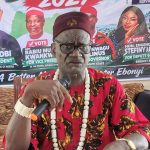
AUSTIN ORETTE WRITES FROM OZORO, HEADQUARTERS OF ISOKO NORTH LOCAL GOVERNMENT AREA.
DemocracyNewslineNewspaper September 23, 2026