






University of Jos Community Shower Encomiums on Prof. Sati Fwatshak as He Launches Book, Delivers Inaugural Lecture
By Peter Azi – Jos
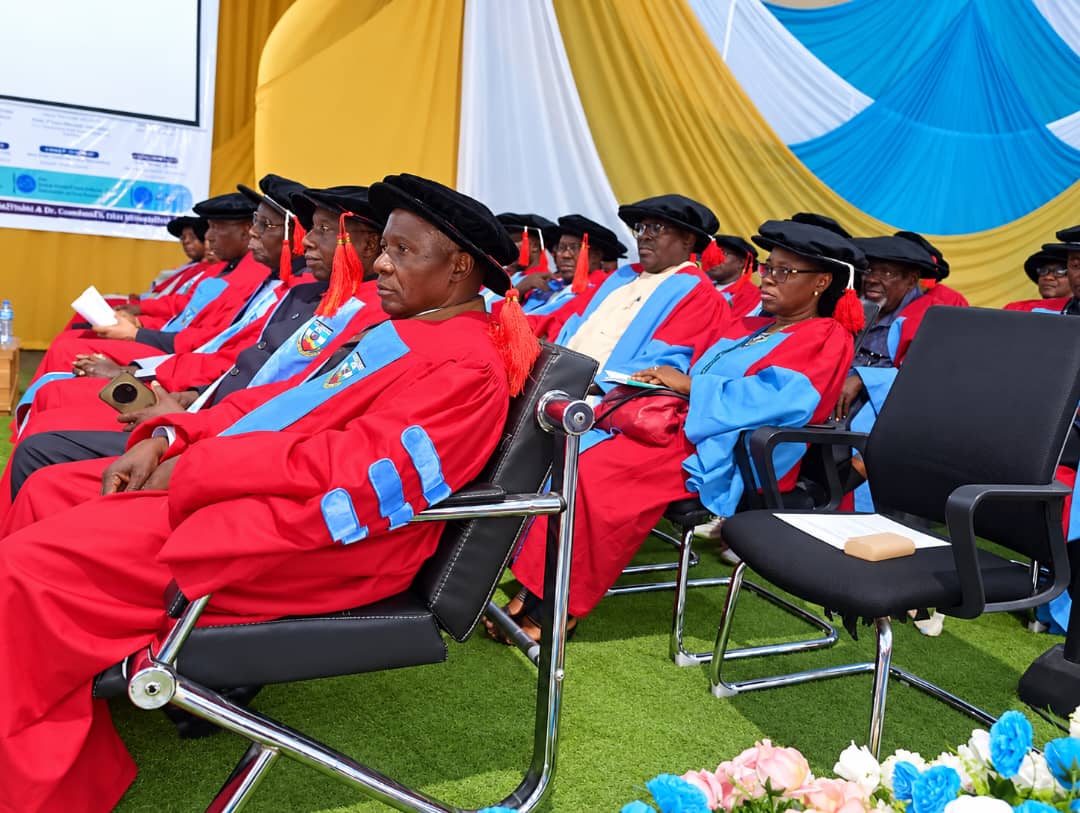
The University of Jos community, alongside distinguished personalities from various walks of life, on Thursday gathered to celebrate a renowned Professor of African Economic and Social History, Prof. Sati Umar Fwatshak, during his book launch and the university’s 133rd Inaugural Lecture Series.
The event attracted prominent academics, political leaders, government officials, colleagues, students and well-wishers, who took turns to shower encomiums on the celebrated professor for his outstanding contributions to scholarship, mentorship and academic development.
In a goodwill message delivered through his representative, Prof. David Wanang, Senator Diket Plang, who represents Plateau Central Senatorial District, described Prof. Fwatshak as a brilliant and impactful academic whose contributions have positively influenced society.
- Advertisement -


Similarly, Senator Gyang Dachung, through his representative, Prof. Tanko Shut of the Department of Political Science, Plateau State University, described the inaugural lecturer as a mentor and an accomplished teacher of great reputation.
Other goodwill messages came from the Commissioner for Urban and Rural Development, Taraba State, Dr. Emmanuel Lowsan, and the Plateau State Commissioner for Women Affairs, Hon. Caroline Dafur, represented by Kim Jerry Bot. Both representatives showered accolades on the author, commending his positive impact on the academic environment and society.
Prof. Lazarus Maigoro, Provost of the College of Education, Gindiri, alongside some of Prof. Fwatshak’s mentees, described him as a humble, approachable and easygoing personality who has remained committed to nurturing younger academics.
In his remarks, the Chairman of the occasion, Prof. Monday Mwanvat, a former Vice-Chancellor of the University of Jos, expressed gratitude to God for being alive to witness what he described as a unique and memorable occasion.
The Chairman of the Academic Staff Union of Universities (ASUU), in his congratulatory message, described Prof. Fwatshak as an altruistic, benevolent and compassionate individual whose life and academic career exemplify selflessness and commitment to humanity.
Earlier, in his opening remarks, the Vice-Chancellor of the University of Jos, Prof. Tanko Ishaya, explained that the inaugural lecture was an integral part of the university’s academic activities and longstanding traditions.
He observed that despite Africa being endowed with approximately 30 per cent of the world’s mineral resources, the continent continues to grapple with poverty and underdevelopment.
The Vice-Chancellor further expressed concern over the circumstances surrounding the exploration of mineral resources in Nigeria, noting that the manner in which communities and their people are affected by the quest for mineral wealth remains worrisome.
Delivering the inaugural lecture titled “The Drift, Certainty and the Lineages of Hope: Contemporary Africa in the Throes of Greed and the Making of Resilient Citizens,” Prof. Fwatshak examined the challenges confronting Africa and why the continent’s enormous potential has yet to translate into sustainable development and prosperity for its people.
He recalled that in the 1960s, Africa was projected to grow faster than Asia. Similarly, in the 1980s, the Bretton Woods institutions projected that African economies would experience significant growth through the implementation of the Structural Adjustment Programme. However, the reverse was the case, as poverty continued to increase across the continent.
The professor attributed Africa’s development challenges to two major schools of thought: the historical school of thought and the internalist school of thought.
According to him, the historical perspective examines the structural damage inflicted on Africa through historical experiences, particularly the trans-Saharan and transatlantic slave trades, while the internalist perspective focuses on the role of contemporary Africans and their responsibility for the continent’s present challenges.
He explained that the internalist school comprises younger Africans who did not experience colonialism firsthand and therefore question the tendency to attribute the continent’s underdevelopment solely to colonialism.
Prof. Fwatshak further disclosed that about 88 per cent of the poorest countries in the world are in Africa, stressing that many African nations remain heavily indebted, with Egypt among the leading countries in terms of debt exposure.
He lamented that several African countries spend a substantial proportion of their national revenues on debt servicing, leaving limited resources for critical development projects and social infrastructure.
The inaugural lecturer also decried the high level of greed among African leaders and followers, identifying selfish leadership, poor governance and the pursuit of personal interests as major obstacles to the continent’s progress.
Reflecting on the historical consequences of slavery, he stated that approximately 20 million Africans were taken away through the trans-Saharan slave trade, while another 30 million were reportedly taken through the transatlantic slave trade.
He added that the abolition of the international slave trades did not completely end slavery, as domestic slave practices persisted in parts of Nigeria, particularly in the Niger Delta and the Sokoto Caliphate, where people were captured from areas of the North-Central region and deployed as labourers on farms.
He emphasised the need for Africans to confront the historical and contemporary factors responsible for the continent’s challenges while promoting responsible leadership, accountability, intellectual development and resilient citizenship.
In keeping with the university’s tradition, the Vice-Chancellor presented a commemorative plaque and a gift to the inaugural lecturer in recognition of his scholarly contributions and successful delivery of the 133rd Inaugural Lecture.
The Department of History and International Studies also presented a gift to Prof. Fwatshak in honour of his remarkable academic achievements and contributions to the university community.
The event was marked by tributes, intellectual reflections and renewed appreciation of Prof. Fwatshak’s contributions to academia and the development of future generations of scholars.
DemocracyNewslineNewspaper October 30th, 2026