


WHEN A ROYAL FATHER BECOMES A FATHER
Beyond the Crown, the Throne and the Traditional Institution
An Appreciation Rooted in Principle, Fairness and the Common Good
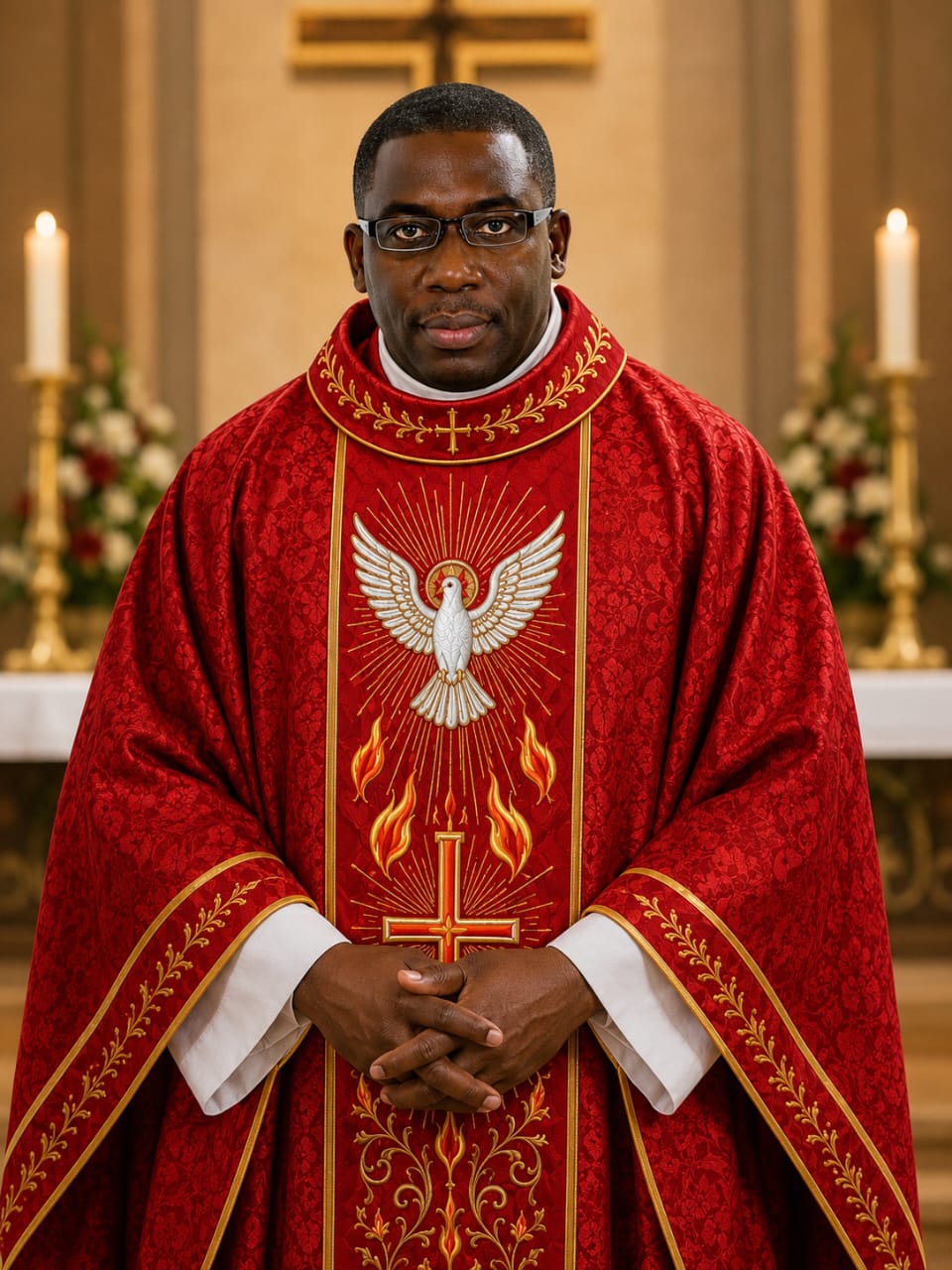
Fr Kunle Dukiya
- Advertisement -

There are moments when leadership transcends titles, positions, protocol and ceremonial responsibilities. In such moments, the true character of a leader is revealed, not by the authority he exercises or the privileges attached to his office, but by his willingness to intervene when human life, peace and the future of a community are at stake.
Recently, we found ourselves confronted with an extremely grave and delicate situation involving three persons who had been arrested and charged in connection with allegations of murder and culpable homicide. The potential consequences were devastating, including the possibility of life imprisonment.
The arrests followed a petition submitted by the aggrieved family and their tribal group. Subsequent investigation raised serious questions about the evidential basis of the allegations, particularly the reliance on circumstantial evidence that had not been substantiated. The situation was further compounded by procedural ignorance and negligence on the part of the accused persons, as well as ill-advised counsel from a critical sector.
It was a situation that demanded urgency, tact, diplomacy and the mobilisation of every available contact. Beyond the legal implications, there was an overriding concern for human life, the possibility of further tragedy, the protection of innocent persons and the need to prevent a situation that could destroy lives and families.
One of the critical connections we considered necessary was a Royal Father. We reached out to him, and his response was remarkable.
It took just one telephone call for him to swing into action. He immediately initiated contact and convened a meeting between the parties, creating an opportunity for dialogue and a peaceful resolution. His intervention went far beyond convening a meeting. He personally arranged the transportation of the aggrieved family and the complainants to Lokoja, and secured hotel accommodation for them so that an early meeting could hold and the matter receive the urgent attention it deserved. Throughout the process, he remained actively involved, monitoring developments and offering whatever additional assistance was required.
Through Alternative Dispute Resolution (ADR), the parties eventually reached a peaceful settlement. The aggrieved family and their tribal group formally withdrew the petition that had initiated the matter and expressed their desire not to pursue it further.
Importantly, the resolution was neither an informal arrangement nor an attempt to circumvent the law. The agreement and resolutions reached by both parties were formally documented in court, and an affidavit was issued in support of them. The process was conducted transparently in the presence of the legal counsels of both parties, the police and State Counsel. All applicable legal requirements were fulfilled. The formal disposition of the matter, of course, remains subject to the applicable legal process, since the withdrawal of a petition and the documentation of a settlement do not by themselves automatically terminate criminal proceedings.
This was a significant outcome. A situation that could have resulted in prolonged criminal proceedings, enormous financial and emotional burdens, damaged relationships and further communal hostility was brought to a peaceful resolution through dialogue, responsible intervention and appropriate legal process.
What impressed us most was the swiftness of the Royal Father’s response, his commitment, his patriotism and his willingness to take personal responsibility for a situation with potentially devastating consequences. This was not ceremonial leadership. It was leadership in action: a Royal Father deploying his authority, personal resources, influence and relationships in the service of humanity.
He did not merely wear the crown; he carried the burden of fatherhood.
An Appreciation Without Compromising Principle
It is common knowledge in our community of Oweland that, while I respect and hold in high esteem the traditional stool and the majesty of the Crown and the Throne, I do not share the same principles, approaches and procedural protocols with the current Royal Majesty. The differences between us are fundamental, and they are not negotiable.
My position is informed by my Christian values, my identity and responsibilities as a Catholic priest, and my conviction that I cannot see the truth and remain silent about it. Everyone who knows me understands where I stand on justice, fairness, truth, peace and the proper observance of social and cultural boundaries. I am uncompromising when it comes to doing things rightly, respecting established boundaries and upholding the values that sustain a decent and orderly society.
These are not positions I adopt for convenience, popularity or personal advantage. They are fundamental to my faith, my priestly vocation and my conscience. They are so dear to me that they have become my heartbeat, what I live for and what defines my religion. I stand firmly by them, and I am not prepared to compromise them.
Yet my disagreements with the Royal Majesty, and with the way he exercises traditional authority, do not make me blind to goodness wherever it is demonstrated. I can disagree with the Throne without becoming blind to the good that may come from it. I can maintain my convictions without allowing personal differences to prevent me from recognising an act of kindness, patriotism or responsible leadership.
My appreciation of this particular intervention should therefore not be misconstrued as an endorsement of every principle, policy, action or procedure associated with the Throne, nor as a withdrawal from the positions I have consistently maintained. I am not changing my position. I am not compromising my principles. I am simply acknowledging a good deed that deserves recognition.
Principle demands consistency, but fairness equally demands that we acknowledge goodness wherever we find it.
The Qualities of a True Royal Father
The traditional institution occupies an important place in the social, cultural and historical architecture of our communities. Its relevance, however, must continually be demonstrated through responsible leadership and service to the people. A Royal Father should embody certain fundamental qualities:
Fatherhood and Compassion. He must possess the heart of a father, genuinely concerned for the welfare of his people, particularly the vulnerable, the disadvantaged and those facing difficult circumstances.
Accessibility and Responsiveness. He should be approachable. His palace must not become so insulated by protocol that people in distress cannot reach him.
Commitment to Peace and Reconciliation. He should be a bridge-builder, able to bring opposing parties together, encourage dialogue and prevent disagreements from escalating into violence and avoidable tragedy.
Justice, Fairness and Impartiality. He must rise above personal interests, ethnic affiliations, religious sentiments, political considerations and family loyalties, so that his authority inspires confidence among all sections of the community.
Courage and Decisiveness. He must be prepared to intervene in difficult situations, make hard decisions and take responsibility when circumstances demand it.
Patriotism and Community Development. His influence, relationships and access to people in authority should be deployed towards the common good, community development and the protection of human dignity.
Humility and Selflessness. The crown should never become a barrier between the ruler and his people. It should remind him of the responsibility entrusted to him.
Integrity and Moral Authority. The respect accorded a traditional ruler should be sustained by honesty, consistency, transparency and personal conduct.
Respect for Diversity and Social Boundaries. He must recognise and respect the religious, cultural, social and political diversity of the community. Traditional authority should unite people rather than impose unnecessary divisions.
Political Neutrality and Statesmanship. The Throne should remain above partisan politics, providing a common meeting ground for people of different political persuasions.
These qualities transform traditional authority from a position of prestige into an institution of enduring social relevance.
The Responsibility of the Crown to Oweland
Beyond this particular intervention, I sincerely hope that the Throne will increasingly devote its influence and authority to matters that promote unity, goodwill, mutual respect and peaceful coexistence among the indigenes and visitors who constitute our community.
Oweland needs a traditional institution that serves as a rallying point for everyone, irrespective of political affiliation, religious persuasion, family background or personal differences. The Crown should be a symbol of unity, not division; of reconciliation, not antagonism; of inclusion, not exclusion. Our community must be able to look to the palace as a place where differences can be accommodated, grievances heard, peace negotiated and the collective interest defended.
The traditional institution must remain apolitical in disposition and statesmanlike in conduct. It should not become an extension of partisan political interests or a platform for settling personal scores. Its greatest value lies in its ability to bring people together, preserve communal identity, protect cultural heritage and provide moral leadership in times of uncertainty. I believe the Crown can play this role more effectively by deliberately cultivating an atmosphere of mutual respect, fairness, inclusion and peaceful coexistence.
A Good Deed Deserves Recognition
There is a popular local adage which says, in essence, that when a hoe has served the farmer exceptionally well, the farmer has a responsibility to clean it and sharpen its blade in appreciation of the good work it has done. I find this wisdom particularly relevant here.
When someone, irrespective of our differences, demonstrates commitment, performs a good deed or rises to an occasion in the interest of humanity, such an effort deserves recognition. We should not allow disagreements to make us ungrateful, nor should our convictions become an excuse for denying another person the recognition he deserves.
This intervention by our Royal Father deserves commendation. He responded when called upon. He mobilised his influence, committed his resources, facilitated transportation, secured accommodation, brought the parties together and remained available throughout the process. These are practical expressions of concern for human life and communal peace.
We commend him for this demonstration of fatherhood and encourage the Throne to build on this positive disposition. Our appreciation is sincere, but our principles remain intact. Our respect for the traditional institution remains, and so does our commitment to truth, justice, fairness and proper social conduct.
Conclusion: Royalty Is a Privilege; Fatherhood Is a Responsibility
A person may inherit a throne, receive a crown and enjoy the privileges of traditional authority. But becoming a father to a community requires something more: compassion, sacrifice, wisdom, courage, fairness and an enduring commitment to the common good.
The true worth of a Royal Father is not measured by the grandeur of his palace, the number of chiefs in his cabinet, the size of his entourage or the political personalities who pay him homage. It is measured by the lives he touches, the conflicts he helps to resolve, the vulnerable people he protects, the divisions he bridges and the hope he restores.
Our Royal Father has demonstrated one important dimension of this responsibility through his intervention in a difficult and potentially tragic situation. For this, he deserves our commendation. I sincerely hope it will be one of many occasions on which the Crown deploys its authority, influence and resources towards unity, goodwill, justice, mutual respect and peaceful coexistence in Oweland.
I remain who I am, guided by my Christian faith, my priestly vocation and my non-negotiable commitment to truth, justice and fairness. I will continue to speak where I believe truth demands a voice, just as I will continue to acknowledge goodness wherever it is demonstrated.
I may fundamentally disagree with the Royal Majesty on principles, approaches and procedures, but I will not deny the Throne its flowers when it does something worthy of appreciation.
That, for me, is the meaning of fairness.
The crown may confer royalty. The throne may confer authority. Tradition may confer recognition. But it is compassion, service and responsibility that confer fatherhood.
A Royal Father truly becomes a father when he understands that his people are not merely his subjects; they are his responsibility.
Long live Oweland.
Long live responsible traditional leadership.
Long live Royal Fathers who understand that the crown is a privilege, but fatherhood is a responsibility.
Fr Kunle Dukiya
DemocracyNewslineNewspaper November 13th, 2026