



2027: CAN INSECURITY DERAIL NIGERIA’S BID FOR A CREDIBLE ELECTION?
Security, displacement, poverty, unemployment and political tensions pose a formidable test for Nigeria’s democracy.
By Bala Salihu Dawakin Kudu
Northern Bureau Chief, Democracy Newsline
8th August 2026.
Nigeria is steadily moving towards another defining moment in its democratic journey.
The 2027 general elections will not merely be another constitutional exercise for choosing political leaders. They will be a major test of the country’s democratic resilience, the independence and capacity of the electoral commission, the professionalism of the security agencies and, ultimately, the willingness of Nigeria’s political class to put national stability above partisan ambition.
- Advertisement -
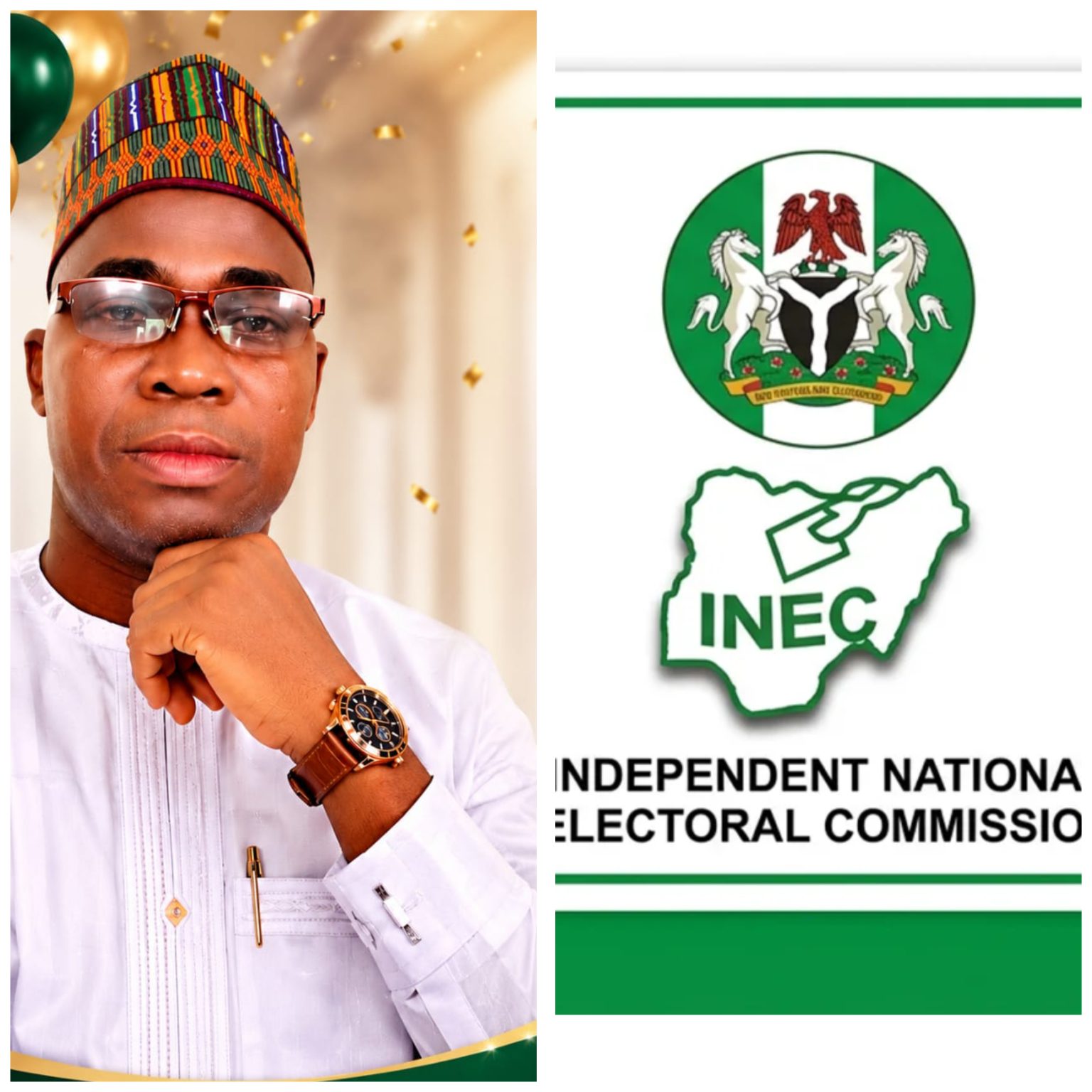
The Independent National Electoral Commission (INEC) has fixed 20 February 2027 for the Presidential and National Assembly elections and 6 March 2027 for Governorship and State House of Assembly elections, setting the country firmly on the road to another fiercely contested electoral season.
But as political parties position themselves for the contest, one question deserves much greater attention than the usual calculations over candidates, alliances and electoral arithmetic:
Can Nigeria guarantee that citizens in every part of the country will be able to exercise their constitutional right to vote without fear of being killed, kidnapped or intimidated?
That question is not simply a matter of electoral administration. It is inseparable from Nigeria’s security, economic and humanitarian crises.
The country is confronting several forms of insecurity simultaneously: the long-running insurgency in the North-East; banditry and mass kidnapping in parts of the North-West and North-Central; communal and farmer-herder violence; criminality and armed groups in parts of the South; and continuing unrest associated with separatist agitation in the South-East.
The European Union Agency for Asylum’s 2026 assessment describes Nigeria as facing multiple, concurrent security crises. It identifies Boko Haram-related conflict principally in Borno, Adamawa and Yobe, armed conflict involving groups in parts of the North-West and North-Central, continuing farmer-herder tensions, communal violence, widespread banditry and significant unrest in the South-East.
This is the environment in which Nigeria is preparing to conduct one of its most consequential elections.
Election security begins long before Election Day
There is a tendency to discuss election security as though it begins on the morning citizens arrive at polling units.
An election begins long before the ballot is cast.
INEC officials must reach communities. Electoral materials must be transported across roads and difficult terrain. Political parties must campaign. Candidates must travel. Security personnel must protect electoral officials and materials. Citizens must be able to register, collect their voting credentials, reach polling units and return home safely.
This is particularly important in rural communities where insecurity has already disrupted farming, education, transportation, markets and access to public services.
INEC has itself recognised the importance of early security planning and inter-agency coordination. The Commission’s 2026 electoral-security engagements have stressed cooperation among security agencies and other stakeholders as preparations for 2027 continue.
Election security cannot be an emergency operation improvised a few days before voting. It must be a national strategy developed months in advance.
Borno: The hardest test
Few states illustrate the security challenge more clearly than Borno.
The state remains at the centre of the insurgency that has devastated communities, displaced millions and disrupted economic and social life across the North-East.
The EUAA’s 2026 security assessment identifies Borno as the centre of the more than decade-long Boko Haram insurgency and records continuing activity involving Boko Haram and ISWAP, particularly in rural areas. Security incidents have been recorded across most of the state’s local government areas.
The electoral implications are obvious.
If insecurity persists in vulnerable rural areas as the election approaches, several questions will require credible answers:
Can electoral officials safely reach remote communities?
Can sensitive electoral materials be transported without interruption?
Can security agencies adequately protect polling units?
Will voters feel safe enough to leave their homes?
And perhaps most importantly:
What happens to citizens who have been displaced from their original communities?
These are not questions that Nigeria can afford to postpone until Election Day.
North-West: When the road to the polling unit becomes dangerous
The North-West presents another major challenge.
Zamfara, Katsina, Kaduna, Sokoto and parts of Kebbi have experienced persistent banditry, kidnapping and attacks on rural communities.
The consequences extend far beyond casualties.
Insecurity affects farming, livestock production, markets, schools, transportation and the ability of citizens to move freely between communities.
The EUAA’s assessment records particularly high levels of security incidents in Borno, Katsina and Zamfara during 2024–2025. It also identifies the North-West as one of the regions heavily affected by criminal violence and displacement.
Zamfara provides a particularly troubling example. EUAA reports that bandit groups have maintained significant influence in parts of the state, with communities facing attacks, abductions, extortion and forced displacement.
The electoral question is therefore not simply whether polling units exist.
It is whether citizens can safely reach them.
A polling unit may be physically present on an electoral map, but if residents are too frightened to leave their homes, the existence of that polling unit alone does not guarantee meaningful participation.
Kaduna and the wider security belt
Kaduna occupies a particularly sensitive position because of its geographical location and its links to several parts of northern Nigeria.
The state has experienced a mixture of kidnapping, communal tensions and armed attacks, while its roads connect communities across a region where insecurity can move quickly from one state to another.
This creates a logistical problem for election management.
Electoral officials do not operate in isolation. They travel through communities, use roads and depend on secure communication and transportation networks.
Where those networks are compromised, the electoral process itself becomes vulnerable.
This is why election security planning must look beyond individual polling stations and consider roads, bridges, communication systems, local government offices, collation centres and the wider security environment.
Kwara and Niger: The changing geography of insecurity
The expansion of kidnapping and armed criminality into parts of North-Central Nigeria should also concern electoral planners.
Niger State, Kwara and neighbouring areas occupy important geographical corridors connecting northern and southern Nigeria.
Where kidnapping and criminal activity affect major roads and rural communities, electoral logistics can become significantly more complicated.
This is particularly important because the movement of electoral personnel and materials is one of the most sensitive aspects of election administration.
A credible election cannot depend on taking unnecessary security risks.
Nigeria therefore needs detailed, state-by-state and local-government-by-local-government security assessments well before February 2027.
The North-Central region presents a different but equally serious challenge.
Benue and Plateau have experienced recurrent communal and farmer-herder conflicts, often intertwined with disputes over land, livelihoods, identity and religion.
The EUAA has documented farmer-herder violence and communal conflict in Plateau and other parts of the North-Central region.
The danger during an election period is that existing social tensions can acquire a political dimension.
A dispute that begins over land or resources can quickly be interpreted through ethnic, religious or partisan identities.
This is why political leaders have a particular responsibility in such areas.
They must avoid inflammatory rhetoric and resist the temptation to convert genuine grievances into electoral weapons.
No political victory is worth the destruction of communities.
Nigeria’s security conversation must not be reduced to the North.
Parts of the South-East have also experienced significant unrest, including attacks associated with separatist movements and other armed actors.
Citizens may decide that staying at home is safer than travelling to a polling station. Political campaigns may be restricted. Electoral officials may face difficulties reaching certain communities.
This creates a subtle but profound threat:
An election can take place legally while democratic participation is severely weakened by insecurity.
That distinction matters.
The question is not only whether voting technically occurred. The question is whether citizens genuinely had the freedom and security necessary to participate.
3.7 million internally displaced Nigerians: Who gets to vote?
Perhaps one of the most difficult questions confronting Nigeria ahead of 2027 concerns internally displaced persons.
According to UNHCR’s 1 July 2026 data, Nigeria had 3,711,314 internally displaced people, while the total forcibly displaced population stood at 3,837,954.
These are not merely statistics.
Behind every number is a citizen whose home, community or livelihood has been disrupted.
A voter who fled Borno for Abuja, Zamfara for Kaduna or Benue for another state may face a basic democratic dilemma:
Where does that person vote?
Can the voter safely return to the place where they are registered?
If returning is impossible, what arrangements will protect the person’s political rights?
This issue deserves urgent attention because displacement is not only a humanitarian problem. It is also a democratic-participation problem.
The Federal Government and development partners have begun efforts to create durable solutions for displaced communities. In February 2026, the governments of Katsina and Zamfara, with UNDP support, launched state action plans addressing durable solutions for internally displaced persons.
Such initiatives are important, but the electoral dimension of displacement must be incorporated into national preparations for 2027.
Poverty: Will voters choose policies or survival?
Security is not the only threat to electoral quality.
Economic hardship can also distort democratic competition.
Nigeria has made progress towards macroeconomic stabilisation, according to the World Bank, with inflation easing and economic growth remaining positive. But the same assessment warns that household incomes have not fully recovered and that poverty remains widespread.
The World Bank also notes that more than 3.5 million Nigerians enter the labour force each year, while job creation remains inadequate. It estimates that more than 60 per cent of Nigerians were living below the national poverty line in 2025 and says food inflation disproportionately affects poorer households.
These conditions have direct implications for democracy.
When families are struggling to afford food, transport, rent, education and healthcare, political promises can easily become transactional.
The question can shift from:
“Which candidate has the best policy?”
to:
“What will I receive if I support this candidate?”
This is fertile ground for vote buying.
The poor should not be blamed for this vulnerability. The responsibility lies with political institutions and leaders to create an electoral environment in which citizens are not forced to choose between immediate survival and independent political judgment.
Fighting poverty is therefore not merely an economic responsibility. It is also a democratic responsibility.
Nigeria’s youth: A democratic force or political weapon?
Nigeria’s young population will be central to the 2027 election.
Young Nigerians are among the most active participants in political conversations online. They are also among those most affected by unemployment, economic uncertainty and limited opportunities.
This creates both an opportunity and a danger.
Political parties can mobilise young people positively through civic participation, policy debate and peaceful campaigning.
But young people can also be exploited as instruments of political violence, intimidation, misinformation and online abuse.
The choice belongs partly to political leaders.
Nigeria must reject the culture of recruiting unemployed or frustrated young people as political foot soldiers.
Young Nigerians are not expendable political weapons. They are the custodians of the country’s future.
Government and opposition: Can competition remain democratic?
As 2027 approaches, political competition will inevitably intensify.
The government will defend its record.
The opposition will attack its policies and present alternatives.
That is democracy.
The danger begins when political competition becomes hatred.
When political discourse degenerates into:
“us versus them,”
“North versus South,”
“Christian versus Muslim,”
or
“one ethnic group against another,”
the consequences can be devastating.
Nigeria is too diverse and too fragile to permit political disagreements to become communal warfare.
Political parties must compete on policies, leadership, economic performance, security, education and the future of the country—not on the basis of hatred or fear.
Disinformation: The invisible election threat
Another major threat may not come from guns at all.
It may come from mobile phones.
Nigeria’s 2027 election will take place in an environment where false information can spread across WhatsApp, Facebook, TikTok, X and other platforms within minutes.
An old photograph can be presented as a new attack.
An old video can be falsely attributed to another state.
A fabricated election result can trigger anger before citizens have an opportunity to verify it.
False claims about INEC, candidates or security incidents can create panic and undermine confidence in the electoral process.
This means journalists, broadcasters, religious leaders, traditional rulers, civil society organisations, technology companies and citizens themselves all have a responsibility.
Fact-checking must become part of election security.
A false rumour that sends frightened voters home can be as damaging to democratic participation as a physical threat.
Can technology alone save Nigeria’s elections?
Nigeria’s use of technology, including the Bimodal Voter Accreditation System, has changed the mechanics of electoral administration.
But technology cannot solve every problem.
A biometric device can authenticate a voter.
It cannot stop a gunman from attacking a polling unit.
A digital system can transmit information.
It cannot repair a road destroyed by insecurity.
A sophisticated electoral platform cannot substitute for public confidence.
This is why Nigeria’s electoral formula for 2027 must be understood as:
Technology + Security + Public Trust = Credible Elections
Remove any one of those elements, and the system becomes weaker.
The greatest danger may not be cancellation
Perhaps the greatest danger facing Nigeria is not that elections will be cancelled altogether in large parts of the country.
The greater danger is more subtle.
An election may take place, but millions of citizens may be unable to participate because of fear.
Imagine a country in which voters in relatively secure cities participate freely while residents of insecure rural communities remain indoors.
Technically, an election has occurred.
But democratically, a difficult question remains:
Does the result adequately reflect the will of citizens who were denied a realistic opportunity to participate?
That is the question Nigeria must answer before 2027—not after the results have been announced.
What must be done before February 2027?
The country still has time to reduce these risks.
But preparation must begin now.
First, election security must be mapped locally.
Security planning should go beyond states and examine individual local government areas, communities, roads and polling locations.
Second, INEC and security agencies must develop joint contingency plans.
Electoral officials need secure routes, emergency communication systems and alternative logistical arrangements for high-risk areas.
Third, displaced citizens must not become invisible voters.
The authorities must clearly communicate what legal mechanisms exist for displaced Nigerians and how their electoral rights will be protected.
Fourth, security agencies must remain politically neutral.
The credibility of an election depends heavily on public confidence that security personnel are protecting citizens and the electoral process—not particular candidates or political parties.
Fifth, political parties must sign and honour enforceable peace commitments.
Peace declarations are meaningless if political actors continue to encourage intimidation, ethnic hostility or violence.
Sixth, vote buying must be treated as a serious democratic crime.
Poverty must never become a licence for politicians to purchase the political choices of vulnerable citizens.
Seventh, Nigeria must invest heavily in information integrity.
Media organisations and civil society groups should establish rapid-response systems for identifying and correcting election-related misinformation.
2027: A test of Nigeria, not merely INEC
The 2027 election will test INEC.
It will test the security agencies.
It will test political parties.
It will test the media.
It will test civil society.
It will test the country’s young people.
But above all, it will test Nigeria itself.
Can a country confronting insurgency, banditry, kidnapping, displacement, poverty and political polarisation still conduct an election in which citizens feel safe enough to participate?
The answer is yes—but only if the country treats election security as a national priority rather than an electoral afterthought.
Nigeria has no shortage of citizens who want peace.
What is required is political leadership capable of placing human life above political advantage.
No presidential, governorship, senatorial or parliamentary seat is worth the life of a Nigerian.
The Time to Act Is Now
Nigeria still has an opportunity to deliver a peaceful, credible and inclusive election in 2027.
But credibility will not happen automatically.
If insecurity continues to spread into rural communities, if kidnapping continues to restrict movement, if economic hardship deepens, if unemployment leaves young people vulnerable to political manipulation, if political rhetoric becomes increasingly divisive, and if millions of displaced Nigerians remain uncertain about their ability to participate, the 2027 elections could face an extraordinary challenge.
But the opposite is also possible.
If the Federal Government, INEC, security agencies, political parties, civil society organisations, the media, traditional and religious leaders and ordinary citizens work together, Nigeria can still demonstrate that its democracy is stronger than its crises.
2027 is not simply another election.
It is a referendum on Nigeria’s democratic resilience.
The question before the nation is therefore simple, but profound:
Can Nigeria build an electoral environment in which a citizen in Borno, Zamfara, Kaduna, Benue, Plateau, the South-East, South-South or South-West can walk out of his or her home on Election Day without fear and freely cast a ballot?
If the answer is yes, Nigeria’s democracy will emerge stronger.
If the answer is no, the consequences will extend far beyond the ballot box.
They will affect public trust in democratic institutions themselves.
Nigeria therefore needs a comprehensive National Election Security Strategy for 2027—one that begins long before Election Day, identifies high-risk communities, protects electoral personnel and materials, addresses displacement, counters political violence and misinformation, and guarantees the neutrality of security agencies.
The country still has time.
But the time to act is now.
— Bala Salihu Dawakin Kudu
Northern Bureau Chief
Democracy Newsline
This version is deliberately written as an editorial-page analysis rather than a straight news report: it makes an argument, uses evidence to support that argument, presents the risks without declaring that violence or election failure is inevitable, and ends with concrete recommendations. The security assessment is supported by the EUAA’s 2026 country-level and state-level analysis, while the displacement and economic sections use current UNHCR and World Bank data.
Bala Salihu Dawakin Kudu wrote from Abuja Email balasalihudawakinkudu@gmail.com 08060017934
(DEMOCRACY NEWSLINE NEWSPAPER 8TH AUGUST, 2026)