




BAM COLLOQUIUM 2.0: BALA MOHAMMED AT 68 — A CELEBRATION OF LEADERSHIP, DEMOCRACY AND THE ROAD AHEAD
By: Daure David,
Kaura Independent Communication
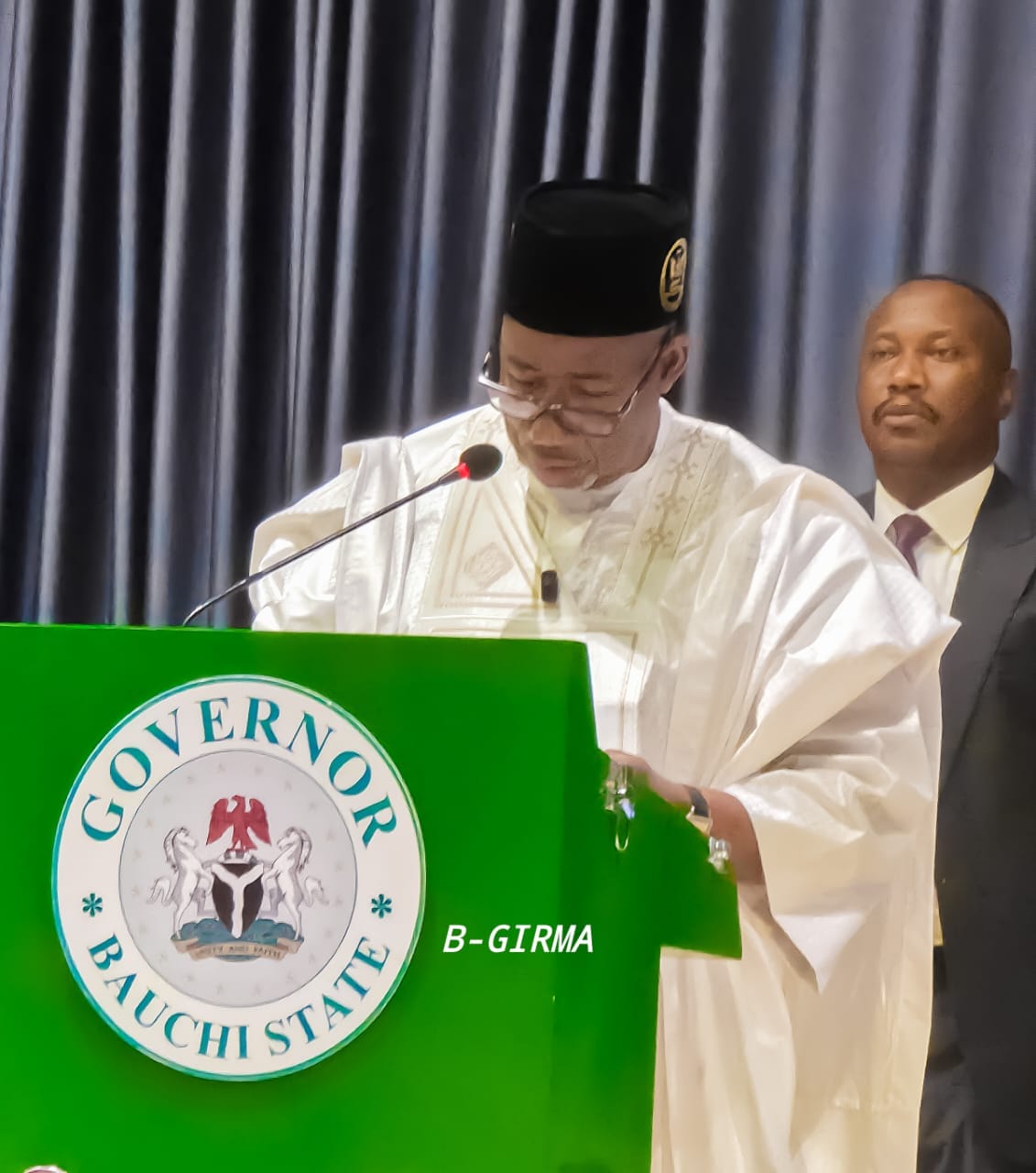
The 68th birthday anniversary of Bauchi State Governor, Senator Bala Abdulkadir Mohammed, CON, was marked in a manner that went beyond the traditional rituals of birthday celebrations, as the BAM Colloquium 2.0 brought together political leaders, academics, former public office holders, policy thinkers and other stakeholders for an extensive conversation on leadership, representative democracy and Nigeria’s political future.
Held at the Sir Abubakar Tafawa Balewa International Conference Centre in Bauchi, the colloquium provided an intellectually engaging platform through which Governor Bala Mohammed’s public service journey was examined within the broader context of Nigeria’s democratic development.
- Advertisement -
Rather than being defined solely by congratulatory messages and ceremonial activities, the occasion became a forum for critical reflection on the country’s democratic experience, the evolution of representative institutions, the responsibilities of political leadership and the need to prepare Nigeria for a new generation of leadership.
The significance of the event was further underscored by the calibre and diversity of personalities represented at the gathering, including the Allied Peoples Movement (APM) presidential candidate, Seyi Makinde, who was represented by the party’s Vice Presidential Candidate, Lawal Daura; Senator Datti Baba-Ahmed; former Minister of Youth and Sports, Solomon Dalung; former Niger State Governor, Babangida Aliyu; Professor Suleiman Bogoro; political leaders, academics and other distinguished Nigerians.
FROM BIRTHDAY CELEBRATION TO NATIONAL CONVERSATION
At its core, BAM Colloquium 2.0 represented an attempt to connect an individual political milestone with larger questions about the Nigerian state.
Governor Bala Mohammed’s 68th birthday provided the immediate occasion, but the conversations generated by the colloquium were considerably broader.
They touched on the nature of political leadership, the resilience of Nigeria’s democratic institutions, the responsibilities of elected representatives and the importance of constitutional governance in a country whose democratic journey has been characterised by both progress and persistent challenges.
This transformation of a birthday celebration into a public policy and democratic conversation is perhaps one of the most important features of the occasion.
It created an avenue for participants to look beyond the personality of the celebrant and examine the institutions, experiences and political circumstances that have shaped his journey through public life.
THE SENATE AND THE FUTURE OF REPRESENTATIVE GOVERNMENT
One of the major highlights of the colloquium was a high-level panel discussion moderated by former Minister Solomon Dalung under the theme:
“The Nigerian Senate: Yesterday, Today and the Future of Representative Legislature.”
The theme was particularly significant at a time when questions surrounding the effectiveness, independence, accountability and responsiveness of Nigeria’s legislative institutions continue to dominate national discourse.
The panel examined the historical evolution of the Senate, its constitutional responsibilities and the extent to which representative institutions have fulfilled the expectations of the Nigerian people.
The conversation also highlighted the relationship between legislative authority and democratic accountability, stressing the need for institutions that are not merely constitutionally empowered but also sufficiently responsive to the people they represent.
For Bauchi, the theme carried additional significance because Governor Bala Mohammed himself has a history of legislative engagement, having served in the National Assembly before assuming executive responsibility at the state level.
Consequently, the colloquium provided an opportunity to examine how experiences acquired in the legislature can influence executive leadership and public policy.
REVISITING A CRITICAL MOMENT IN NIGERIA’S DEMOCRATIC HISTORY
Another important dimension of the colloquium was the reflection on Governor Bala Mohammed’s participation in one of the most delicate constitutional moments of Nigeria’s Fourth Republic.
Participants revisited the political crisis surrounding the prolonged illness of former President Umaru Musa Yar’Adua and the constitutional uncertainty that emerged around the transfer of presidential authority.
Governor Bala Mohammed’s role and advocacy around the Doctrine of Necessity were referenced in discussions about the political developments that eventually facilitated the assumption of presidential responsibilities by then-Vice President Goodluck Jonathan.
That period remains one of the defining episodes in Nigeria’s democratic history because it tested the country’s constitutional order and political institutions at a moment of extraordinary national uncertainty.
The recollection of that chapter at BAM Colloquium 2.0 therefore served a purpose beyond historical nostalgia.
It reinforced the argument that political leadership is sometimes tested most severely not during periods of stability, but when institutions face uncertainty and political actors must make decisions with consequences extending beyond their immediate political interests.
FROM NATIONAL LEGISLATURE TO STATE GOVERNANCE
The colloquium subsequently examined the transition in Governor Bala Mohammed’s political career from the National Assembly to the executive leadership of Bauchi State.
Speakers and participants reflected on areas associated with his administration, including infrastructure development, education, healthcare, agriculture, urban renewal and socioeconomic development.
The discussions presented his political career as a continuum of public responsibility rather than a collection of isolated political positions.
From his experience at the federal legislative level to his responsibilities as Governor of Bauchi State, the trajectory illustrates the different demands placed on political leadership at different levels of government.
More importantly, it provided an opportunity for participants to consider the extent to which political experience, institutional knowledge and public service can be translated into developmental outcomes.
THE BAUCHI EXPERIENCE AND THE QUESTION OF DEVELOPMENT
For Bauchi State, the significance of the occasion extended beyond Governor Bala Mohammed’s personal milestone.
The governor’s administration has, over the years, placed considerable emphasis on physical infrastructure, urban development, human capital, education, healthcare and economic initiatives.
The colloquium consequently became an opportunity to assess the relationship between political leadership and development, while also recognising that governance must remain a continuing process rather than a claim to finality.
The most important question is not simply what has been achieved, but what remains to be done.
That perspective is particularly relevant as Nigeria approaches another general election cycle in 2027, when citizens will once again be required to evaluate political records, leadership capacity, policy direction and competing visions for the future.
THE ROAD TO 2027 AND THE QUESTION OF LEADERSHIP
The timing of BAM Colloquium 2.0 also gives the event an important political dimension.
With 2027 approaching, Nigeria’s political environment is already increasingly focused on questions of succession, continuity, political realignment and the emergence of leaders capable of responding to the country’s complex socioeconomic challenges.
Against this backdrop, Governor Bala Mohammed’s 68th birthday provides an opportunity to reflect on both his political legacy and the future direction of the political movement around him.
For supporters and political associates, his experience across the legislative and executive branches of government represents an important political asset.
For the broader public, however, the more consequential question remains whether the lessons of his political journey can contribute to the emergence of stronger democratic institutions and more accountable governance.
This distinction is important.
The future of Nigerian politics cannot depend solely on individual personalities. Sustainable democratic development requires institutions, ideas, policies and a younger generation of leaders capable of assuming responsibility.
INVESTING IN THE NEXT GENERATION
One of the strongest messages emerging from the colloquium was the need for generational renewal.
Nigeria’s democratic future will ultimately depend on its ability to cultivate leaders who possess not only political ambition but also competence, integrity, intellectual capacity and a genuine understanding of public service.
The conversation therefore extended beyond Governor Bala Mohammed’s personal political history to the larger question of what kind of leaders Nigeria should produce in the coming decades.
At 68, the governor’s journey provides an opportunity to reflect on experience while simultaneously looking toward the future.
The challenge for political leaders of his generation is not merely to occupy positions of authority, but to leave behind institutions, ideas and human capital capable of sustaining democratic governance after them.
That is perhaps one of the most enduring lessons of the colloquium.
A MOMENT OF POLITICAL REFLECTION
The presence of personalities from different political, academic and professional backgrounds also demonstrated the importance of dialogue across institutional and political boundaries.
Democracy is strengthened when political differences do not eliminate opportunities for intellectual engagement.
The BAM Colloquium 2.0 provided such an avenue, bringing together different perspectives around a common concern the future of Nigerian democracy and the quality of leadership required to advance the country.
It was therefore significant that the event did not merely celebrate Governor Bala Mohammed as an individual but also used his public career as a lens through which broader national questions could be examined.
A LEGACY STILL IN MOTION
Governor Bala Mohammed’s 68th birthday should consequently be understood as a milestone in a continuing political and public service journey.
The occasion offered supporters an opportunity to celebrate his contributions, while providing political observers and policy thinkers with a platform to examine the broader meaning of his years in public life.
More importantly, it created a moment to ask difficult but necessary questions about the future the future of Bauchi State, the future of Nigeria’s democratic institutions and the future generation of Nigerians who will inherit the responsibility of governance.
As the country moves toward 2027, those questions will become increasingly important.
Elections are ultimately not only contests for political offices; they are opportunities for citizens to assess records, interrogate ideas and determine the direction in which their communities, states and country should move.
In that sense, the BAM Colloquium 2.0 was more than a birthday event.
It was a celebration of experience, a reflection on democratic history and a conversation about the responsibilities that accompany political leadership.
At 68, Senator Bala Abdulkadir Mohammed stands at another significant point in a long public service journey. The challenge now is not simply to celebrate where he has been, but to interrogate what the experience represents for the present and what lessons it offers for the future.
As Nigeria looks toward 2027 and beyond, the enduring significance of the colloquium may ultimately lie in its central message: leadership is not measured only by the offices one occupies, but by the institutions one strengthens, the people one empowers, the ideas one advances and the democratic legacy one leaves for generations yet unborn.
The BAM Colloquium 2.0 thus transformed a personal birthday milestone into a wider national conversation one that connected the history of Nigeria’s democracy with the demands of contemporary governance and the possibilities of the road ahead.
#KIC
#BAM
#Boris
DemocracyNewslineNewspaper October 6th, 2026