

POLITICAL UPDATE ON KOGI STATE AND THE 2027 GOVERNORSHIP QUESTION
Presented by Pastor Stanley Omoniyi Ajileye
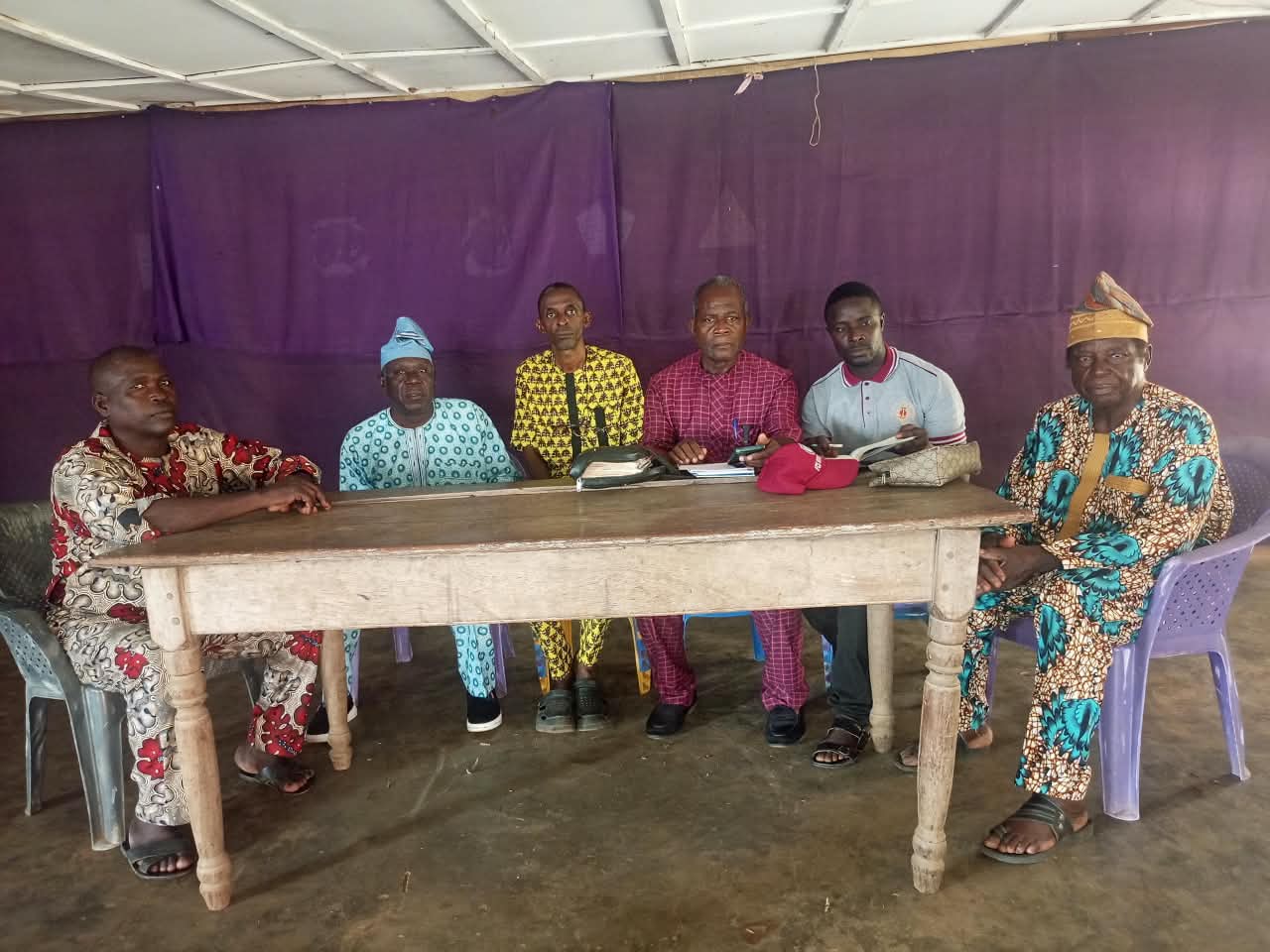
At the Consultative Meeting of Kogi State Kingdom Forum,
Our Saviour’s Anglican Church, Kabba
Monday, 5th October 2026
Distinguished fathers and mothers in the Lord, respected Christian leaders, gospel ministers, and beloved brethren,
- Advertisement -
I am deeply honoured to stand before this august gathering of Christian leaders in Kogi State.
Let me begin by appreciating the Kogi State Kingdom Forum for convening this important consultative meeting. The fact that the Church is deliberately creating a platform to discuss political developments is significant. For too long, many Christians have approached politics as though it were a territory from which the Church should remain permanently distant.
But politics affects our roads, our schools, our hospitals, our communities, our security, our economy and, ultimately, the welfare of the people we serve.
Therefore, if the Church does not participate in shaping political leadership, we should not be surprised when political decisions eventually shape the Church and the society around us.
There is a narrative in Kogi State which we must have the courage to interrogate.
For many years, there has been a perception among Christians that aspiring to the governorship of Kogi State is almost a forbidden ambition for a Christian.
Whether we describe it as political marginalisation, religious exclusion, ethnic calculation or simply the consequence of political arrangements, the question remains:
Can a Christian legitimately aspire to govern Kogi State without being disqualified because of his or her faith?
Our Constitution does not make the governorship of Kogi State the exclusive preserve of any religion.
That is why I believe the Church must begin to ask difficult questions, not with bitterness, not with hatred, and certainly not with a desire to dominate anybody, but with a commitment to justice and equal citizenship.
One of the events that continues to shape this conversation is the experience of Hon. James Abiodun Faleke in 2015.
The historical facts are clear. Faleke was the running mate to the late Prince Abubakar Audu on the APC ticket in the 2015 Kogi governorship election. The election was declared inconclusive after Audu’s death, and the APC subsequently substituted Yahaya Bello as its governorship candidate for the supplementary election. Faleke challenged aspects of that process, and the matter eventually reached the Supreme Court, which dismissed his appeal.
But beyond the legal arguments, there has remained a political interpretation of that episode among many people.
Some have argued that Faleke’s Christian identity, and even the name “James”, became part of the political conversation surrounding his eligibility to lead Kogi State.
I do not present that allegation as a judicially established fact. But I ask this question:
If a man’s name or Christian identity can become a reason why he should not aspire to govern, where does that leave Samuel, John, Emmanuel, Stephen, David and millions of other Christians who are citizens of Kogi State?
We must be careful about the precedents we create.
Injustice, wherever it occurs, should concern every generation.
One day, our children and grandchildren will look back at our generation and ask:
What did you do when you had the opportunity to correct what was wrong?
That question should concern every Christian leader in this state.
Ordinarily, I would prefer not to make the 2027 governorship the immediate political issue before us.
Kogi State is one of Nigeria’s off cycle governorship states. INEC has already confirmed that Kogi will not participate in the 2027 nationwide governorship election scheduled for the general election cycle.
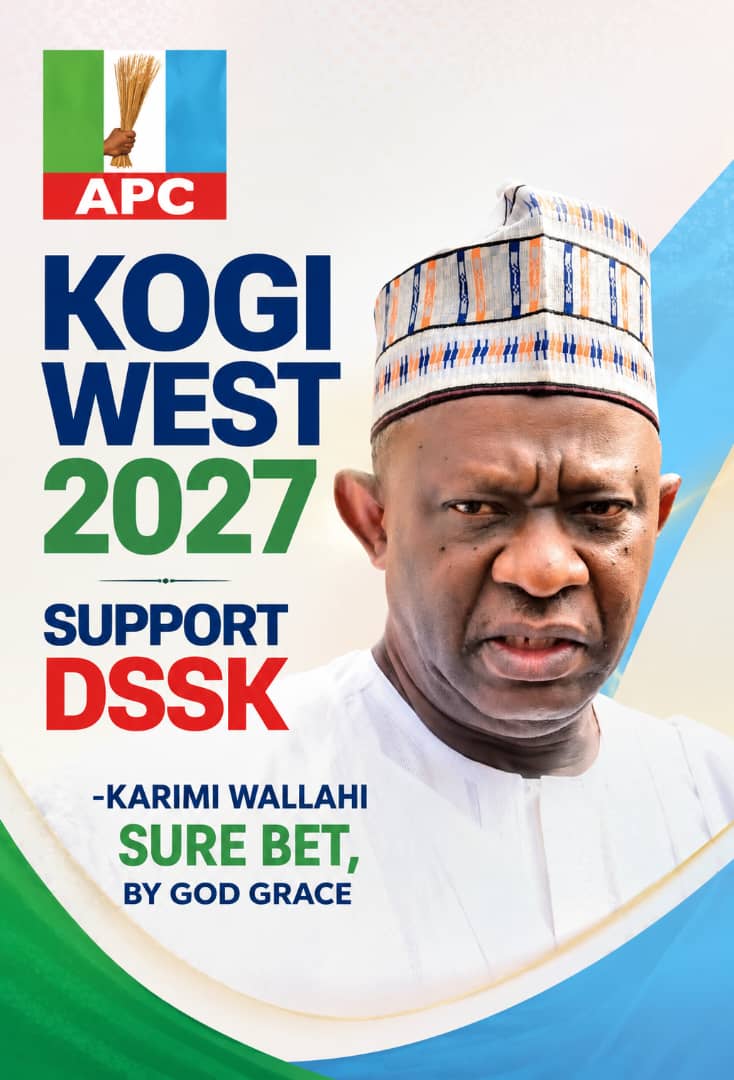
Therefore, the presidential and National Assembly elections are the immediate nationwide electoral focus for 2027. So, some of the billboards campaigning for Kogi Governorship are born out of unnecessary jitters.
And as far as my own political assessment is concerned, the re election of President Bola Ahmed Tinubu and the continuation of Senator Sunday Steve Karimi’s representation of Kogi West have been matters I have regarded as important to anyone in Kogi West.
Senator Karimi is currently the elected senator representing Kogi West in the 10th National Assembly, having won the seat in 2023.
However, this distinguished gathering has specifically asked me to provide an update on the question of a Christian governor in Kogi State.
That changes the conversation.
I have therefore decided not to hold anything back from you, because you are fathers and mothers of faith in this land, and I am encouraged that the Church is becoming increasingly conscious of its responsibility in public affairs.
One of the developments that concerns me is the way the argument appears to be changing.
For years, we have debated governorship through the lens of ethnicity and senatorial rotation.
Now, increasingly, there is a discussion about faith.
I believe we must examine this very carefully.
We cannot replace one form of exclusion with another. Both must go together. What we need is unhindered inclusion.
But then, the fundamental question should be:
Who is qualified, who is competent, who has integrity, who can unite Kogi State, and what principle of fairness should guide the process of selecting political leadership?
That is the standard we should demand.
Let me make this personal.
If some people do not fully understand the importance of having a governor from Kogi West, I do.
I have travelled extensively across Kogi State.
Over the weekend, I had the privilege of presenting my book, A–Z of Christian Marriage, A Biblical, Practical & Africa Contextual Guide, at the celebration of my 30th wedding anniversary.
The five traditional rulers in my hometown, Ekinrin Adde, had desired to attend that event.
But they could not make it because of the deplorable and, at certain points, practically impassable road between Ife and Ikoyi communities.
And this is not a new problem.
I have travelled across Kogi State, and I have seen roads in other parts of the state receiving attention while some communities in Kogi West continue to struggle with roads that have remained in terrible condition for years.
Growing up, travelling from Kabba to Ilorin through Isanlu and Egbe could take about three hours.
Today, the situation has become so difficult that people sometimes have to take longer alternative routes through neighbouring states, turning what should be a relatively straightforward journey into an exhausting trip of many hours.
This is why political representation matters.
A governor who understands the geography, history and peculiar infrastructure challenges of a community is more likely to appreciate the urgency of those problems.
If we eventually have a governor who comes from Iyamoye, Kabba, Mopa Muro or another part of Kogi West, the expectation will naturally be that the administration understands these longstanding challenges and pursues lawful, sustainable solutions, including appropriate engagement with the Federal Government on federal roads.
Representation is not about hatred for another district.
It is about ensuring that every part of Kogi State has an opportunity to have its peculiar concerns understood and addressed.
There is also a reason why the political leadership at the national level matters to the governorship conversation.
President Bola Ahmed Tinubu is a Muslim, but he has publicly built his political career around a multi religious and multi ethnic political coalition.
For those who believe that questions of fairness, inclusion and equity will become important in the 2027 Kogi governorship conversation, it is understandable that they would pay attention to the disposition of the Federal Government and the national leadership of the political parties.
But let us be clear:
The Church must not approach politics merely as a religious struggle.
We must approach it as a struggle for justice, fairness, inclusion, competence and responsible leadership.
There is also another conversation that has emerged in Kogi State, the question of rotation.
I have expressed in some of my writings the view that there appears to be increasing national discussion about giving greater consideration to politically marginalised areas in the distribution of governorship opportunities.
I must, however, distinguish between what is officially established and what remains political interpretation.
There have been different arguments and proposals about zoning, rotation and consensus arrangements within Nigerian political parties. The recent debates and meetings in Kogi State have therefore generated considerable political interest.
But whatever the motivation behind any proposed rotation summit, the Church should not allow itself to be used merely as an instrument for ratifying a predetermined political arrangement.
Any arrangement concerning the future leadership of Kogi State should be subjected to open discussion.
Let the people hear the arguments.
Let the political actors explain their positions.
Let the people consider competence, fairness, inclusion, performance, integrity and the broader interest of Kogi State.
My message to this gathering is simple.
The Church must wake up.
Not to become partisan.
Not to become violent.
Not to hate those who disagree with us.
But to become politically conscious.
We must teach our people that their Christian faith does not require political silence.
We must encourage our members to register, obtain their Permanent Voter Cards, understand the issues, participate peacefully and make informed choices according to their conscience.
We must also teach our people that political disagreement should never become religious hatred.
And when politicians tell us that politics is a dirty game, I agree with them to this extent:
If politics is dirty, then it needs clean water.
And who carries clean water if not people of integrity?
Who should bring light into darkness if not the people of light?
Jesus said:
“You are the light of the world.”
Matthew 5:14
Therefore, the answer to dirty politics is not for Christians to abandon politics.
The answer is for men and women of character to enter public life and bring integrity, justice, compassion, accountability and the fear of God with them.
Distinguished fathers and mothers in the Lord,
The question before Kogi Christians is bigger than one individual.
It is bigger than one political party.
It is even bigger than the 2027 governorship election.
It is about what kind of political culture we want to leave behind for the next generation.
We must ask ourselves:
Will our children inherit a Kogi State where political leadership is open to every qualified citizen, or one where certain identities are quietly excluded?
Will they inherit a culture of fairness, or a culture of political manipulation?
Will they see a Church that remained silent, or a Church that participated responsibly and helped shape a better society?
This is why today’s meeting is important.
The Church has a voice.
The Church has a conscience.
The Church has a responsibility.
Let us therefore arise, not in anger, but in wisdom.
Not in hatred, but in love.
Not in political desperation, but in courage.
And not merely to ask, “Who will become governor?”
Let us first ask:
“What kind of governor does Kogi State need, and what principles should determine who gets the opportunity to serve?”
May God give our leaders wisdom.
May He give the Church courage.
May He give Kogi State peace, justice and responsible leadership.
And may the next generation look back at us and say:
When it mattered, they stood for what was right.
Thank you, and God bless you all.
DemocracyNewslineNewspaper October 6th, 2026