



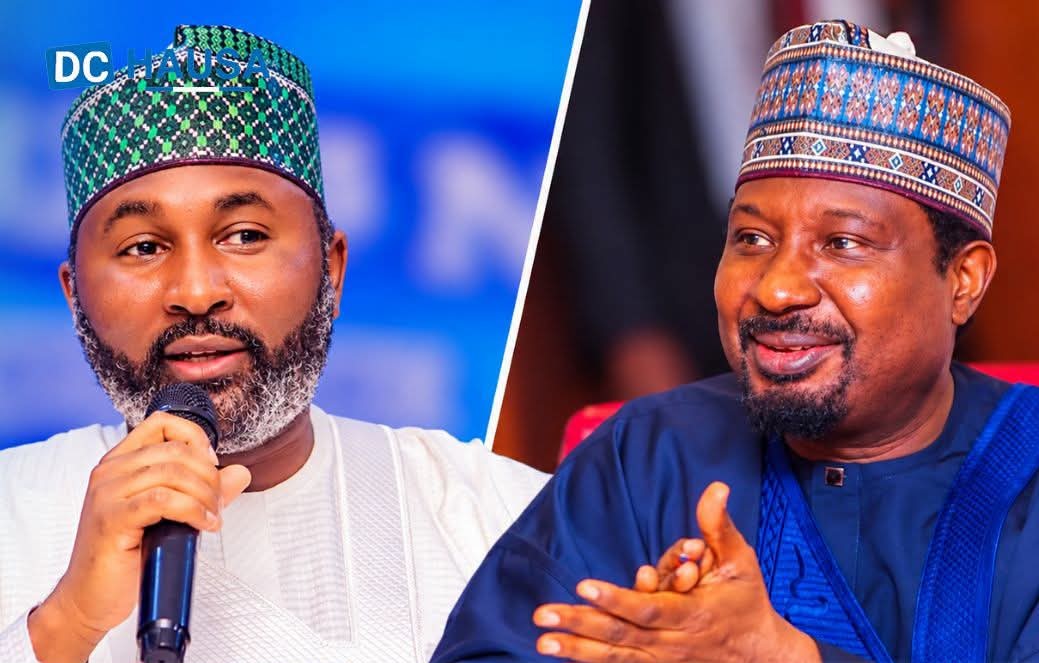

Barau–Bichi Tension Deepens as Kano APC Heads Towards 2027.
By Bala Salihu Dawakin Kudu
Northern Bureau Chief
September 26, 2026.
KANO — Political tensions within the Kano chapter of the All Progressives Congress (APC) appear to be taking a new turn as questions continue to surround the relationship between Deputy President of the Senate, Senator Barau I. Jibrin, and the Chairman of the House Committee on Appropriations, Hon. Abubakar Kabir Bichi.
Both politicians are prominent APC figures from Kano North and occupy influential positions at the National Assembly. Senator Barau represents Kano North in the Senate and serves as Deputy President of the Senate, while Bichi represents Bichi Federal Constituency in the House of Representatives and chairs the House Committee on Appropriations.
- Advertisement -
The reported disagreement has attracted growing attention as Kano’s political actors reposition themselves ahead of the 2027 general elections. Much of the discussion has centred on competing political interests, the control of grassroots structures and the future leadership of the APC in Kano North.
According to political observers interviewed in the course of this report, Barau and Bichi once maintained a cordial political relationship. Some accounts in Kano political circles even trace their association to Barau’s relationship with Bichi’s late father.
Supporters of the two politicians, however, now appear increasingly divided, with political disagreements sometimes becoming public through statements, appointments, resignations and competing grassroots activities.
It is important to note that claims that either Barau or Bichi is personally orchestrating political attacks against the other have not been independently established. They remain allegations and interpretations circulating among political actors in Kano.
The development is nevertheless significant because the two men operate within the same political constituency and belong to the same governing party.
The controversy has become more pronounced following Senator Barau’s emergence as the APC candidate for the Kano North Senatorial District ahead of the 2027 election. Reports in May said his candidacy was affirmed after an exercise attended by APC members and officials.
Earlier in May, APC stakeholders from the 13 local government areas of Kano North were also reported to have endorsed Barau for another Senate term.
With Barau’s Senate candidacy now settled within the APC structure, political attention has shifted towards the broader question of who will control the political machinery of Kano North and what roles various actors may seek after the 2027 elections.
This has fuelled speculation about possible disagreements over future National Assembly leadership positions. Such speculation, however, should not be treated as confirmation that any particular politician is pursuing a specific leadership position or attempting to prevent another politician from attaining one.
On September 25, reports emerged that Comrade Abdullahi Umar Bichi resigned as Chairman of Senator Barau’s Campaign Media Centre. The resignation statement reportedly expressed appreciation to Senator Barau and the media centre’s leadership but did not publicly give a reason for the decision.
The resignation has consequently generated fresh speculation among political observers about realignments within Barau’s political structure. It should, however, not automatically be interpreted as evidence of a direct Barau–Abubakar Kabir Bichi confrontation, particularly because no verified statement from either politician has established such a connection.
The central question being raised in Kano political circles is whether disagreements among influential APC figures can be managed without damaging party cohesion.
The return and consolidation of political figures within the APC have already produced new alliances and competing interests in Kano. At the same time, Senator Barau has continued to build his political structure in Kano North. On September 5, he unveiled an APC campaign council for the senatorial district and directed the structure to commence grassroots mobilisation ahead of the 2027 elections. The council is headed by Engineer Rabiu Sulaiman Bichi, not Hon. Abubakar Kabir Bichi.
The development demonstrates that preparations for 2027 are already becoming increasingly organised, particularly at the grassroots level.
Calls for Reconciliation
Some community leaders and political stakeholders interviewed for this report have expressed concern that personal or factional disagreements among senior politicians could eventually affect party unity.
A senior figure from Bichi Local Government, who requested anonymity, appealed to Senator Barau and Hon. Abubakar Kabir Bichi to exercise restraint and avoid allowing political competition to become a personal confrontation.
The elder also argued that senior political figures have a responsibility to intervene when disagreements emerge among younger politicians and urged political leaders in Kano to place the long-term interests of the state above individual ambitions.
Similarly, Mustapha Ibrahim, a political supporter from Shanono Local Government, said he remains politically loyal to Hon. Abubakar Kabir Bichi but expressed concern about what he described as hostile comments from some supporters against Senator Barau.
He alleged that some individuals were attempting to widen the disagreement between the two politicians for their own political interests. That allegation could not independently be verified.
Barau’s Call for APC Unity
Reports in August indicated that Senator Barau appealed to APC members in Kano North to remain united, stressing that political differences should not obstruct the development of the senatorial district.That position is consistent with his subsequent mobilisation of APC structures across the 13 local government areas of Kano North ahead of 2027.
Whether such appeals will translate into reconciliation among competing political blocs remains a matter for the party’s leadership and stakeholders.
The present situation has also renewed discussion about the role of senior politicians in resolving disagreements within the APC.
Former Kano State Governor and former APC National Chairman, Dr Abdullahi Umar Ganduje, has been mentioned by some political stakeholders as one of the senior figures who could play a role in reconciliation. However, there is no verified evidence establishing that Ganduje has accepted responsibility for, or caused, the current disagreement between Barau and Bichi.
Likewise, Governor Abba Kabir Yusuf has become an important figure in Kano’s changing political landscape following his movement into the APC political fold, but claims about his personal involvement in the Barau–Bichi dispute should be distinguished from established facts unless supported by direct statements or evidence.
The developing situation presents a broader question for the APC: how can a major political party accommodate competing ambitions among influential members while maintaining internal cohesion?
Political competition is a normal feature of democratic politics. Differences become more consequential when supporters transform political disagreements into personal attacks, factional confrontations or campaigns capable of weakening party structures.
For Kano North, where both Barau and Bichi command significant political influence, the manner in which their supporters manage their differences could have implications for the wider political atmosphere ahead of 2027.
At present, the available public evidence establishes that both men remain influential APC politicians with major responsibilities at the National Assembly. It also establishes that Barau has secured the APC’s Kano North senatorial ticket and has begun organising his 2027 campaign structure.
What remains less clear is the extent to which the reported political tension between the two men represents a direct personal disagreement, competition among their respective supporters, or a wider struggle involving several political interests in Kano.
For many Kano residents, the unfolding drama is a reminder of an old political reality: political positions are temporary, while relationships and communities endure beyond individual electoral cycles.
The immediate challenge before APC leaders and stakeholders is therefore not simply who controls which political structure, but how competing ambitions can be managed without creating lasting divisions within the party or the wider community.
If reconciliation becomes possible, political observers say it would require dialogue, restraint and a willingness among competing camps to distinguish legitimate political competition from personal hostility.
As Kano moves towards 2027, the Barau–Bichi relationship will undoubtedly remain a subject of political interest. But whether the current tension develops into a wider factional confrontation or is ultimately resolved through negotiation remains to be seen.
DemocracyNewslineNewspaper September 27, 2026