

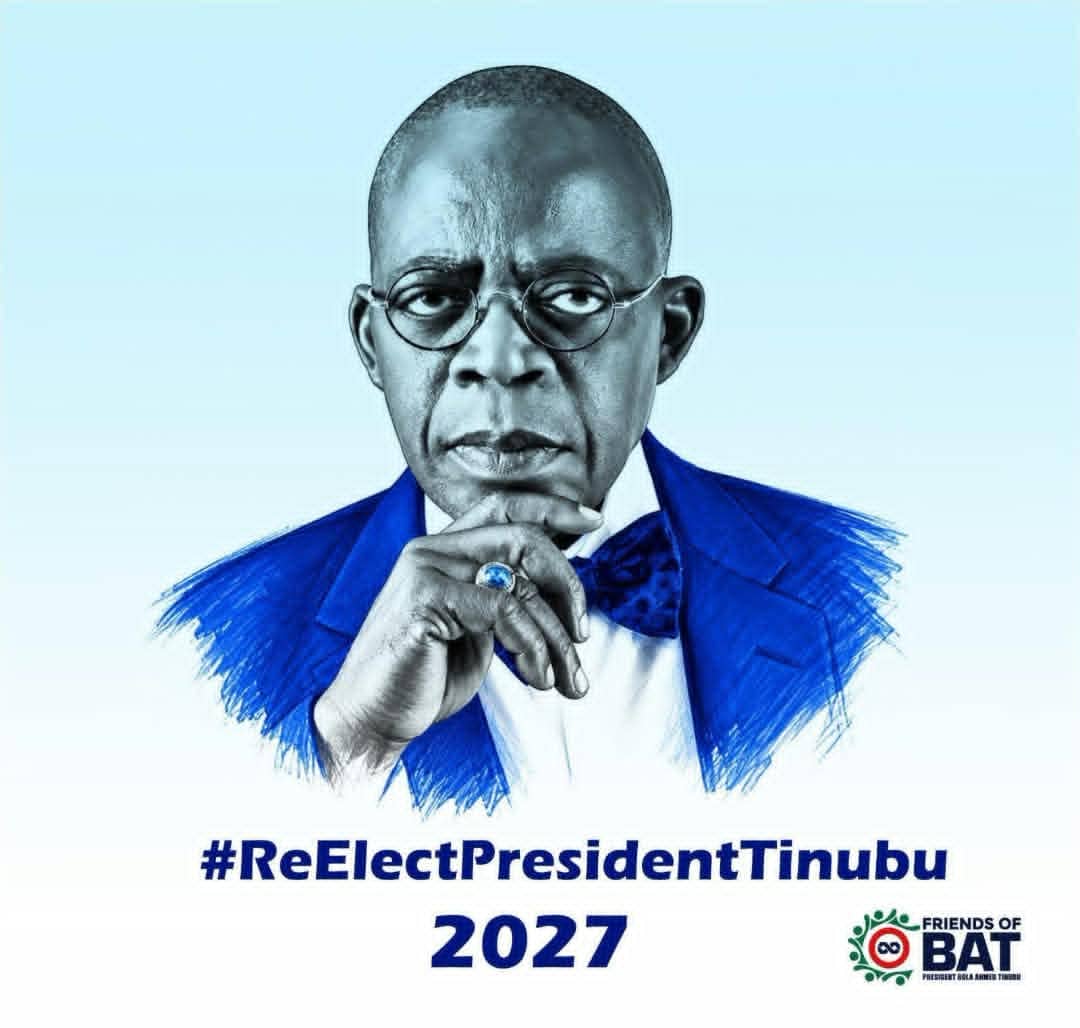

BOLA AHMED TINUBU: RENEWED HOPE, REFORMS AND THE 2027 POLITICAL TEST
By Edison Atumeyi Edime
Political Activist & Youths Advocate
As Nigeria approaches the 2027 general elections, the political atmosphere is gradually gathering momentum. Across the federation, citizens, political parties, stakeholders and aspirants are beginning to examine the records, policies, programmes and promises that will shape the next electoral contest.
- Advertisement -
At the centre of national political discourse is President Bola Ahmed Tinubu, whose administration has pursued a reform-driven agenda under the banner of Renewed Hope.
The Tinubu administration inherited significant economic pressures, including fiscal challenges, fuel-subsidy costs, exchange-rate distortions, infrastructure deficits and concerns over investment and public finances. Since assuming office, the administration has responded with major economic reforms, some of which have generated both support and criticism because of their immediate impact on households and businesses.
THE REFORM AGENDA
One of the administration’s most consequential decisions was the removal of the petrol subsidy. President Tinubu has consistently defended the decision as necessary for fiscal sustainability, while acknowledging that the policy imposed serious hardship on many Nigerians.
The administration has also pursued foreign-exchange reforms, measures aimed at attracting investment, infrastructure development, energy-sector reforms and programmes designed to expand economic opportunities.
By the administration’s own account, its reform programme is intended to move Nigeria from short-term economic pressures toward greater fiscal stability, investment and long-term growth.
INVESTING IN EDUCATION AND HUMAN CAPITAL
Education has also featured prominently in the administration’s policy agenda.
The Nigerian Education Loan Fund (NELFUND) has been used to expand access to tertiary education for students facing financial difficulties. In its May 2026 anniversary statement, the Presidency reported that more than 1.5 million students had received access to higher-education financing, with over ₦282 billion disbursed.
Beyond student financing, the Federal Government has introduced programmes under the HOPE framework, alongside NG-CARES and other interventions targeting vulnerable households, communities and human-capital development.
INFRASTRUCTURE, ENERGY AND INDUSTRIAL DEVELOPMENT
Infrastructure remains another important component of the administration’s agenda.
The Presidency has highlighted ongoing investments in rail modernisation, roads, power transmission, renewable energy and other infrastructure intended to improve national connectivity and economic productivity.
In the energy sector, the administration has promoted domestic refining, gas utilisation and alternative transportation fuels, including CNG, as part of its broader response to energy and transportation challenges.
The strategic argument is straightforward: improved infrastructure and energy supply can reduce production costs, strengthen businesses, attract investment and create employment.
THE POLITICAL QUESTION FOR 2027
But democracy is ultimately about accountability.
The 2027 election will provide Nigerians with an opportunity to examine the record of the administration, assess the effects of its policies on their communities and households, compare alternative programmes and make informed electoral decisions.
For supporters of the APC, the central political argument is continuity: that policies and reforms should be given sufficient time to mature and produce their intended long-term results.
For critics, the central questions include the cost of living, purchasing power, unemployment, insecurity and whether the benefits of economic reforms are reaching ordinary Nigerians quickly enough.
These competing perspectives are part of the democratic conversation and deserve to be examined through evidence rather than slogans.
FROM ASO ROCK TO THE GRASSROOTS
The most important test of any national political agenda is its impact at the grassroots.
From Aso Rock to the State Houses of Assembly, Nigerians will continue to scrutinise how federal and subnational institutions translate policies into roads, electricity, education, healthcare, agriculture, employment, security and economic opportunity.
Political participation should therefore go beyond party slogans. Citizens should examine candidates, manifestos, records, promises and measurable results before casting their ballots.
The 2027 electoral process is already underway, with INEC having announced the timetable for the general elections. INEC’s published schedule provides for the Presidential and National Assembly elections on 20 February 2027, while Governorship and State House of Assembly elections are scheduled for 6 March 2027, subject to the applicable electoral and legal framework.
A CALL FOR ISSUE-BASED POLITICS
As the political season intensifies, Nigerian youths must not become spectators in the democratic process.
The youth constituency represents a critical force in determining the direction of Nigeria’s political future. Young Nigerians should demand accountability, study policies, participate peacefully in the electoral process and make decisions based on issues that directly affect their future.
Whether one supports APC, another political party, or an independent political position, the responsibility remains the same: know the candidates, understand the issues, verify the claims and vote according to your conscience.
Nigeria’s democracy becomes stronger when political competition is based on ideas, records and programmes rather than violence, misinformation or personality politics.
2027: THE CHOICE BELONGS TO THE PEOPLE
President Bola Ahmed Tinubu’s administration has placed economic reform, institutional restructuring, infrastructure, education, energy and human-capital development at the centre of its governing agenda.
The coming election will give Nigerians the democratic opportunity to assess that record alongside the alternatives presented by other political actors.
The ultimate power remains with the Nigerian voter.
The ballot is the people’s voice.
The PVC is a democratic instrument.
The future belongs to the people who participate.
By Edison Atumeyi Edime
Political Activist & Youths Advocate
DemocracyNewslineNewspaper October 13th, 2026