




Ghana’s Petroleum Authority Delegation Visits PTI, Seeks Partnership to Build Oil and Gas Capacity
By Wilson Macaulay
EFFURUN, Delta State
In a significant move to strengthen regional cooperation and accelerate capacity development in Africa’s petroleum ministry, a delegation from Ghana’s National Petroleum Authority
Yesterday ,Tuesday, October 20, 2026, visited the Petroleum Training Institute (PTI), Effurun, Delta State, to explore strategic partnership and technical collaboration in oil and gas training, research and human capital development.
- Advertisement -
The visit provided an opportunity for the Ghanaian delegation to assess PTI’s decades of experience in petroleum technology education, practical training and skills development, as Ghana seeks to strengthen its technical capacity in the upstream and downstream segments of the hydrocarbon industry.
Welcoming the delegation on behalf of the Principal and Chief Executive of PTI, Engr. Dr. Samuel E. Onoji, the institute’s representative, Dr. Tina Isichei, the Director of Research and Development
expressed delight at the visit and assured the Ghanaian officials of PTI’s readiness to establish a mutually beneficial partnership capable of advancing petroleum industry expertise in both countries.
Speaking at the institute’s Council Chambers, Dr. Isichei described the visit as a welcomed development that will strengthen the importance of regional solidarity, knowledge exchange and institutional cooperation in building a stronger African oil and gas sector.
She recalled that PTI was established in 1972, approximately 54 years ago, as part of Nigeria’s efforts to develop the technical manpower required to support its emergence as a leading player in the Organisation of the Petroleum Exporting Countries (OPEC) and the global petroleum industry.
According to her, the institute has trained more than 50,000 personnel over the years, many of whom have become important contributors to the oil and gas industry in Nigeria and other parts of the world.
She said PTI’s wealth of experience, accumulated through decades of specialised training, had positioned the institution to provide valuable technical assistance and professional support to Ghana as the country seeks to deepen its petroleum industry capacity.
“PTI is ready and glad to be of help to the Ghana National Petroleum Authority in every conceivable way, having gathered the expertise over the 54 years of the institute’s existence,” she said.
Dr.Tina Isichei particularly commended the Ghanaian delegation for identifying PTI as a potential strategic partner, expressing confidence that the proposed collaboration would create opportunities for both countries to improve the quality of technical training and strengthen professional competence in the oil and gas sector.
Explaining the factors responsible for the institute’s enduring reputation, Dr.Tina Isichei identified four major pillars underpinning PTI’s achievements: expertise, experience, exclusivity and effectiveness.
She stressed that the institute’s emphasis on practical, hands-on training distinguished it as a preferred destination for specialised petroleum education and technical skills acquisition.
According to her, PTI’s training philosophy is designed to equip trainees with the practical knowledge and professional competence required to operate effectively in the demanding and technology-driven petroleum industry.
On maintaining academic quality and professional standards, she explained that the institute’s curriculum is certified by the National Board for Technical Education (NBTE), reinforcing its commitment to recognised technical education standards.
She added that the institute’s training programmes were supported by specialised facilities and experienced personnel capable of translating theoretical knowledge into practical industrial competence.
Dr. Isichei listed some of the institute’s areas of strength to include welding and fabrication, drilling and well control, National Skills Qualification (NSQ) certification programmes, the Skills Development Academy, firefighting training, underwater welding operations and research clusters.
She explained that the availability of modern training facilities, alongside resourceful technical personnel, had enabled PTI to deliver specialised training across several critical areas of petroleum operations.
The PTI representative subsequently assured the delegation of a guided tour of the institute’s facilities to enable its members to obtain first-hand information about the institution’s training infrastructure and operational capabilities.
She also encouraged the Ghanaian officials to take advantage of the visit by exploring participation in PTI’s Annual International Conference on Hydrocarbon Science and Technology, which she said had been promoting manpower development and knowledge exchange in the petroleum industry since 2023.
In his response, the leader of the Ghanaian delegation, Dr. Joseph Wilson, Director of Research at Ghana’s National Petroleum Authority, conveyed greetings from Ghana to the PTI academic community and the people of the Federal Republic of Nigeria.
He expressed appreciation for the warm reception accorded the delegation, describing the presentations and engagements with PTI management as enlightening and valuable to Ghana’s petroleum industry development aspirations.
Dr. Wilson acknowledged that Ghana had much to learn from PTI’s decades of institutional experience, technical expertise and practical training capabilities.
He explained that the delegation’s primary objective was to explore ways of deepening technical capacity across the upstream and downstream segments of the oil and gas industry including modalities for financing.
According to him, Ghana deliberately chose Nigeria as a strategic partner because of the two countries’ longstanding relationship, regional solidarity and the need to strengthen African cooperation in critical industrial sectors.
“We are here basically to deepen capacity. For reasons having to do with regional solidarity, Ghana decided to choose Nigeria as a senior partner instead of looking outside the continental shelf of Africa,” he said.
He added: “Nigeria, being our big brother, became our desired destination for us to seek technical assistance to set up our own centre of excellence.”
The Ghanaian delegation leader explained that the proposed collaboration was expected to address several strategic areas, including legal frameworks, technical assistance, stakeholder engagement, consultancy services, human capital development and capacity building etc.
He expressed confidence that the knowledge gained from the visit would enable the delegation to return to Ghana better informed about the institutional structures, technical resources and training systems required to advance their country’s petroleum industry.
Dr. Wilson thanked PTI management for providing the delegation with an opportunity to examine the institute’s operations and explore areas of possible cooperation.
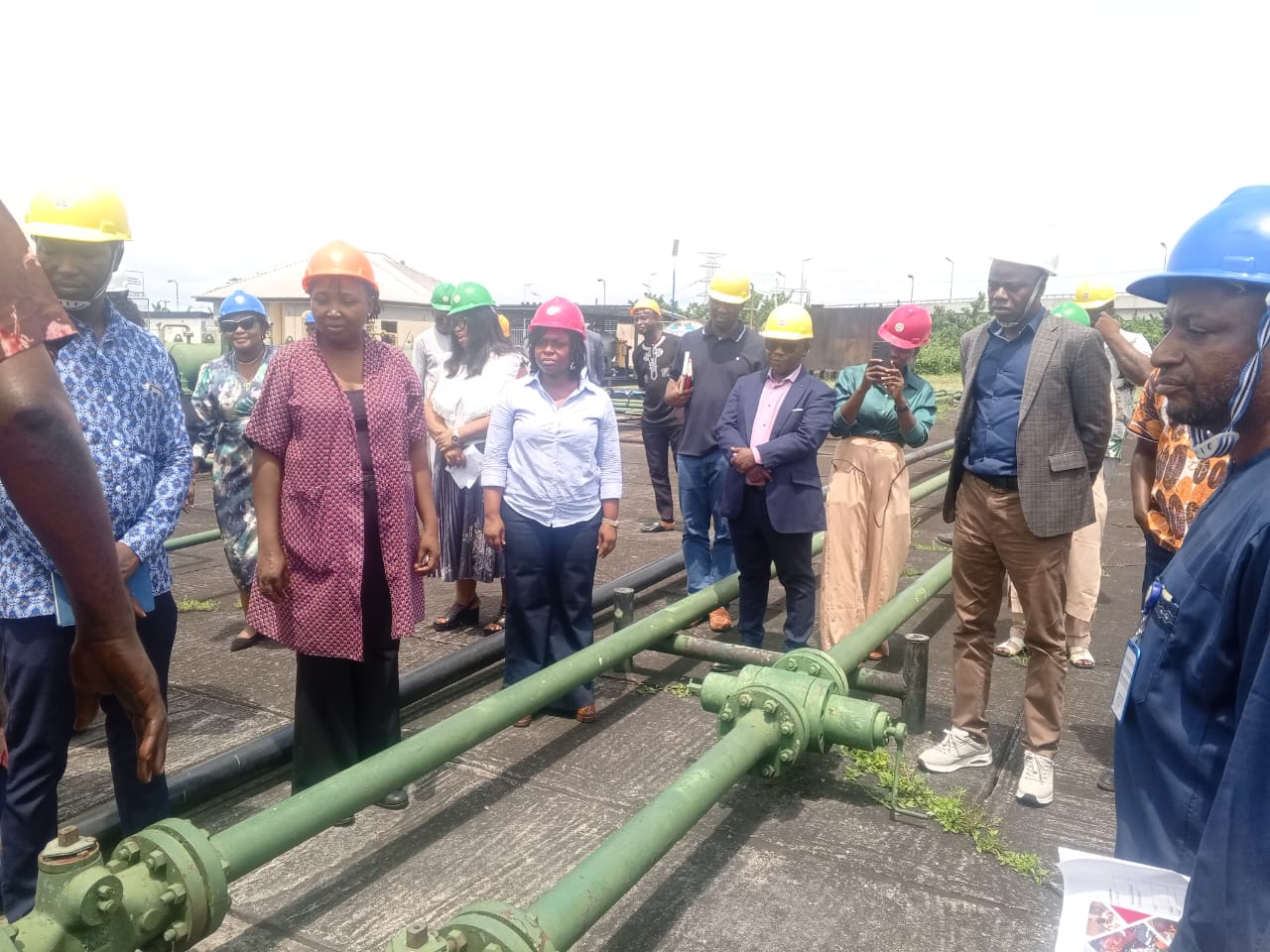
A major highlight of the visit was the guided tour of PTI’s specialised training facilities, where the Ghanaian delegates received practical explanations of petroleum operations and the technical processes involved in oil and gas exploration and production.
Leading the delegation through the rig operations facility, the Director of Rig Operations, Engr. Lawrence Uti, explained the workings of the rig and demonstrated the operational principles behind the equipment used in drilling activities. He explained the five major components of drilling in a chronological order for clarity.
The engagement provided the visiting
Ghanaian officials and engineers with an opportunity to relate the institute’s theoretical training framework to the practical realities of petroleum operations.
The delegation subsequently visited the institute’s flow station, where the Flow Station Director, Engr. Austin Ogugu, conducted the visitors around the facility and explained the operational processes involved in handling crude oil and associated fluids.
Engr. Ogugu provided explanations of the major components of the flow station, beginning with the wellhead and manifold and extending to the separators and the designated gas, water and crude oil chambers.
He explained the functions of the various components and how they contribute to the separation and handling of production fluids before the crude oil is directed towards the next stages of processing and handling.
The practical session offered the Ghanaian delegation valuable insight into the operational systems, equipment and technical procedures required for effective petroleum production and processing.
The tour also demonstrated the importance of practical training infrastructure in preparing engineers and technical personnel for the operational demands of the oil and gas industry.
Other members of the Ghanaian delegation who participated in the discussions and interactive sessions included Bridgette Obiri-Yeboah, Director,
Licencing , Ghana National Petroleum Authority; Mohammed Issah of COMAC, Director of Policy; Eunice Budu Nyarko, Director of Commercial Services; and Sedinam Mammara, Director of Human Resources.
Others were Mudasiru Malana, Technical Aide; Saed Ubeidaleh, Head of Quality Control; Godwin Yan Konu, Director of Business Development; and George Sasu Afful, responsible for Talent Development.
For Ghana, engagement with PTI offers an opportunity to draw on Nigeria’s established experience in petroleum training and technical manpower development as it explores the development of its own centre of excellence.
For PTI, the engagement presents an opportunity to extend its technical expertise beyond Nigeria, strengthen regional partnerships and contribute to the development of skilled manpower across the African oil and gas sector.
As the Ghanaian delegation continues its engagements at the institute, one thing is clear, that the visit is a shared recognition that the future competitiveness of Africa’s petroleum industry will depend not only on the availability of hydrocarbon resources but also on the strength of its technical institutions, the quality of its workforce and the ability of African countries to exchange knowledge and expertise.
With more than five decades of petroleum training experience behind it, PTI has positioned itself as a potential strategic partner in Ghana’s quest to deepen technical capacity and establish a centre of excellence tailored to the needs of its petroleum industry.
DemocracyNewslineNewspaper October 21st, 2026