





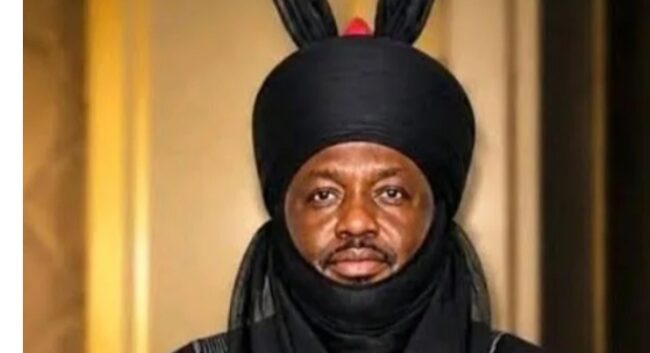

Jigawa Gov Names Lawan Ahmed Muhammad Sani 17th Emir of Gumel
46-year reign of late Ahmed Muhammad Sani ends as son takes over historic throne.
By Bala Salihu Dawakin Kudu
Northern Bureau Chief
September 7, 2026.
The ancient Gumel Emirate in Jigawa State has entered a new chapter following the appointment of Dr Lawan Ahmed Muhammad Sani as the 17th Emir of Gumel, barely three days after the death of his father and predecessor, the late Alhaji Dr Ahmed Muhammad Sani II, CON, who spent about 46 years on the revered traditional throne.
The appointment, approved by Jigawa State Governor, Malam Umar Namadi, was announced on Sunday by the Secretary to the State Government, Malam Bala Ibrahim, during a press briefing at the Nigeria Union of Journalists Secretariat in Dutse, the state capital.
- Advertisement -

The development has brought to an end the brief period of uncertainty that naturally followed the death of the former monarch and has simultaneously ushered in a new generation of leadership in one of Northern Nigeria’s historic traditional institutions.
According to the state government, the appointment followed consultations with the Gumel Emirate Council and its kingmakers, as well as consideration by the Jigawa State Council of Chiefs, before receiving the governor’s approval.
“Following due consultations with the Gumel Emirate Council, kingmakers, and in accordance with the Jigawa State Emirate Council Law, His Excellency the Executive Governor of Jigawa State, Malam Umar Namadi, has approved the appointment of Dr Lawan Ahmed Muhammad Sani as the new Emir of Gumel,” the SSG announced.
Gumel Emirate is one of the oldest traditional institutions in Northern Nigeria. Historical records from the Jigawa State Government trace the foundation of the emirate to around 1750, when Dan Juma and his followers from the Mangawa tribe established the polity.
The emirate subsequently became a tributary state of the Bornu Kingdom and survived the upheavals associated with the nineteenth-century jihad period. Its history also reflects centuries of interaction, competition and conflict involving neighbouring communities and traditional states, including Hadejia, Danzomo, Kano and Zinder.
The present location of Gumel dates from an 1845 relocation from Tumbi, while the emirate eventually became part of Kano State in 1976 before becoming part of the newly created Jigawa State in 1991.
That long history helps explain why the succession to the Gumel throne is regarded as an important development not only for the royal family but also for the wider traditional and cultural structure of Jigawa State.
The new appointment follows the death of the 16th Emir, Alhaji Dr Ahmed Muhammad Sani II, CON, on Thursday, September 3, 2026.
The late monarch, who ascended the throne in 1981 according to the Jigawa State Government’s historical record, spent roughly four and a half decades on the throne, making his reign one of the longest in the modern history of the emirate.
For generations of people in Gumel, his reign was not simply a period of traditional leadership. It represented continuity.
He presided over an emirate that witnessed enormous changes in Nigeria—from military rule to democratic governance, from the old Kano State structure to the creation of Jigawa State, and from an era dominated by traditional communication and institutions to today’s technology-driven society.
His palace remained a symbol of cultural identity, while the Emirate Council continued to serve as an important bridge between the people, government and traditional institutions.
The late monarch’s long tenure also meant that many of the people now welcoming his successor were either born during his reign or grew up knowing him as the Emir of Gumel.
His death therefore represented the closing of a major historical chapter.
From Chiroma to Emir
The emergence of his son, Dr Lawan Ahmed Muhammad Sani, gives the succession a strong element of continuity.
Before his elevation, Dr Lawan held the traditional title of Chiroman Gumel, a position that gave him considerable exposure to the workings of the emirate, its royal institution and the expectations of the people.
He also brings an unusual combination of traditional upbringing and modern professional experience to the throne.
Reports indicate that he served as Director of Cyber Security at the National Information Technology Development Agency (NITDA) before his emergence as Emir.
That background may become particularly significant as the traditional institution confronts a rapidly changing society in which technology, education, youth development, security and economic empowerment increasingly shape community leadership.
His emergence therefore presents the unusual picture of a traditional ruler with experience in one of the most modern and strategically important fields of contemporary governance—cybersecurity and information technology.
A bridge between tradition and modernity
Observers of Northern Nigeria’s traditional institutions have increasingly noted that the role of an Emir has evolved considerably.
While Emirs remain custodians of culture, history and traditional authority, they are also expected to contribute to peace-building, education, social mobilisation, community development and constructive engagement with government.
For Dr Lawan, the challenge will be how to preserve the dignity and traditions of the Gumel throne while responding to the aspirations of a younger and increasingly educated population.
His professional background could prove useful in this regard.
Gumel, like many communities across Northern Nigeria, faces the broader challenges of youth unemployment, educational needs, economic hardship, insecurity and the changing expectations of younger generations.
The new Emir will therefore inherit not merely a palace and title, but a substantial responsibility to maintain the confidence of the people while helping to position the traditional institution for a new era.
Namadi seeks continuity and stability
Governor Umar Namadi, through the SSG, urged the people of Gumel Emirate to rally behind the new monarch and give him the necessary support to succeed.
The governor also commended the Gumel Emirate Council kingmakers, led by the Wazirin Gumel, Alhaji Adamu Muhammad Nasoro, for their role in the selection process.
The state government further acknowledged the contributions of the Emirs of Hadejia, Kazaure, Ringim and Dutse, who constitute the Jigawa State Council of Chiefs and participated in the process leading to the emergence of the new monarch.
Governor Namadi also congratulated the new Emir and wished him many years of successful service to Gumel Emirate and Nigeria.
The government has promised to organise the presentation of the staff of office to the new monarch at a later date in a ceremony befitting the status of the ancient throne.
For Dr Lawan Ahmed Muhammad Sani, however, the significance of becoming the 17th Emir goes beyond succeeding his father.
He is inheriting a throne whose history stretches back more than two centuries and a legacy shaped by generations of rulers, communities and cultural institutions.
He is also succeeding a father whose 46-year reign has left an enormous institutional footprint.
That means his greatest challenge may not necessarily be to create a new identity for the Gumel Emirate, but to determine how best to preserve its heritage while providing the type of leadership required by contemporary society.
The new Emir is stepping onto the throne at a time when traditional institutions are increasingly being called upon to play a greater role in conflict prevention, community mobilisation, education, youth engagement and development.
His professional experience in cybersecurity and technology could also give him a distinctive perspective on the emerging challenges facing communities in the digital age, including misinformation, online fraud, cybercrime and the need to prepare young people for opportunities in the digital economy.
A new chapter for Gumel
For the people of Gumel, the succession marks both an emotional farewell and a hopeful beginning.
The passing of Emir Ahmed Muhammad Sani II closed an era that lasted for approximately 46 years. The emergence of his son opens another.
The transition also carries a powerful message about continuity within the Gumel royal institution: from a monarch whose reign spanned generations to a successor whose professional background reflects the rapidly changing world around the emirate.
As Dr Lawan Ahmed Muhammad Sani prepares to formally assume the responsibilities of the 17th Emir, attention will now shift to the palace, the Emirate Council and the people themselves.
The expectation is clear: that the new monarch will preserve the dignity, unity and cultural heritage of Gumel while bringing fresh energy, modern knowledge and inclusive leadership to the ancient institution.
In the history of Gumel Emirate, September 2026 may therefore be remembered not only as the month in which a revered 46-year reign came to an end, but also as the moment a new generation stepped forward to carry the ancient crown.
DemocracyNewslineNewspaper, September 8, 2026