





KABBA DAY: KARIMI’S PEOPLE, THE POLITICS OF EQUITY AND THE WARNING TO APC
By Pastor Stanley Ajileye
On Saturday, November 7, 2026, the ancient town of Kabba played host to its annual cultural celebration, popularly known as Kabba Day. As expected, the event attracted people from different walks of life, bringing together cultural enthusiasts, political stakeholders, community leaders and indigenes of the Okun nation.
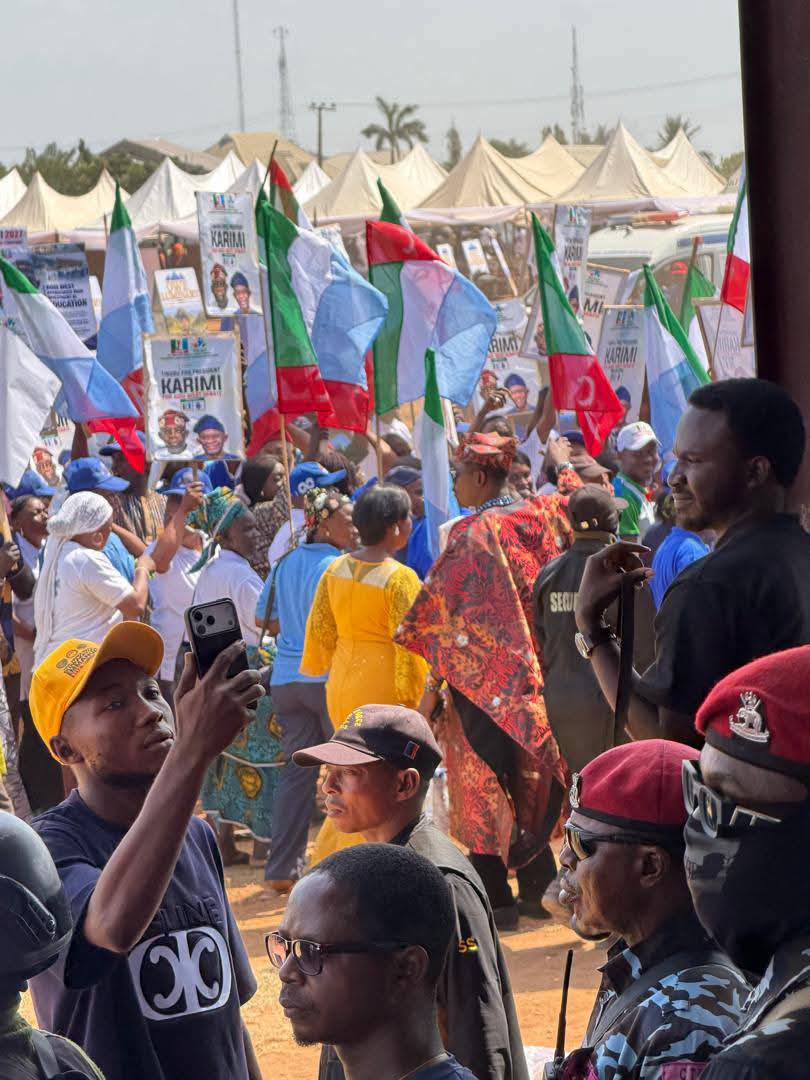
However, beyond the cultural festivities, one political spectacle stood out and became a subject of conversation: the massive procession by supporters of Senator Sunday Steve Karimi.
- Advertisement -

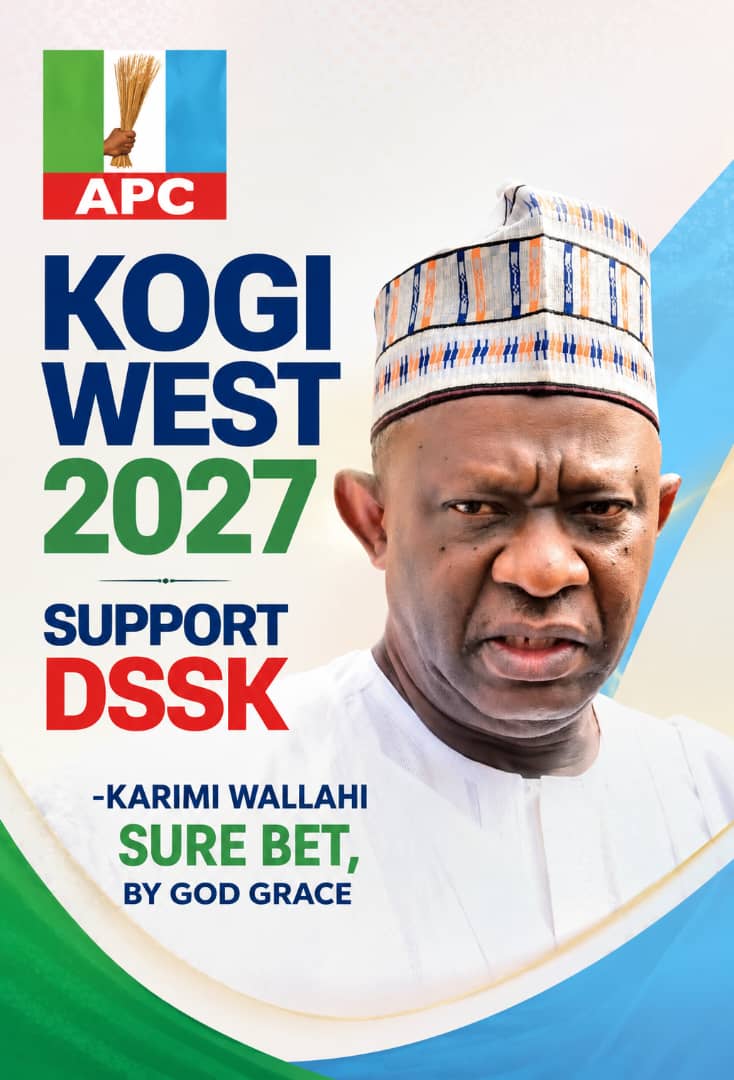
In what appeared to be a powerful demonstration of grassroots solidarity, thousands of supporters took to the streets in a colourful procession, displaying placards bearing Karimi’s photographs and waving the flags of the All Progressives Congress (APC). Their numerical strength, enthusiasm and geographical spread were difficult to ignore.
They came from different communities, religious backgrounds and political affiliations. Their message was unmistakable: Senator Karimi enjoys considerable grassroots support, and his political mandate is not a possession that can be casually taken away by a few powerful individuals.
One particularly striking feature of the procession was the song adopted by the supporters. Borrowing from the musical collaboration between King Sunny Ade and Onyeka Onwenu, they sang:
“APC yi ti gnogbo wa ni, Ko ma gbodo baje.”
Translated loosely, this means, “This APC belongs to all of us; it must not be destroyed.”
The choice of this song was not accidental. It carried a political message that transcended entertainment. It was an appeal for the preservation of the party, an expression of collective ownership and, more importantly, a warning against allowing personal interests and political manipulation to destroy an institution built through the collective efforts of its members.
The message was particularly instructive against the background of the ongoing controversy surrounding the senatorial mandate of Senator Karimi.
Kabba Day holds a special political significance for Senator Karimi and his supporters. It was at an earlier edition of the celebration that Karimi delivered his now-famous equity speech, which subsequently placed him on a collision course with powerful interests within the Kogi State political establishment.
What was his offence?
He made a case for equity, fairness and political inclusion for the people of Kogi West, the very constituency that elected him to the Senate.
His intervention was not necessarily a declaration of war against any section of Kogi State. Rather, it was an expression of a long-standing grievance over political exclusion and the apparent imbalance in the distribution of political power in the state.
Since the creation of Kogi State in 1991, Kogi West has consistently struggled to secure a fair share of the state’s highest political office. Despite its contributions to the political and socioeconomic development of the state, the senatorial district has remained outside the governorship equation.
For many people in Kogi West, this is not merely a question of occupying political office. It is a question of belonging, recognition, representation and the right to participate meaningfully in determining the political direction of their state.
Karimi merely gave voice to a sentiment that had existed among his people for decades.
Perhaps nothing illustrates the frustration of Kogi West more than the events that followed the death of Prince Abubakar Audu in 2015.
At the time, the late Audu was the APC governorship candidate and was on the verge of becoming governor-elect before his unfortunate death during the electoral process.
James Abiodun Faleke, his running mate, became central to the succession controversy that followed.
For many in Kogi West, the argument was straightforward: the mandate secured by the Audu-Faleke ticket ought to have been respected. However, the political and legal complications that followed ultimately produced a different outcome.
One of the arguments that became particularly controversial in the political discourse was the suggestion that a Christian should not be allowed to govern Kogi State.
Whether openly advanced or privately entertained, the religious dimension of that controversy left a deep impression on many people in Kogi West.
Eventually, Yahaya Bello emerged as governor through the political process that followed, despite not having participated in the governorship election itself as the original APC candidate.
The development remains one of the most consequential and controversial episodes in the political history of Kogi State.
It reinforced the perception among many people in Kogi West that political calculations, rather than the principle of equity and respect for electoral mandates, often determine who gets what in the state.
The eight years of Yahaya Bello’s administration further deepened the concerns of those who questioned the credibility of the electoral process in Kogi State.
Elections conducted during that period attracted serious allegations of irregularities, manipulation of electoral figures, intimidation and compromise of democratic institutions.
Questions were repeatedly raised about the credibility of voter registers, the conduct of elections and the apparent discrepancies in electoral outcomes.
Among the recurring concerns was the allegation that electoral figures were manipulated in ways that favoured particular political interests, including the perception that Kogi Central enjoyed disproportionate electoral advantages.
These allegations were damaging not only to the credibility of individual elections but also to public confidence in the APC as the governing political platform.
Unfortunately, the expectation that a change of administration would usher in a new political culture appears not to have completely materialised.
The controversy surrounding the APC senatorial primary in Kogi West is a case in point.
In the last senatorial primary, the principle of consensus was invoked in the process that eventually saw Bamidele Aro step down from the contest.
Yet, in a development that generated considerable controversy, his name was subsequently presented by certain party elements as the winner of the primary election, despite the fact that he had withdrawn from the contest and could not legitimately have emerged victorious in a primary he did not participate in.
The matter subsequently found its way into the courts, culminating in a judicial pronouncement that further complicated the political situation.
However, there is a fundamental distinction between obtaining a judicial victory and securing the confidence and acceptance of the party’s grassroots membership.
A political party is not merely a platform for securing court orders or managing political interests. It is an institution whose strength derives from internal democracy, fairness, credibility and the confidence of its members.
Where party members begin to perceive that political outcomes can be manufactured, electoral mandates manipulated and consensus agreements disregarded, the consequences extend beyond the immediate beneficiaries of such arrangements.
The entire party suffers.
This is the context within which the massive Karimi procession at Kabba Day should be understood.
It was more than a show of popularity. It was a public expression of dissatisfaction with what the demonstrators consider an attempt to undermine their principal’s mandate. It was also a reminder that political authority within a democratic party cannot be sustained indefinitely by institutional manoeuvres without regard for the wishes of the people.
Perhaps the most remarkable aspect of the procession was its rainbow character.
The participants were not drawn exclusively from the APC. They included people from different political parties, religious organisations and community associations.
This diversity gives the procession a significance beyond the immediate controversy over the APC senatorial ticket.
It suggests that the question of Karimi’s political future has become intertwined with a wider conversation about equity, political inclusion and the protection of electoral mandates in Kogi State.
It also challenges the assumption that political loyalty must always be determined by party affiliation.
People may disagree on political platforms and candidates, yet converge around a common principle when they believe that fairness is under threat.
In this instance, the rallying point appears to be the defence of what the participants consider the legitimate mandate of their senator.
This is an important distinction. The procession was not simply about Karimi as an individual. It was also about the political symbolism of his struggle and what his supporters believe it represents for Kogi West.
At the conclusion of the procession, the mammoth crowd reportedly made a strong political declaration.
They vowed to work against APC candidates across Kogi State, from the House of Representatives to the Senate and even the presidential election, should what they consider Karimi’s stolen mandate not be restored.
This is a serious political warning.
The APC leadership in Kogi State and at the national level must not dismiss it as an emotional outburst or an empty threat from an aggrieved political group.
Political parties are sustained by their members, not merely by their elected officeholders. The enthusiasm of grassroots supporters, their willingness to mobilise and their confidence in the party’s internal processes are essential to electoral success.
When a group that has invested its political energy, resources and loyalty in a party begins to feel betrayed, the consequences can be far-reaching.
The danger is even greater when such grievances attract support across religious, ethnic, geographical and political boundaries.
The APC must therefore recognise that the Karimi controversy is bigger than a senatorial ticket. It touches on the party’s internal democracy, its commitment to equity and its capacity to manage political disagreements without alienating its own support base.
A political party that fails to protect the confidence of its members may eventually discover that its greatest opposition is not necessarily outside its walls, but within its own ranks.
There is a lesson in the song that echoed through the streets of Kabba.
“APC yi ti gnogbo wa ni, Ko ma gbodo baje.”
The APC belongs to all of us; it must not be destroyed.
This is perhaps the most important message from the procession.
No political party should become the private property of a few individuals, regardless of their influence, financial resources or access to power. Its constitution, established procedures and democratic principles must apply equally to everyone.
Equity is not a favour. Fairness is not a privilege. And political mandates are not commodities to be exchanged at the convenience of powerful interests.
Senator Karimi’s equity intervention may have unsettled some political establishments, but the underlying question remains legitimate: can Kogi State build a sustainable political future without addressing the persistent grievances of its constituent communities?
Can the APC continue to preach unity while allowing internal processes to generate feelings of exclusion and injustice?
Can a party expect loyalty from its members while disregarding the principles upon which such loyalty is built?
These are questions that demand honest answers.
Kabba Day 2026 may have come and gone, but the political message from its streets will not disappear so easily.
The thousands who marched for Karimi were not merely celebrating a senator. They were expressing a political conviction, defending what they believe to be a legitimate mandate and demanding that the APC remain a party for all its members.
The leadership of the party would ignore that message at its own peril.
After all, a party may win political battles through influence and institutional manoeuvres, but it can only win elections through the confidence and commitment of its people.
The APC must not be allowed to destroy itself in the name of protecting a few political interests.
DemocracyNewslineNewspaper November 10th, 2026