




Part Two: Kano Politics Must Be Driven by Kano Interests:-
Kano Politics: APC Must Bridge the Old-New Divide Before It Is Too Late.
By Bala Salihu Dawakin Kudu
Democracy Newsline
Northern Bureau Chief
August 15th, 2026.
Politics is rarely static. Political parties evolve, alliances shift, and politicians move from one platform to another in response to changing circumstances. But whenever such changes occur, one important principle should not be forgotten: a political party can only remain strong when its members believe that they have a place in its future. This is particularly important in Kano State, where political competition has always been intense and where party structures are often deeply rooted in local communities and Why Governor Abba Kabir Yusuf and APC Leaders Must Build an Inclusive Political Family in Kano
- Advertisement -

In the first part of this discussion, we examined the political situation surrounding the All Progressives Congress (APC) in Kano and the emergence of what many observers now describe as two broad tendencies within the party: the old APC structure and the new members who joined the APC from the New Nigeria Peoples Party (NNPP) camp. The question now is whether these two political tendencies can genuinely coexist under one umbrella without creating resentment, mistrust and internal competition.
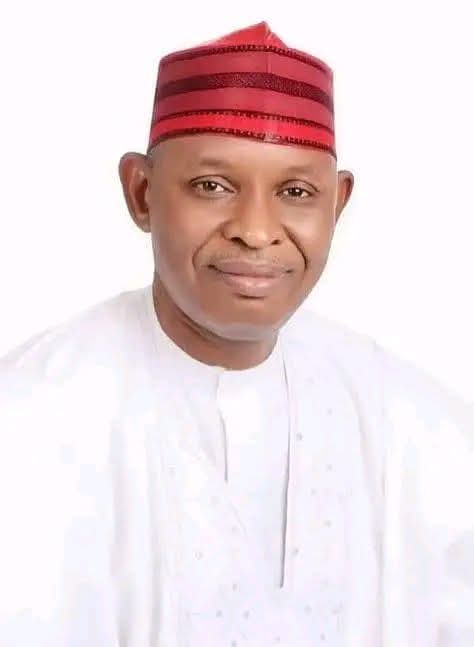
Governor Abba Kabir Yusuf has undoubtedly become an important political figure in Kano. His administration has also demonstrated that political relationships can change rapidly. However, the consolidation of a broad political coalition requires more than winning elections or bringing new political actors into a party. It requires consultation, fairness, inclusion and respect for those who built the party before the arrival of new members.
One of the concerns increasingly expressed among APC stakeholders is the perception that some politicians who have been with the party from its earlier days are being sidelined, while individuals who recently joined the party alongside Governor Abba Kabir Yusuf are receiving greater political recognition.
Whether this perception is entirely accurate or not, political leaders cannot afford to ignore it.
Perception itself can become a political force.
When long-standing party members begin to feel that their sacrifices, resources and years of organisational work no longer matter, they may gradually withdraw from party activities. Some may remain silent while waiting for another political opportunity; others may openly challenge the leadership. Either way, the party risks losing valuable human resources.
The APC has politicians, businessmen, professionals, youth leaders, community organisers, religious scholars and grassroots mobilisers who have invested years of effort in building its structures across Kano State. Many of these people contributed their time, money and personal influence when the party was struggling to establish itself.
Their contributions should not be forgotten simply because the political landscape has changed.
Governor Abba Cannot Do It Alone.
Governor Abba Kabir Yusuf, like every political leader, cannot successfully manage the complexities of Kano politics alone. He needs advisers, party leaders, legislators, local government stakeholders, traditional influencers, youth organisations, women leaders and other political actors who understand the history and dynamics of each community.
The responsibility of party elders and leaders should therefore be to help the governor identify individuals and groups that have genuinely contributed to the party, particularly at the grassroots.
Names such as Babangida Lamido of Kano Municipal and Alhaji Labaran Kura, among others cited by political stakeholders, represent the kind of grassroots political actors whose roles and contributions deserve serious attention. Their individual political records and current relevance should, of course, be judged on the basis of facts and verifiable contributions rather than personal loyalty or factional considerations.
The broader point is that Kano APC has a large pool of experienced political actors. The challenge is to ensure that they are not pushed to the margins simply because political alliances have changed.
The distribution of government programmes and empowerment initiatives is another area where perceptions of fairness can have significant political consequences.
Governor Abba Kabir Yusuf’s administration has implemented various programmes and interventions, including the distribution of motorcycles, agricultural inputs, employment opportunities, housing-related initiatives, Hajj seats and other forms of empowerment.
Such programmes can have enormous social value when they reach the people who need them most.
However, government empowerment should be based on transparent and clearly defined criteria, rather than being perceived as a reward for political allegiance.
If a person is a supporter of the government and qualifies under an established programme, that person should benefit. If another person belongs to an opposing faction but equally qualifies, that person should not be excluded merely because of political identity.
There has also been discussion within political circles about the need for an equitable arrangement that gives members of the established APC structure a meaningful share of political appointments, opportunities and party responsibilities.
Whatever formula is eventually adopted, the most important issue should be fair representation rather than mathematical allocation alone.
The old APC members should not feel like guests in a political house they helped build. At the same time, politicians who joined the APC from other parties should not be treated as second-class members.
Both groups now have to find a way to work together.
The APC cannot build a winning political machine in Kano by permanently maintaining two camps. It must eventually become one party in practice, not merely one party on paper.
What Happened to the Grassroots Mobilisers?
Across Kano’s 44 local government areas, the APC has numerous youth organisations and grassroots structures that played important roles in the party’s previous political campaigns.
Organisations and networks associated with the party’s earlier structure, including groups that mobilised young people across the state, should not be allowed to disappear simply because the party has experienced a change in political leadership.
They should not be remembered only during elections, when their services are required for mobilisation. They should also have a place in policy discussions, party administration, government programmes and political appointments.
A party that ignores its young grassroots members today may discover tomorrow that another political organisation has successfully attracted them.
Local Government Is Where the Real Battle Is
Kano politics cannot be understood only from Government House or party headquarters. The real strength of any political organisation is determined at the ward and local government levels.
There are elected councillors, appointed political office holders, ward leaders and local organisers who understand the political realities of their communities better than many politicians at the state level. If these people feel excluded, the consequences can become serious during elections. There have also been claims in political circles that some local government chairmen and councillors are not fully aligned with the administration’s political interests. Such claims should be investigated and discussed responsibly rather than turned into accusations without evidence.
A political structure that appears strong in the capital but is divided in the wards and local governments may discover its weakness only when an election arrives.
The APC’s internal challenges in Kano also require mature intervention from senior party figures.
Former Governor Abdullahi Umar Ganduje and Senator Barau I. Jibrin, among other senior APC leaders, have significant experience in Kano politics. If they choose to use that experience to encourage reconciliation rather than deepen factional divisions, they could play an important role in stabilising the party.
The responsibility, however, should not rest on two individuals alone.
All APC stakeholders must accept that no faction can permanently dominate a political party without eventually creating resistance.
Political maturity means knowing when to compromise.
Those who followed Governor Abba Kabir Yusuf into the APC also have a responsibility.
Joining a new political party brings opportunities, but it also requires an understanding of the party’s history, structures and existing stakeholders.
The newcomers should not behave as though the party began on the day they joined it. Equally, members of the old APC should not treat the newcomers as permanent outsiders.
The APC needs a new political identity in Kano—one that recognises its history while making room for its future. That future cannot be built by humiliating old members, nor can it be built by rejecting new members.
The Bigger Question: What Kind of APC Does Kano Want?.
The most important question is not simply who receives appointments, motorcycles, Hajj seats, contracts or empowerment programmes.
The bigger question is:
What kind of political party does the APC want to become in Kano?
Does it want to be a party where loyalty is rewarded but competence is ignored?
Does it want to be a party divided permanently between old and new members?
Or does it want to build a broad coalition in which every genuine member has a sense of belonging?
The third option is clearly the most sustainable.
Political parties survive when their members have confidence that tomorrow will bring another opportunity. They collapse when members conclude that there is no future for them within the organisation.
The situation in Kano APC is not beyond repair.
There is still time for reconciliation, consultation and restructuring.
The party leadership should consider organising genuine stakeholder meetings involving former office holders, serving politicians, ward leaders, local government leaders, youth and women groups, legislators, businessmen, professionals and other major stakeholders.
Such meetings should not be ceremonial gatherings where speeches are made and everyone goes home. They should produce practical recommendations on party inclusion, appointments, empowerment programmes, grassroots mobilisation and conflict resolution.
There should also be a credible internal mechanism for resolving disputes before they become public crises.
The party needs fewer rumours and more dialogue.
It needs fewer political camps and more institutional structures.
It needs fewer promises and more measurable inclusion.
Ultimately, politics in Kano should serve Kano.
Political leaders may have different party affiliations, different histories and different political ambitions, but the interest of the people must remain greater than the interest of any individual faction.
Governor Abba Kabir Yusuf has the opportunity to build a political legacy based not only on the projects his administration completes, but also on the political institutions he helps strengthen.
The APC, meanwhile, has an opportunity to turn its current internal differences into a strength by bringing experienced old members and energetic new entrants together.
But that will require humility from all sides.
The old APC must accept that politics has changed.
The new APC must recognise that history matters.
And the governor must understand that good advisers are not those who tell a leader only what he wants to hear, but those who have the courage to tell him what he needs to know.
If the APC genuinely wants to remain a formidable political force in Kano, it must begin the difficult but necessary work of reconciliation now.
Because elections are won at the polling station, but the foundation for electoral victory is built long before election day—inside the wards, local governments, party offices and homes of ordinary supporters.
Kano APC still has time to put its house in order.
The question is whether its leaders will act before political disagreements become permanent divisions.
By Bala Salihu Dawakin Kudu
Democracy Newsline
Email: balasalihudawakinkudu@gmail.com
Tel: 08060017934
(DEMOCRACY NEWSLINE NEWSPAPER 15TH AUGUST, 2026)