




KOGI POWER ROTATION SUMMIT: DR. TOM OHIKERE’S POSITION IS TOO INCONSEQUENTIAL TO PRE-EMPT WHAT OVER 500 INVITED STAKEHOLDERS HAVE EMBRACED
Dr. Tom Ohikere is entitled to his position on the 2028 governorship of Kogi State. He is equally entitled to advocate for Kogi West and to present arguments in support of whatever political arrangement he believes is fair. But there is an important distinction that must be made: the position of one individual, no matter how strongly expressed, cannot automatically become the position of an entire state.
The Kogi Power Rotation Summit is precisely the kind of platform where competing perspectives can be presented, examined and debated. It is scheduled for 30 September and 1 October 2026, and it has not yet taken place. Therefore, no resolution has been reached, no collective position has been adopted, and no part of Kogi State has been handed an automatic political entitlement through the summit. Any attempt to pronounce the outcome before the stakeholders even gather is premature, selfish or out of ignorance and careless assumptions.
The fundamental issue is simple: who speaks for Kogi State? Can one individual, one organisation, one political party or one senatorial district legitimately claim to have settled an issue involving the entire state before the wider stakeholders have had the opportunity to speak? The answer should be obvious. Kogi State consists of Kogi East, Kogi Central and Kogi West, with diverse ethnic, political, traditional, professional, religious, youth and community interests. The voice of one section cannot substitute for the voices of all.
- Advertisement -
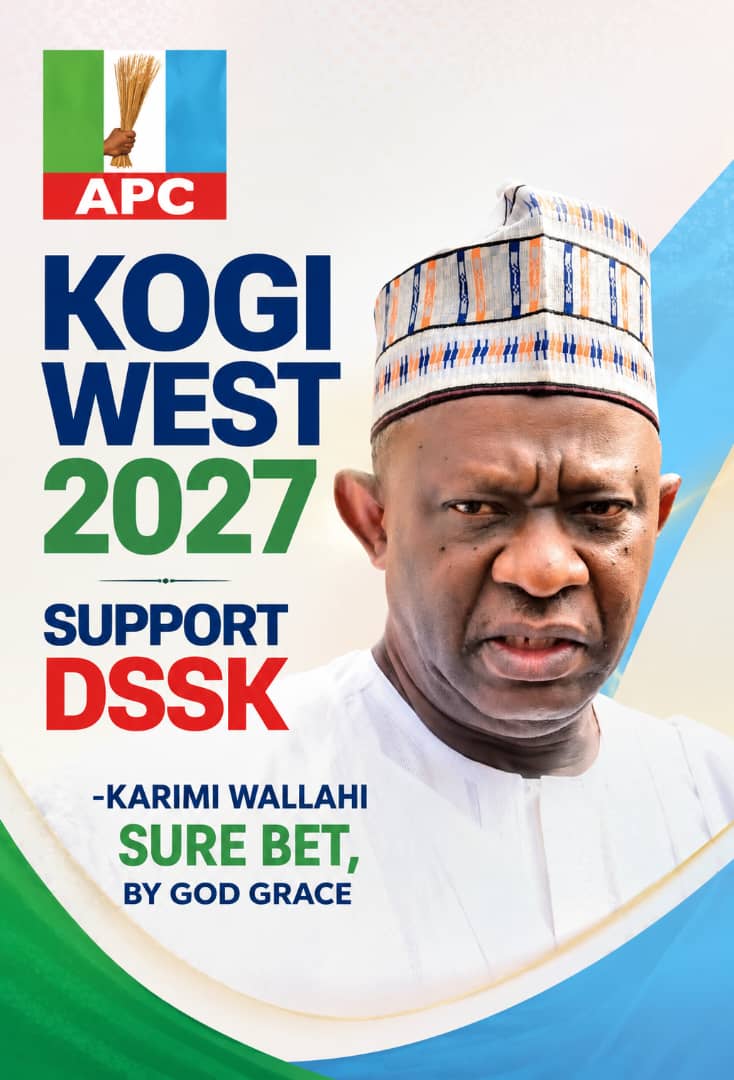
That is why the breadth of invitations to the summit matters. The gathering is expected to bring together traditional rulers, religious leaders, professional bodies, civil society and development organisations, youth and student associations, political parties, community organisations and other respected stakeholders from across the 21 local government areas of the state. The invitation list includes the Attah of Igala, the Ohinoyi of Ebira, the Obaro of Kabba, the Ohimege of Koto, the Aguma of Bassa and the traditional councils, alongside numerous organisations and institutions representing different constituencies across Kogi.
Among the invited stakeholders are the Christian Association of Nigeria, Council of Ulama, Igala Cultural and Development Association, Ebira People Association, Okun Development Association, Bassa Development Union, Ogori Descendants Union, Nigerian Union of Journalists, Nigerian Bar Association, Nigeria Labour Congress, Nigeria Medical Association, Nigeria Union of Teachers, development unions, professional groups, youth organisations and student associations. Political parties including APC, PDP, ADC, SDP and LP are also listed among the invitees. There is also provision for over 150 stakeholders and respected individuals drawn from across the 21 local government areas.
With such a broad invitation, it is difficult to sustain the argument that the summit belongs to one person, one political party or one senatorial district. It is designed, at least by its stated invitation structure, to create a space where different interests can be presented. Whether participants ultimately agree or disagree is a matter for the participants themselves.
Dr. Ohikere may strongly believe that Kogi West deserves consideration in 2028. That is a position he has every right to advance. He may cite the historical distribution of governorship between the three senatorial districts and make whatever case he considers relevant. Other stakeholders, however, may have different interpretations of history, equity, rotation, population, political representation, previous agreements or the interests of their communities. A genuine dialogue must allow those arguments to be heard rather than declaring the conclusion before the discussion begins.
The summit should therefore not be judged by what one person believes or assumes its conclusion will be. Its relevance lies in the opportunity it provides for stakeholders to put their positions on the table. If Dr. Ohikere has compelling arguments concerning Kogi West, the most constructive place to present them is before a broad gathering of Kogi stakeholders where they can be heard, questioned and considered alongside other perspectives.
Rejecting the summit does not cancel the summit. Declining to participate does not prevent others from participating. And expressing a position outside the platform does not give anyone the authority to speak on behalf of every stakeholder who has been invited. Dr. Ohikere can speak for himself and for any organisation that has formally authorised him to speak for it; he cannot pre-empt the voices of more than 500 other invited stakeholders.
There is also an important principle of democratic engagement here. Disagreement is not the problem. In fact, disagreement is often necessary for meaningful dialogue. The real question is whether disagreements can be brought into a common forum where people listen to one another and defend their positions with evidence and reason. If the summit is intended to discuss equity and rotation, then every legitimate argument including the argument for Kogi West should have room to be presented.
The summit should not be approached as a coronation ceremony for any zone, candidate or political interest. It should be approached as a dialogue among stakeholders. Nobody should arrive expecting everyone else to automatically accept his or her position. Equally, nobody should assume that because a particular argument is strongly held, the argument has already become the collective position of Kogi State.
Kogi State belongs to all Kogites. Kogi East has its interests. Kogi Central has its interests. Kogi West has its interests. Traditional institutions have their perspectives. Religious organisations have their perspectives. Professional associations, youth groups, women’s groups, community organisations and political parties have their perspectives. The essence of a summit of this nature is to bring these different perspectives into the same room and allow them to be heard.
If there are concerns about the composition of the summit, the appropriate response is to raise those concerns openly and constructively. If there are questions about neutrality, representation or methodology, those questions can equally be placed before the organisers and stakeholders. A disagreement over the platform should not become an excuse for one side to declare, in advance, what everyone else must believe.
Most importantly, the summit has not yet happened. The stakeholders have not yet assembled. The discussions have not yet taken place. No final communiqué has been issued. No collective resolution has been adopted. No agreement has been reached that can legitimately be described as the position of all Kogites. Therefore, any claim that the summit has already decided the fate of Kogi’s political future is simply ahead of the facts.
The invitation remains an opportunity for every stakeholder with a serious position to make his or her case. If someone believes Kogi West should be considered in 2028, let that argument be presented. If another stakeholder believes a different arrangement is more equitable, let that argument also be heard. If another person believes that rotation should be approached through a different framework altogether, let that position receive consideration. The strength of a position should be demonstrated through argument, not imposed through declaration.
This is why the central message should remain clear: one man’s position cannot pre-empt the voices of over 500 invited stakeholders. Dr. Ohikere has a right to his opinion. Other Kogites have the same right to theirs. The summit organisers have a right to convene the dialogue. And the invited stakeholders have a right to participate, disagree, support, question, challenge and contribute to the discussion.
The dates are already set: 30 September and 1 October 2026. The invitation has been extended. The stakeholders are expected to gather. The arguments are yet to be heard. The conversation has not yet produced a conclusion.
Therefore, nobody should attempt to write the final chapter before the discussion begins. Let the traditional rulers speak. Let the professional bodies speak. Let the religious leaders speak. Let the youth and student organisations speak. Let the political parties speak. Let community and development associations speak. Let the representatives of the three senatorial districts speak. Let every legitimate stakeholder make his or her case.
Kogi State deserves a conversation broad enough to accommodate disagreement and mature enough to listen to every side. No individual should pre-empt that conversation, because the summit has not yet spoken and when it does, it should be the voices of the stakeholders, not the declaration of one man, that are heard.
DemocracyNewslineNewspaper September 29, 2026