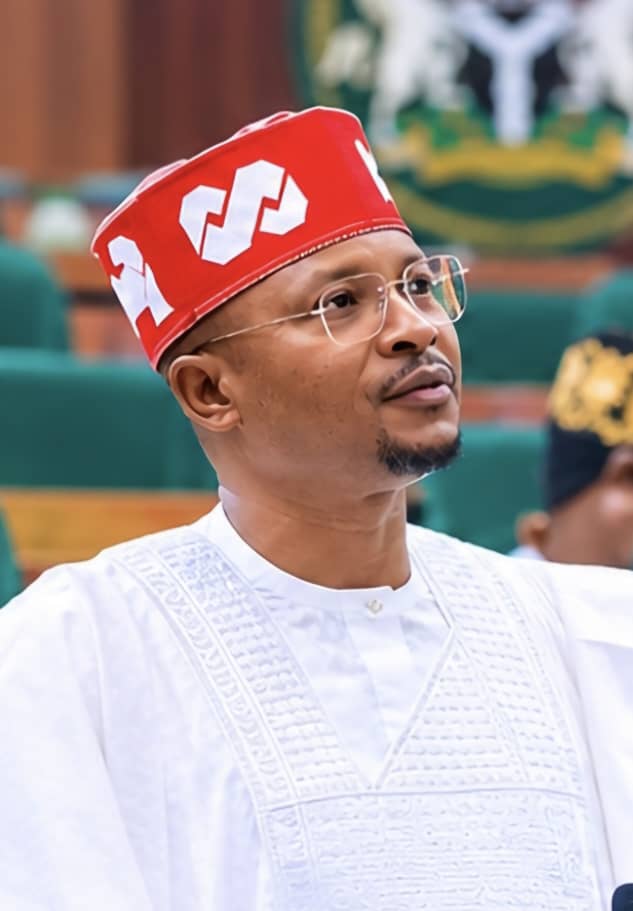

Leke Abejide Championing Tinubu’s Re-election, Mobilises Yoruba Community in Kano, Jigawa
By Our Correspondent
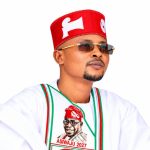
As political activities gradually intensify ahead of the 2027 general elections, Hon. Leke Joseph Abejide, member representing Yagba Federal Constituency in the House of Representatives, has emerged as one of the political figures openly canvassing support for President Bola Ahmed Tinubu’s bid for a second term.
Abejide’s political advocacy has extended beyond his home constituency in Kogi State, with particular attention to Yoruba communities in Northern Nigeria, including Kano and Jigawa States.
- Advertisement -

The lawmaker, who has longstanding ties to Kano, has repeatedly called on Yoruba people living in the North to unite and participate actively in the political process, while supporting what he describes as the policies and programmes of the Tinubu administration.
A Bridge Between the North and the Yoruba Community
Abejide’s relationship with Kano predates his emergence as a federal lawmaker. He has publicly stated that he lived in Kano for more than three decades and built his business and political relationships there.
In 2022, the Yoruba community in Kano conferred on him the traditional title of Asiwaju Yoruba Kano, a recognition reported to have been bestowed by the Oba Yoruba Kano and the Yoruba community in the state.
That background has given Abejide a platform from which he has continued to engage Yoruba organisations and traditional leaders in Northern Nigeria.
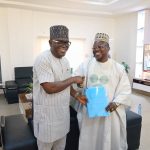
At a gathering of Yoruba traditional leaders and Obas in Abuja, he urged Yoruba people living in the North to work together and support President Tinubu’s administration. He argued that a united Yoruba community could play a significant role in determining political outcomes while also protecting its interests.
Taking the Message to Kano and Beyond
The emerging political mobilisation associated with Abejide is not restricted to political speeches.
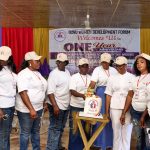
In August 2026, a 21-member One Million Residents Community Empowerment Committee was inaugurated in Kano for an initiative championed by Abejide. According to reports, the programme is designed to target youths, women, entrepreneurs, artisans and small-business owners while also building grassroots support for Tinubu’s Renewed Hope Agenda.
The initiative illustrates an approach that seeks to combine political mobilisation with economic empowerment.
For supporters of the project, the argument is that political engagement becomes more meaningful when it is accompanied by programmes capable of improving livelihoods and creating opportunities at the grassroots.
The Jigawa Dimension
The mobilisation of Yoruba communities in the North also extends into neighbouring states such as Jigawa, where Yoruba residents and business communities form part of the wider network of Nigerians living and working outside their states of origin.
For Abejide and those working with him, the objective is to encourage greater political participation among these communities and ensure that Nigerians living outside their ancestral states are not disconnected from national politics.
The broader message is that ethnic identity and geographical location should not prevent citizens from participating in determining the country’s political direction.
From ADC to Open Support for Tinubu
Abejide’s support for Tinubu has also been notable because of his previous political platform.
He was elected to the House of Representatives on the African Democratic Congress (ADC) platform. In January 2026, he publicly stated that his faction of the ADC would support Tinubu in the 2027 presidential election.
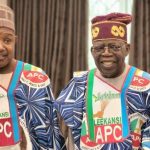
By May 2026, Abejide had announced his departure from the ADC, citing prolonged internal crisis and legal uncertainties within the party. He subsequently aligned himself with the ruling political establishment and was cleared by the All Progressives Congress to contest its House of Representatives primary for Yagba Federal Constituency.
His political journey has therefore added another dimension to his current mobilisation for Tinubu.
Yoruba Political Participation in the North
Beyond the immediate electoral calculations, Abejide’s engagement with Yoruba communities in Northern Nigeria raises a broader issue: the political influence of Nigerians who live outside their states of origin.
Yoruba communities have established deep commercial, professional and cultural networks across Northern Nigeria over many decades.
Kano, in particular, has historically served as a major commercial centre, attracting people from different parts of Nigeria.
Abejide’s own story reflects this relationship. He has repeatedly referred to his years in Kano and the opportunities he found there, presenting the city as an important part of his personal and professional development.
His message to Yoruba residents is consequently built around political participation, unity and engagement with the communities where they live.
Beyond 2027
The success or otherwise of any political mobilisation will ultimately depend on the choices voters make at the ballot box.
For Abejide, however, the 2027 election provides an opportunity to consolidate a political network that stretches from Yagba in Kogi State to Yoruba communities across Northern Nigeria.
His continuing advocacy for Tinubu’s re-election, coupled with his engagement with Yoruba traditional institutions and grassroots empowerment initiatives, has placed him prominently within the emerging political conversation ahead of 2027.
Whether his mobilisation will translate into sustained political support remains a matter for the electorate.
What is already evident is that Leke Abejide is seeking to position himself as a political bridge between the Yoruba community in Northern Nigeria and the broader national political conversation, with President Tinubu’s 2027 re-election campaign at the centre of that engagement.
DemocracyNewslineNewspaper September 28, 2026