



N300 daily feeding allowance not enough for visually impaired students, Alao-Akala’s widow tells govt
KEHINDE AKINPELU ILORIN
Wife of former Oyo State Governor, Chief (Mrs) Oluwakemi Alao-Akala, has called on the government and well-meaning Nigerians to urgently improve the welfare package for visually impaired students, describing the current daily feeding allowance of N300 as “grossly inadequate”.
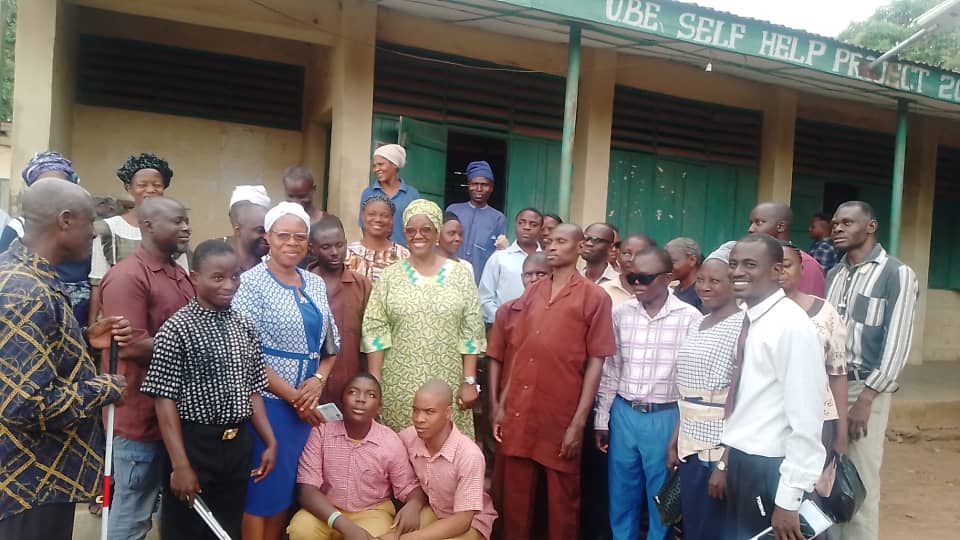
The former Oyo State First Lady made the appeal during a humanitarian visit to the Nigeria Training Centre for the Blind and the Oyo State Special Basic School in Ogbomoso, where she fulfilled a previous promise to support the institutions.
- Advertisement -

Speaking with journalists, Chief (Mrs) Alao-Akala said her visit was driven by a commitment she made during an earlier engagement with the schools, particularly to assist their vocational unit.
“The last time I was here, they requested support for the vocational department and I promised to provide uniforms for them. Today is simply a case of promise kept. I ensured they got what they asked for,” she said.
During the visit, she donated uniforms, liquid soap, beads, disinfectants and air fresheners to support the students’ learning and daily living conditions.
She commended the students for their determination and creativity, noting that their ability to acquire vocational skills despite visual impairment demonstrates their capacity for independence.
“I have spoken with them and seen the things they produce and sell. It shows clearly that they can stand on their own. Despite being visually impaired, they possess skills that can help them live meaningful and independent lives,” she said.
Mrs Alao-Akala stressed that keeping the students actively engaged in productive activities contributes significantly to their emotional wellbeing and overall happiness.
“When they are busy, they are happy. You can see the joy on their faces. With all these activities, they don’t have time for negative things,” she added.
She further expressed admiration for the quality of items produced by the students, revealing that she had purchased a basket made by them and even requested a customised bag.
“I was amazed that they could create such beautiful items. I even have a special design of a bag I want them to make for me,” she said.
Calling for greater societal support, she urged Nigerians to regularly visit and assist institutions catering to persons with disabilities.
“People should come here from time to time to support them in whatever way they can. If they are happy, then everyone is happy,” she said.
However, she raised serious concern over the feeding allowance available to the students, insisting that the current provision falls far below acceptable standards.
“What comes to them is not encouraging. N300 per day is not enough for anyone. I appeal to the government to increase their allocation because their wellbeing matters to all of us,” she stressed.
She also recalled her late husband’s commitment to supporting vulnerable groups during his time in office, urging both government and citizens to sustain such efforts.
In her remarks, the Headmistress of the school, Mrs Oyedokun Janet Olabimpe, appealed to parents to stop hiding children with disabilities and instead enrol them in schools where they can receive proper care and education.
“If you have any disabled child at home, don’t keep them hidden. Bring them to us at Oyo State Special Basic School, Ogbomoso. These children are capable and should be given the opportunity to become what God wants them to be,” she said.
Also speaking, a special educator, Mr Ogunleke Simeon, emphasised the importance of early enrolment for children with special needs, warning that delays in education can limit their development.
“We want to sensitise the public that children with special needs should not be kept at home. When they are brought early, they can be properly trained in braille, typing and other academic activities just like their peers in regular schools,” he said.
He added that vocational training at the institution dates back to 1958, while formal academic instruction for visually impaired learners began in 1977, following the recognition of their educational potential.
(DEMOCRACY NEWSLINE NEWSPAPER, MARCH 31ST 2026)