


THE CRY BEHIND THE CRY: THE CRY OF THE UNDISCOVERED SELF
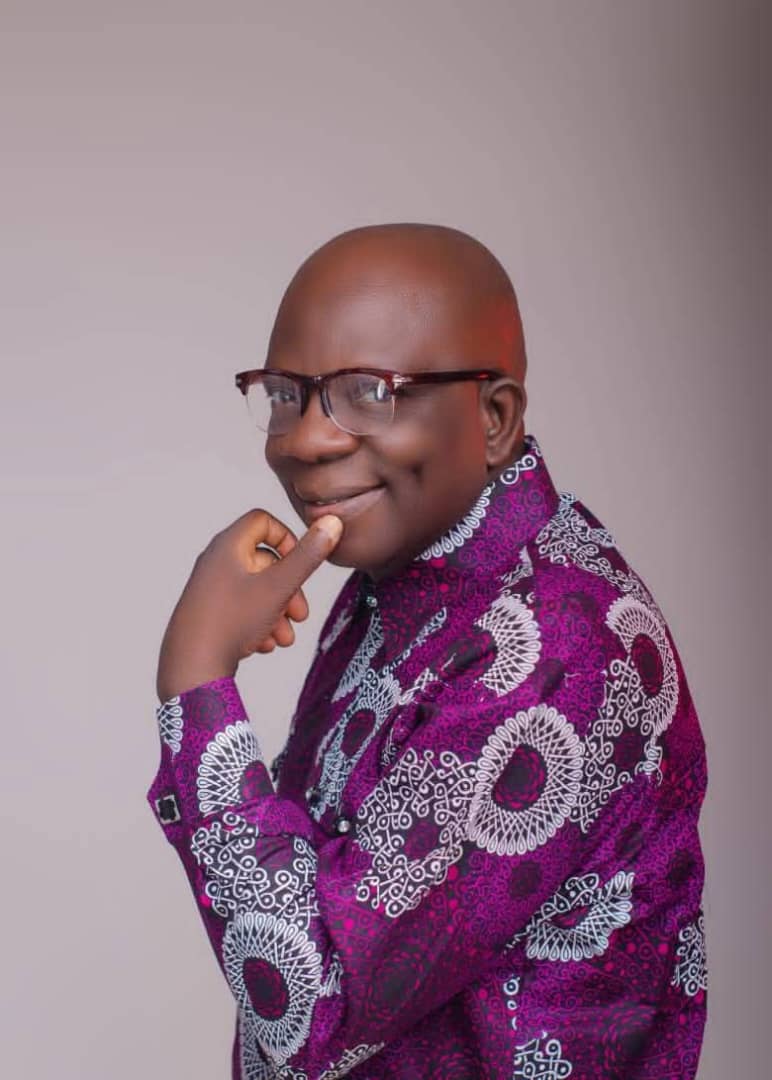
By Shae Bebeyi @ Curiously Yours Arena
The greatest tragedy in life is not merely to die without wealth, but to live without discovering why you were born.
There is a cry that money cannot silence, political power cannot suppress, public recognition cannot satisfy, and material possessions cannot permanently satisfy. It is the cry of the undiscovered self—the silent struggle of people who have spent their lives becoming what society expects without discovering who they truly are and what they were born to accomplish.
- Advertisement -
This cry is not limited to the poor, the unemployed or the forgotten. It can also be found in government houses, corporate boardrooms, political offices, business empires and the corridors of influence.
In Nigeria, where political power is fiercely contested, wealth is celebrated, and social status often determines public recognition, an important question deserves our attention: Are we becoming a nation of people who know what they want to possess but have yet to discover what they ought to become?
Our society frequently measures success by the position a person occupies, the money in their bank account, the cars they drive, the people they know and the influence they command. Yet, beneath these outward achievements lies a deeper question: What purpose does this success serve?
A politician may win elections without discovering the responsibility of leadership. A businessperson may accumulate wealth without understanding the obligations that accompany prosperity. A public administrator may rise through the ranks without appreciating the human consequences of administrative decisions.
A person may become everything society celebrates and still remain a stranger to himself.
Position may introduce you to society, wealth may give you influence, but only purpose can give your achievements lasting meaning.
This is the crisis of the undiscovered self, and its consequences extend beyond individuals to the institutions they build, the businesses they manage and the nations they lead.
Nigeria’s challenge, therefore, is not simply about finding competent people to occupy public offices or capable individuals to manage private enterprises. It is also about developing people whose ambition is guided by character, whose influence is restrained by responsibility, and whose success is measured by the value they create for others.
A nation cannot consistently achieve more than the quality of its thinking, the strength of its institutions and the values that guide its decisions.
We cannot ignore the relationship between personal purpose and national development. When individuals place self-interest above collective welfare, institutions become vulnerable to manipulation. When businesses pursue profit without responsibility, communities bear the consequences. When political leaders treat public office as personal property, governance loses its moral foundation.
The problem is not ambition itself. Nigeria needs ambitious politicians, enterprising businesspeople, innovative professionals and courageous leaders. What the nation cannot afford is ambition without conscience.
The tragedy begins when the desire to become important becomes more powerful than the willingness to become useful.
Our economic conversation also demands deeper reflection. Economic growth matters, and no serious nation can overlook employment, industrialisation, agricultural productivity, infrastructure, investment and wealth creation. But development must ultimately improve the lives of the people it is intended to serve.
What does economic growth mean to a graduate who cannot find employment? What does industrial expansion mean to a small business owner struggling with electricity costs, taxation and access to affordable credit? What does agricultural potential mean to a farmer whose produce cannot reach profitable markets because of poor roads, insecurity or inadequate storage?
Behind every economic statistic is a human story. Behind every unemployment figure is a frustrated ambition. Behind every inflation rate is a household making difficult choices. Behind every struggling enterprise is a dream that may be fighting for survival.
These realities remind us that the economy is not an abstract collection of figures. It is a system that shapes human possibilities.
The true measure of economic success is not merely the wealth a nation produces, but the dignity, opportunity and security that wealth creates for its people.
This is where the Nigerian business community must look beyond immediate profit and consider its broader responsibility. Businesses are essential to national development because they create employment, generate revenue, stimulate innovation and expand opportunities. However, sustainable enterprise requires more than the ability to make money. It requires vision, integrity, sound management and an understanding of the society in which the business operates.
Profit is necessary for survival, but trust is essential for longevity. A business that exploits its workers, deceives its customers or undermines its community may record short-term gains while destroying the foundation of its future.
The same principle applies to leadership in government.
Politics, at its best, is the organisation of society for the common good. Public office should provide an opportunity to solve problems, strengthen institutions and improve the conditions under which citizens live. Yet, when political ambition becomes detached from public responsibility, leadership degenerates into a contest for personal advantage.
The undiscovered self in politics is the individual who seeks power without understanding service, demands loyalty without demonstrating integrity, and desires public honour without accepting public accountability.
Nigeria does not lack people who want to lead. The more difficult question is whether those seeking leadership have discovered the responsibility that leadership demands.
A political mandate is not a personal inheritance. Public funds are not private rewards. Government institutions are not instruments for settling personal scores. The authority entrusted to elected officials and public servants exists to serve the people.
“The greatest test of leadership is not how much power a person acquires, but how much good that power accomplishes for those who entrusted it to him.”
This truth should challenge every level of the political class, from local government officials to state governors, legislators, ministers and the highest offices of the federation.
It should equally challenge corporate executives, traditional institutions, religious leaders and professionals whose decisions influence the lives of others.
However, citizens must also examine their own responsibilities. It is convenient to condemn corruption in public office while tolerating dishonesty in private dealings. It is easy to demand accountability from political leaders while refusing to accept responsibility for our own conduct.
When votes are exchanged for immediate gratification, when merit is sacrificed on the altar of personal connections, and when public wrongdoing is excused because the offender belongs to our political, ethnic, religious or social group, the foundations of accountability become weaker.
This does not absolve those entrusted with public authority of their greater obligations. Rather, it reminds us that a healthy democracy requires both responsible leadership and citizens who understand the value of their choices.
We cannot build a culture of integrity through selective condemnation. Neither can we demand national transformation while celebrating the very attitudes that frustrate it.
The question of the undiscovered self is therefore not merely personal or political. It is also a question of national character.
What kind of society are we building when influence matters more than competence, loyalty matters more than truth, and the appearance of success matters more than the substance of achievement?
Perhaps Nigeria’s greatest challenge is not simply the struggle to discover natural resources, develop infrastructure or attract investment. It is the need to discover and develop the human capacity required to transform these opportunities into lasting national progress.
Our natural resources cannot substitute for responsible management. Our population cannot become an advantage without education, skills, healthcare and productive opportunities. Our democratic institutions cannot function effectively without integrity, accountability and respect for the rule of law.
A nation’s potential is not the same as its achievement. Potential becomes progress only when vision is translated into disciplined action.
At the deepest level, the search for purpose also raises spiritual and moral questions. Human beings have always sought to understand why they exist, what makes life meaningful and what responsibilities accompany the gift of existence.
The Bible declares in Acts 17:28, “For in him we live, and move, and have our being.”
For those who embrace this understanding, life is more than the pursuit of possessions, recognition and personal comfort. It carries a responsibility to contribute, serve and use one’s abilities wisely.
We are not here merely to accumulate wealth, occupy positions or leave behind monuments bearing our names. We are also here to improve lives, strengthen communities, nurture future generations and make our contributions count.
A person who discovers personal greatness but fails to recognise responsibility to others has discovered only half of himself.
This principle is particularly relevant to those who possess wealth, authority, knowledge or influence. Such advantages should not become reasons for superiority but opportunities for greater responsibility.
The wealthy can create opportunities. The politically powerful can strengthen institutions. Business leaders can build enterprises that generate decent employment. Professionals can use their expertise to solve problems. Young people can challenge outdated assumptions and develop innovative responses to national difficulties.
Every individual may not occupy a public office, own a large business or command national influence. Yet everyone has the capacity to make a meaningful contribution within their sphere of responsibility.
The challenge is to recognise that contribution and pursue it with discipline.
Perhaps the greatest crisis of our generation is not the absence of information but the shortage of reflection. We communicate constantly, yet often fail to listen. We pursue success relentlessly, yet rarely question its meaning. We celebrate achievement, yet sometimes neglect the values that make achievement worthwhile.
Technology is advancing, businesses are evolving, and societies are changing. Nigeria must embrace innovation and prepare its people for the opportunities of a changing world. But progress must not outrun conscience, and innovation must not become an excuse to abandon responsibility.
We must raise leaders who understand that public office is a trust, entrepreneurs who recognise that enterprise carries social obligations, and citizens who understand that national development requires more than criticism of government.
We must also encourage young Nigerians to discover their abilities, develop their skills and create opportunities rather than surrender to the limitations imposed by their circumstances.
Yet, individual responsibility must not become an excuse for government failure. Citizens need an environment in which hard work can produce results, businesses can grow, institutions can function, and talent can find expression. Government must create the conditions that allow people to translate their potential into productivity.
A purposeful individual needs opportunity to contribute, just as a purposeful nation needs institutions capable of converting collective ambition into measurable progress.
Perhaps, then, the cry behind poverty is not only for money but also for opportunity. The cry behind unemployment is not only for jobs but also for dignity. The cry behind political dissatisfaction is not only for different leaders but also for a system that rewards competence, protects rights and demands accountability.
And the cry behind personal emptiness may not be for more possessions, greater recognition or higher office, but for a reason to live beyond the pursuit of personal advantage.
At the heart of these struggles is a fundamental human desire: to know that our lives matter, that our efforts are not wasted, and that our presence has made a difference.
For Nigeria, this calls for a new understanding of success—one that values wealth creation without worshipping wealth, political ambition without glorifying power, and leadership without separating authority from responsibility.
When leaders discover service, governance becomes more meaningful. When businesses discover responsibility, prosperity becomes more sustainable. When citizens discover their collective duty, democracy becomes stronger. And when a nation places human dignity at the centre of its development, progress becomes more than a political slogan.
The journey towards national transformation must therefore begin with honest questions about who we are, what we value and what we intend to leave behind.
The greatest journey may not be from poverty to wealth, from obscurity to fame or from an ordinary position to the corridors of power. It may be the journey from mere existence to purposeful living.
After all, history does not remember every person who acquired wealth, occupied an office or commanded influence. It remembers those whose actions changed the course of events and whose contributions outlived their personal ambitions.
Perhaps the ultimate tragedy is not to die poor, unknown or uncelebrated. It is to possess the opportunity to make a difference and never discover what one was capable of becoming.
So, as Nigeria searches for better leaders, stronger businesses and a more prosperous future, are we prepared to confront the most uncomfortable question of all: Have we truly discovered who we are, or are we merely becoming successful at being everything except what we were created to be?
DemocracyNewslineNewspaper October 19th, 2026