





TIERFELD INTERNATIONAL LIMITED ANIMAL FARM: A Rising Agricultural Enterprise Positioning Kogi State for Food Security, Job Creation and Economic Growth
By Dr. Olufemi Samuel Adeyinka Aiyeku Development Economist | Policy and Political Analyst | Entrepreneurship and Investment Development Consultant | Climate Change Advocate | Co-Founder & Lead Consultant (MD/CEO), Global Human Capital & Energy Management Limited (GHCEML)
Location: Eganyi, Ajaokuta Local Government Area, Kogi Central Senatorial District, Kogi State, Nigeria
*From 50 Hectares to Agricultural Transformation: The Tierfeld Story*
- Advertisement -

As Nigeria searches for lasting solutions to food insecurity, unemployment, rising food prices and heavy dependence on imported agricultural products, purposeful agricultural enterprises offer a promising path to economic recovery and rural prosperity. One such initiative is Tierfeld International Limited Animal Farm, an emerging integrated agricultural enterprise at Eganyi, Ajaokuta Local Government Area of Kogi State.
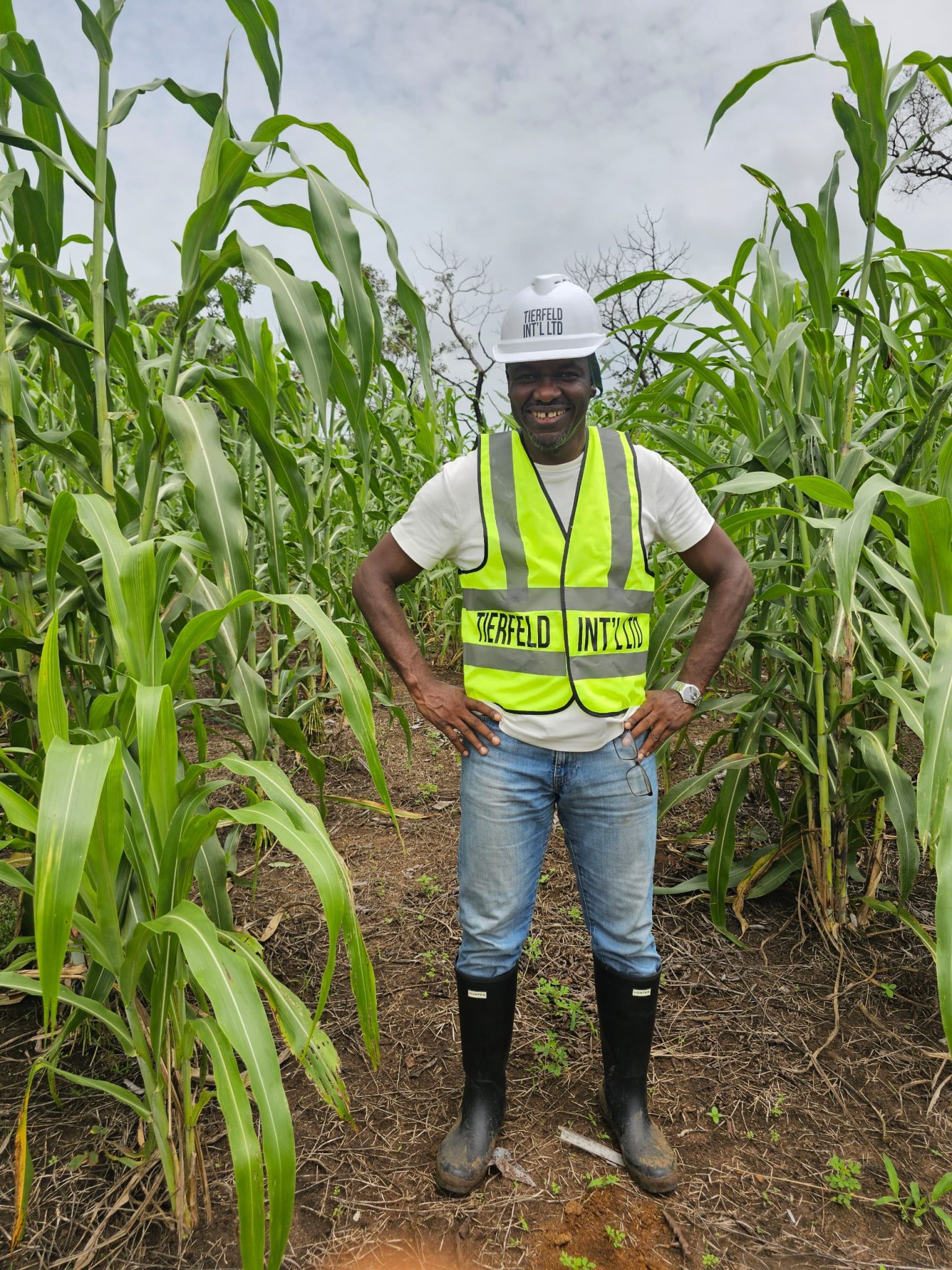
Operating on approximately 50 hectares, the farm represents an investment in productive agriculture, crop diversification, rural enterprise and long-term agricultural value chains. According to management, the enterprise has established a range of crop plantations within its first two years of operation, while preparing for future expansion into large-scale animal husbandry.
At the centre of the initiative is its Chairman, Mallam Yakubu Adoke, popularly known as YAKS. The story of Tierfeld is not merely about cultivating land; it is about how agriculture can become a vehicle for wealth creation, industrial development, employment generation and improved livelihoods in Kogi State and beyond.
*Entrepreneurial Leadership and the YAKS Philosophy:*
Entrepreneurship is not defined solely by financial resources or public recognition. It is reflected in the ability to identify opportunities, mobilise resources, take calculated risks, organise productive activity and create lasting economic value. Tierfeld offers a practical illustration of these principles.
Within two years, the farm reports that it has established more than 25,000 oil-palm trees, cultivated cassava across over 30 hectares, introduced several complementary food crops and planted more than 10,000 seedlings each of selected banana and plantain varieties. Its reported investment in multiple industrial boreholes and water-reticulation facilities shows the importance management attaches to water availability and operational infrastructure.
The strategy combines immediate food-crop production (cassava, maize, beans, soybeans and guinea corn) with long-term plantation agriculture (oil palm, banana and plantain). A responsible assessment of the Chairman’s leadership should recognise these tangible initiatives while acknowledging that independently verified information about his wider professional history and previous business record remains limited. The strongest public appraisal at this stage is therefore grounded in the agricultural enterprise he is building and the community benefits it intends to deliver.
His guiding philosophy, in his own words:
“Services to humanity is not necessarily until you getting an elective position or political offices before we can give back to our communities.”
The statement places responsibility for community development on entrepreneurs, professionals and investors, not only on holders of political office. Productive agriculture can express this philosophy when it creates decent jobs, develops local skills, strengthens food supply, opens markets for smallholders and offers sustainable opportunities to young people.
*Two Years of Reported Agricultural Development:*
• 50 hectares: total reported farm land.
• Over 30 hectares: reported to be under cassava, with other crops grown alongside.
• Over 25,000 oil-palm trees: a significant plantation asset with long-term processing and commercial potential.
• Over 10,000 banana seedlings and over 10,000 plantain seedlings: reported to have been planted.
• Multiple industrial boreholes: water infrastructure for farm operations and water-reticulation services.
• Future livestock development: plans for large-scale animal husbandry for domestic protein supply and prospective export markets.
Cassava acreage is more than 60 per cent of the reported total land area. The remaining allocation should be confirmed by a current farm survey, since management also reports oil palm, fruit crops, other arable crops, infrastructure and farmhouses. Importantly, these figures are management-reported achievements, not independently audited production statistics; they nonetheless give a foundation for a more detailed development and investment plan. A documented land-use map, crop register, plantation survival rate, production history and financial record would help establish operational capacity and investment readiness.
The Cassava Industrialisation Vision:
Garri, Starch and Biogas
Tierfeld is positioning itself to pioneer an industrial-scale garri processing factory in Kogi Central Senatorial District. Building on its cassava cultivation at Eganyi, the company plans to explore large-scale processing into garri, cassava starch, industrial-grade cassava flour, cassava-based gum and other value-added products. Subject to feasibility studies and successful implementation, this could make Tierfeld a leading driver of cassava industrialisation in Kogi Central by reducing post-harvest losses, strengthening food security, creating dependable markets for local farmers and attracting investment into agriculture.
Processing would keep more economic value in the local economy, stimulate small and medium-sized enterprises, generate direct and indirect jobs, and widen opportunities for women and young entrepreneurs across farming, transport, packaging, distribution and manufacturing.
Beyond food processing, the company intends to explore biogas from suitable cassava-processing residues and other biodegradable farm waste, creating renewable energy and better waste management. Biogas could supply part of the factory’s energy needs, while properly treated organic residues could support compost and soil improvement. Cassava starch and appropriately developed cassava-derived gums have potential uses in food manufacturing, paper, textiles and adhesives, subject to product specifications and market demand.
The integrated strategy points towards import substitution, industrial diversification, rural development and climate-smart agriculture. Success will need appropriate technology, reliable feedstock, skilled personnel, quality assurance, environmental safeguards and partnerships with the Bank of Agriculture, Bank of Industry, commercial investors and development agencies.
*Why Tierfeld Matters to Nigeria’s Economy*
Agriculture remains strategic because it supports food production, rural livelihoods, industrial raw-material supply and interconnected markets. According to National Bureau of Statistics agricultural accounts, as reported by The PUNCH in March 2026, Nigeria’s agriculture sector recorded about ₦101.46 trillion in nominal output in 2025, up from ₦96.46 trillion in 2024. Crop production accounted for about ₦64.41 trillion and livestock about ₦25.66 trillion. These are nominal values, not inflation-adjusted measures of real growth.
This scale shows why agricultural enterprises should be assessed not only as farms but as contributors to processing, transport, storage, manufacturing, trade and employment. For Tierfeld, the opportunity lies in converting its land, plantations, water infrastructure and crop portfolio into a system that steadily raises output, cuts waste, supplies local industries and retains value in Kogi State. Its contribution to national GDP will depend on annual output, market prices, value added, processing capacity and operating efficiency.
*The Economic Importance of Tierfeld’s Major Crops:*
1. Oil palm: a long-term industrial asset. With more than 25,000 trees reportedly established, oil palm is among Tierfeld’s most strategic investments. It yields crude palm oil and palm-kernel oil for food manufacturing, soaps, detergents and cosmetics; palm-kernel cake can go into livestock feed with proper formulation. Value chains include fruit aggregation, mechanised milling, kernel crushing, soap manufacture, packaging and distribution. As the plantation matures, Tierfeld could first partner with established processors before building its own mill. Performance will depend on tree age and variety, survival rate, planting density, soil, harvest cycle and access to processing; the tree count should not be converted into a revenue projection without these details.
2. Cassava: food security, processing and import substitution. Nigeria is the world’s largest cassava producer. The FAO has highlighted processing opportunities in food products, ethanol and animal feed, and the Central Bank of Nigeria has identified cassava as a commodity for linking producers with processors. Across 30-plus hectares, Tierfeld can build relationships with garri processors, starch and flour producers, industrial buyers and feed businesses, or supply roots to existing facilities before establishing its own unit. The pathway begins with reliable yield records, improved varieties, harvest scheduling and market agreements. Benefits would reach harvesters, transporters, processors, packaging suppliers, traders and retailers.
3. Maize: food, feed and agro-industry. The FAO identifies Nigeria as Africa’s largest maize producer. Tierfeld’s maize could feed a future livestock programme, though formulation must account for protein, minerals, fibre and energy balance by species. Opportunities include aggregation, drying, storage, milling and supply to poultry farms, feed mills and food processors. Moisture testing, drying equipment and protected storage would minimise losses.
4. Soybeans: protein, oil and feed. Soybeans link crop production, food manufacturing and animal husbandry through oil, meal and protein-rich feed. They could anchor an integrated crop-and-livestock strategy, supported by contract farming, seed-quality improvement and supply agreements with processors and feed manufacturers.
5. Beans: affordable protein and rural markets. Beans, including suitable cowpea varieties, provide dietary protein and household income through cleaning, grading, packaging and distribution to wholesalers, retailers and institutions. Legumes may also improve soil fertility through nitrogen fixation, depending on nodulation, rotation and soil management. Improved seed, planting schedules and pest management (especially storage pests) would raise commercial value.
6. Guinea corn (sorghum): food, feed and climate resilience. Used in traditional foods, flour, beverages and some feed, sorghum tolerates heat and dry conditions, which suits climate-smart planning. It helps diversify production and spread weather and market risk, provided planting calendars are well coordinated.
7. Banana: fresh produce and processing. Over 10,000 seedlings create a long-term opportunity, subject to successful establishment. Bananas can be sold fresh or processed into dried products and flour. Because they are perishable, Tierfeld should secure reliable markets and transport before expanding substantially.
8. Plantain: domestic markets and agro-processing. Plantain serves fresh markets, food service and retail, and can become flour, chips and packaged products to standard. The 10,000-plus seedlings could support a supply programme for markets, restaurants, vendors and processors, once realistic yields, harvest schedules, quality standards and market agreements are set.
Together, these crops give Tierfeld a diversified base; their potential is realised when cultivation links to efficient harvesting, storage, processing, distribution and dependable buyers.
*Strategic Agricultural Value Chains Tierfield Can Develop:*
Tierfield’s long-term growth depends on connecting crop production with processing, livestock development, technology, financing, and markets. Key opportunities include oil palm processing, cassava products, maize and sorghum milling, soybean and bean processing, banana and plantain products, and livestock farming.
Additional opportunities include producing animal feed, converting organic waste into compost, providing agricultural services such as seedling production and mechanisation, and investing in logistics, storage, and transportation.
These value chains could generate long-term revenue, improve food security, reduce imports and post-harvest losses, create employment, strengthen livestock production and increase farmers’ incomes.
These are proposed opportunities, not businesses already confirmed as operational. A prudent approach prioritises market research, reliable production data and offtake agreements before committing capital to processing plants or fixed assets.
*Integrating Crop Production with Animal Husbandry:*
One of Tierfeld’s most promising directions is integrating crops with commercial livestock. The farm intends to establish large-scale animal husbandry to increase domestic protein supply and explore animal-export markets. Maize and soybean products could go into formulated feeds, suitable cassava by-products could supplement rations, and livestock manure could be composted for crops.
This requires sound feed formulation, veterinary oversight, disease prevention, biosecurity, animal welfare and environmental management; not every residue suits every animal. The initial livestock type should be chosen through a feasibility study covering capital, local demand, feed availability, veterinary services, water, mortality risk and expected returns. Proposed phases:
1. A pilot livestock unit with clear production targets.
2. Feed sourcing and storage linked to the crop programme.
3. Veterinary and biosecurity systems, including animal identification and health records.
4. Cold-chain, slaughter, processing or distribution partnerships where appropriate.
5. Expansion into approved export markets only after health certification, traceability and regulatory requirements are met.
*Water Infrastructure and Climate-Smart Agriculture:*
The reported industrial boreholes and water-reticulation system are a useful foundation. The next step is a technical assessment of borehole yields, water quality, pumping costs, storage capacity and distribution efficiency. Depending on findings, the farm could adopt drip irrigation, efficient water scheduling, soil-moisture monitoring, rainwater harvesting and solar-powered pumping where economical. Climate-smart practice also means improved seed varieties, soil testing, integrated pest management, erosion control, mulching and better organic-matter management. Financial viability should be judged against actual water availability, energy costs and crop needs.
*Employment, Youth Empowerment and Community Wealth Creation:*
A developing commercial farm can create direct jobs for supervisors, agronomists, machinery operators, irrigation technicians, nursery attendants, field workers, security staff, accountants, marketers and logistics personnel, and indirect opportunities for transporters, processors, traders, equipment-maintenance firms and packaging suppliers.
A standout proposal is the Tierfeld Youth Agripreneurship and Outgrower Scheme: selected young farmers would receive training, quality planting materials, technical guidance and help connecting with buyers, while nearby smallholders could supply selected crops under transparent quality, pricing and delivery agreements.
To demonstrate impact credibly, management should record jobs created, women and youths trained, outgrowers participating, wages paid, local suppliers engaged and annual output.
*Investment Opportunities and Strategic Partnerships*
To move from its present foundation to an integrated commercial operation, Tierfeld needs patient capital, expertise, technology and dependable markets. Management has indicated interest in engaging financial institutions, investors, international development agencies and donors. Channels include:
1. Bank of Agriculture (BOA): financing for inputs, mechanisation, plantation development, irrigation, storage, livestock and eligible value-chain investments; eligibility, terms and collateral to be confirmed with the bank.
2. Bank of Industry (BOI): for eligible agro-processing, manufacturing and storage components, with a bankable project showing production assumptions, demand, projections and repayment structure.
3. Central Bank of Nigeria (CBN): monitor and enquire about intervention programmes through participating institutions, without assuming any scheme is open or funding guaranteed.
4. Commercial banks and development finance institutions: working capital, equipment leasing, structured agricultural finance and expansion funding.
5. International development agencies and donors: technical assistance, training, climate-smart support and competitive grants, depending on whether programmes accept private commercial enterprises.
6. Private investors and strategic partners: equity investors, plantation operators, processors, livestock businesses, equipment suppliers and agri-tech firms.
*What Tierfeld Should Prepare for Investors:*
Management should assemble a comprehensive investment memorandum containing:
• Corporate registration, ownership information and evidence of land rights.
• A surveyed site plan of the 50-hectare farm and current land allocation.
• Verified crop inventories, seedling counts, plantation ages and survival rates.
• Production records, input costs, sales receipts and operating expenses.
• Water-resource assessments and infrastructure documentation.
• A phased development plan for processing, storage and livestock.
• Market studies, buyer commitments and proposed offtake agreements.
• A five-year financial model, cash-flow forecast and sensitivity analysis.
• Environmental and social safeguards, employment targets and a risk-management plan.
• The precise funding sought, its uses, financing structure and expected outcomes.
The farm should clearly distinguish between existing assets, planned investments and projected income to improve transparency.
Measuring Economic Returns
Agricultural development should be judged by measurable results, not plantation size. Useful indicators include annual tonnes harvested per crop, yield per hectare, production costs, percentage of produce sold, post-harvest losses, revenue by crop, operating profit and number of people employed, plus the share of crops processed locally, smallholders supported, feed supplied to livestock operations and value retained locally. Gross sales are not value added, and nominal revenue growth does not automatically mean real economic growth; sound investment demands attention to productivity, profitability, cost control and sustainability.
*A Strategic Opportunity for Kogi State:*
Kogi State’s location offers scope for supply relationships with markets and processors across the state and neighbouring commercial centres, to be tested against transport costs, road conditions, buyer demand, competition and available processing infrastructure. Eganyi could benefit from an enterprise that steadily expands local procurement, employment, training and distribution. With sound management and suitable investment, the farm could strengthen the rural economy and support national priorities in food security, youth employment, agricultural industrialisation and diversification, as a commercially viable, environmentally responsible enterprise that creates lasting value for owners, employees, communities and the Nigerian economy.
*Conclusion: From Productive Land to Enduring Economic Value*
Tierfeld’s first two years, with 50 hectares, an oil-palm plantation, cassava, banana and plantain, complementary food crops and water infrastructure, provide a base for a diversified agribusiness. The next phase calls for disciplined planning, stronger records, technical expertise, market access, appropriate financing and carefully sequenced investment in processing and livestock.
For Mallam Yakubu Adoke (YAKS), the challenge is to turn this foundation into a commercially sustainable enterprise measured in food produced, businesses supported, jobs created, investments mobilised and communities empowered. His belief that service to humanity does not require political office is a fitting principle for the task. Realising the potential will depend on converting assets and plans into verifiable results, sound business performance and lasting partnerships.
An agricultural enterprise’s most enduring legacy is not simply the land it cultivates, but the value it creates, the people it empowers and the economic opportunities it leaves behind.
About the Author:
Dr. Olufemi Samuel Adeyinka Aiyeku, is a Development Economist, Policy and Political Analyst, entrepreneurship and investment development consultant, and climate change advocate.
He is Co-Founder and Lead Consultant (MD/CEO) of Global Human Capital & Energy Management Limited (GHCEML), focused on human capital development, investment facilitation, project structuring and sustainable development, and Managing Director/CEO of FEMADE GLOBAL LINKS LIMITED GROUP. His interests include economic policy, agricultural and industrial development, public-private partnerships, investment mobilisation and enterprise development, with a focus on turning economic opportunities into sustainable jobs and improved livelihoods.
DemocracyNewslineNewspaper October 16th, 2026