


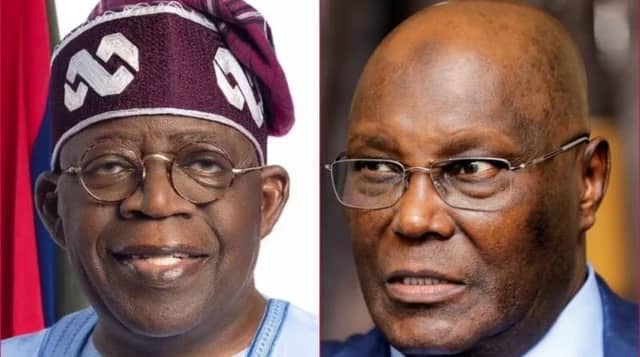

Tinubu Blames Atiku, Peter Obi for Nigeria’s Hunger, Poverty Ahead of 2027 Elections,
President Defends Economic Reforms, Cites Regular Salary Payments as Opposition Challenges His Record.
By Bala Salihu Dawakin Kudu
October 24, 2026.
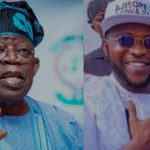
President Bola Ahmed Tinubu has blamed former Vice President Atiku Abubakar and former Anambra State Governor Peter Obi for the hunger and poverty confronting Nigerians, insisting that his administration is working to overcome the country’s economic challenges and improve the living conditions of citizens.
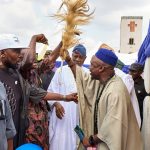
Tinubu made the remarks at the All Progressives Congress (APC) presidential campaign flag-off at the Kaduna Township Stadium in Kaduna State, where he rallied party supporters and began mobilising political support ahead of the 2027 general elections.
- Advertisement -
Addressing the gathering, the president challenged opposition leaders who have consistently criticised his administration over the rising cost of living, food prices and the growing economic difficulties faced by millions of Nigerians.
“I hear my opponent talk about hunger and poverty. Who created it? They did. They created poverty; they created hunger. We are trying to eradicate it. We pay salaries regularly. Our governors are working,” Tinubu said.
The president’s remarks have brought the question of responsibility for Nigeria’s economic hardship to the centre of the political debate as the ruling APC prepares to defend its position and seek another mandate in 2027.
Tinubu’s defence of his government comes against the backdrop of far-reaching economic reforms introduced since he assumed office in May 2023.
Among the most significant measures are the removal of the petrol subsidy and the reform of the foreign exchange system, policies the administration has defended as necessary to reduce government expenditure, improve revenue generation, address economic distortions and establish a more sustainable economic foundation.
However, the reforms have also had significant consequences for households and businesses, particularly through increased transportation costs, higher prices of goods and services, and pressure on the purchasing power of ordinary Nigerians.
For many families, the rising cost of food and other essential commodities has made it increasingly difficult to meet basic needs. Traders, transport operators, artisans, civil servants and private-sector workers have also faced mounting financial pressures.
Although the administration has maintained that its policies are intended to deliver long-term economic benefits, the immediate effects of the reforms have remained a major source of public concern and political criticism.
At the Kaduna rally, Tinubu sought to counter the opposition’s criticisms by pointing to the regular payment of salaries and the activities of APC-controlled state governments as evidence of his administration’s commitment to governance and economic recovery.
His argument suggests that the government considers fiscal reforms, the maintenance of salary payments and the implementation of development programmes important elements of its response to the country’s economic difficulties.
Nevertheless, regular salary payments alone cannot establish whether citizens’ purchasing power has improved or whether the cost of living has become more affordable. Voters are also likely to consider the effects of government policies on employment, food security, household income and access to essential services.
Opposition Leaders Challenge Government’s Record
Atiku Abubakar, who served as Nigeria’s vice president from 1999 to 2007, remains one of the country’s prominent opposition figures. He contested the 2023 presidential election against Tinubu and has continued to criticise the federal government’s economic management and approach to governance.
Atiku has advocated economic restructuring, greater private-sector participation and reforms aimed at improving productivity, creating jobs and addressing the structural weaknesses affecting the Nigerian economy.
Peter Obi, the Labour Party’s presidential candidate in the 2023 election and a former governor of Anambra State, has also remained a prominent critic of the administration.
Obi has repeatedly emphasised the need for prudent public spending, improved accountability, investment in productive sectors and policies that prioritise the welfare of ordinary Nigerians.
Both politicians have drawn public attention to the challenges facing households and businesses, making economic management a central issue in their criticism of the federal government.
Tinubu’s accusation that the opposition leaders created the conditions responsible for the present hardship represents a direct political response to their criticisms.
However, determining responsibility for Nigeria’s hunger and poverty requires consideration of the country’s economic history, the policies of successive administrations and the structural challenges that have persisted over several decades.
Nigeria’s Economic Challenges Predate Current Administration
Nigeria’s economic difficulties did not begin with the Tinubu administration. The country has long struggled with unemployment, inadequate infrastructure, dependence on crude oil revenue, weak industrial productivity, poverty and insufficient investment in agriculture and other productive sectors.
Successive governments have introduced different economic policies to address these problems, with varying degrees of success.
Other contributing factors include insecurity in farming communities, which has disrupted agricultural production in several parts of the country; exchange-rate volatility; high transportation and distribution costs; limited access to affordable credit; and persistent weaknesses in electricity supply and manufacturing.
These challenges have contributed to rising production costs, reduced business competitiveness and difficulties in making food and other essential commodities affordable.
At the same time, the policies of individual administrations have influenced the direction of the economy, including decisions relating to public spending, energy prices, foreign exchange management, taxation and investment.
Consequently, the debate over who bears responsibility for Nigeria’s present economic hardship is likely to become more intense as the 2027 elections approach.
For the ruling party, the argument is that the current administration inherited deep-rooted economic problems and is taking difficult but necessary measures to address them.
For the opposition, the central question is whether the government’s policies have delivered sufficient benefits to justify the economic sacrifices demanded of citizens.
Hunger and Cost of Living Dominate Public Debate
Beyond the political exchanges between Tinubu and his opponents, the affordability of food remains one of the most pressing concerns for Nigerian households.
The rising cost of staple foods, including rice, beans, maize, bread and other essential commodities, has placed considerable pressure on family budgets.
Low-income earners, particularly those whose incomes have not increased in line with living costs, are among the groups most vulnerable to the effects of inflation.
For workers who depend on fixed monthly salaries, the difference between income growth and the rising cost of essential goods can determine whether they can adequately feed their families, pay school fees, access healthcare and meet other obligations.
Small businesses have also faced increased operating expenses, including transportation, electricity, raw materials and rent. These pressures can affect their ability to expand, employ additional workers or maintain affordable prices.
The removal of the petrol subsidy has been a particularly significant factor in the public debate because petrol prices influence transportation and the movement of agricultural produce and manufactured goods across the country.
While the federal government has argued that ending the subsidy would free up resources for development and reduce fiscal pressures, many Nigerians continue to demand more visible evidence that the savings and other reforms are translating into improved living conditions.
The challenge before the administration is therefore not only to explain the rationale behind its policies but also to demonstrate measurable improvements in household welfare.
Tinubu’s remarks at the Kaduna rally also reflected the growing political contest ahead of the 2027 general elections.
The APC is expected to campaign on its economic reforms, revenue mobilisation efforts, infrastructure projects and other policies it considers achievements of the administration.
The opposition, meanwhile, is likely to focus on the cost of living, unemployment, insecurity, poverty and concerns about the effectiveness of government spending.
These competing narratives will place pressure on all political parties to present credible programmes capable of addressing the everyday challenges faced by Nigerians.
For Tinubu, securing a second term will require convincing voters that his administration’s economic policies are either already producing meaningful results or are likely to deliver substantial benefits within a reasonable period.
For Atiku, Obi and other opposition figures, the challenge will be to demonstrate that their proposed alternatives offer a practical and credible route to economic recovery.
The election debate is therefore expected to extend beyond political accusations to include questions about the management of public resources, agricultural development, industrialisation, job creation, social protection and the cost of governance.
As the political atmosphere gathers momentum, Nigerians are likely to assess the competing claims of the ruling party and the opposition against their personal experiences and the broader economic situation.
For many citizens, the most important indicators of progress will include affordable food, stable prices, better employment opportunities, improved security, reliable electricity, accessible healthcare and an increase in real household incomes.
The government’s ability to demonstrate progress in these areas could significantly influence public perceptions of its performance.
Similarly, opposition leaders will need to explain how their proposed policies would address the country’s longstanding economic problems and avoid placing additional burdens on already struggling households.
Tinubu’s decision to blame Atiku Abubakar and Peter Obi for the hunger and poverty confronting Nigerians has added another dimension to the political contest ahead of the 2027 presidential election.
While the president maintains that his administration is working to eradicate poverty and points to regular salary payments as evidence of its efforts, the opposition continues to challenge the government over the impact of its economic policies.
Ultimately, the debate will be decided not by political accusations alone but by the strength of the competing policy proposals and the extent to which the government can demonstrate tangible improvements in the lives of Nigerians.
As the 2027 elections approach, the central question remains whether the country’s economic direction will deliver the relief, opportunities and improved living standards that millions of citizens urgently seek.
DemocracyNewslineNewspaper October 25th, 2026