



YAGBA 2027: WHY LEKE ABEJIDE DESERVES CONTINUITY
Experience, Projects, Grassroots Connection and the Argument for Another Term
By Democracy Newsline Feature Desk
As political activities gather momentum ahead of the 2027 general elections, the debate over who should represent Yagba Federal Constituency in the House of Representatives is gradually taking centre stage.
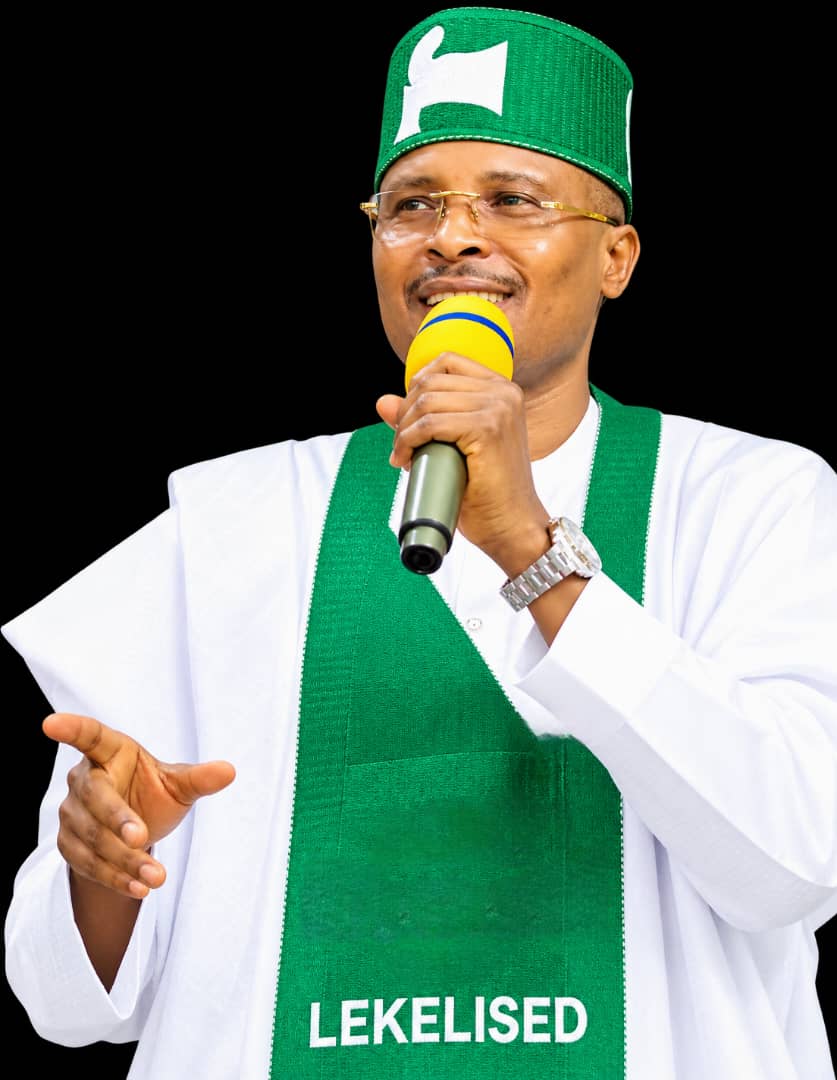
Across Yagba East, Yagba West and Mopamuro Local Government Areas, political conversations are increasingly focusing on the performance, experience and future of the incumbent representative, Rt. Hon. Leke Joseph Abejide, with his supporters making a strong case for continuity.
For those backing his return in 2027, the argument is anchored on a simple proposition: when a representative has acquired legislative experience, established channels of engagement and initiated development interventions, continuity provides an opportunity to consolidate those efforts rather than begin another cycle from scratch.
- Advertisement -

Abejide’s political journey in the National Assembly has made him a familiar figure in Yagba politics. Since assuming representation, he has remained at the centre of discussions concerning federal presence and constituency development.
The campaign for Abejide’s continuity is not being built solely around political affiliation. His supporters are presenting it as a question of experience and development.
According to them, effective representation at the federal level requires knowledge of legislative procedures, familiarity with government institutions and the ability to consistently draw attention to the needs of constituents.
They argue that after several years in the National Assembly, Abejide understands the peculiar challenges confronting Yagba and is better positioned to continue pursuing solutions to them.
The thinking among his supporters is that Yagba should consolidate what has been achieved while pursuing the unfinished business of development.
One of the major issues dominating conversations about Yagba’s development is infrastructure, particularly roads.
As an agrarian constituency, good roads are critical to the movement of farm produce, access to markets, transportation and the general economic wellbeing of rural communities.
Abejide’s supporters have consistently cited road interventions as one of the areas where they believe his representation has made a significant impact, particularly the ongoing rehabilitation and reconstruction of the 58-kilometre Igbagun–Alu–Iffe-Olukotun–Ejuku–Ijowa Road project, which he has been spearheading, aside other road projects in Isanlu, Takete-Ide and Odo-Ere towards Oke-Ere in Yagba West local government area.
They maintain that continuity would provide additional time and opportunity to pursue more federal interventions, attract attention to abandoned or deteriorating roads and advocate for projects capable of opening up rural communities.
For them, the objective is not simply to construct roads but to create an infrastructure network capable of stimulating commerce and agriculture throughout the constituency.
Another important component of the Abejide continuity argument is empowerment.
Supporters say representation must extend beyond physical infrastructure to include initiatives that directly affect the lives of ordinary people.
Educational assistance, skills acquisition, economic empowerment and support for vulnerable groups have consequently featured prominently in the narrative surrounding his representation. His payment of WAEC and NECO registration fees for SS3 students across Yagbaland, as well as in the Kabba/Bunu/Ijumu Federal Constituency, is more than a mere gesture. Beyond this, students in higher institutions have also benefited from what his supporters describe as significant educational support.
The emphasis is particularly significant in an environment where many young people are looking for opportunities to acquire skills, establish businesses and become economically independent.
For Abejide’s supporters, sustaining such programmes could help create a stronger connection between federal representation and grassroots economic development.
At the heart of the continuity campaign is also the question of political visibility.
Yagba, like many constituencies across Nigeria, requires consistent advocacy at the national level to attract federal projects and interventions.
Supporters of Abejide believe his experience within the National Assembly gives him an understanding of how to navigate legislative processes and engage relevant ministries, departments and agencies on matters affecting his constituency.
They contend that retaining an experienced representative can provide institutional continuity and preserve the relationships necessary to pursue constituency interests.
Perhaps the strongest argument for continuity is that development does not end with one project or one electoral cycle.
There are still challenges confronting communities across Yagba — electricity, roads, healthcare, education, agricultural development, youth employment, water supply and security among them.
Consequently, Abejide’s supporters see 2027 as an opportunity to consolidate existing interventions while pursuing a broader development agenda.
Their message is that the constituency should not merely change representatives for the sake of change, but should carefully examine what has been achieved, what remains outstanding and who possesses the experience and capacity to pursue the next phase.
The 2027 election will undoubtedly be contested along political-party lines, but the emerging debate in Yagba also provides an opportunity to place constituency development at the centre of electoral discussions.
For Abejide’s supporters, his record should be assessed against the realities of the constituency and the challenges confronting its people. Recently, the Leke Abejide Foundation disbursed ₦710 million to 71 communities for infrastructure development, with each community receiving ₦10 million to execute projects identified and prioritised by the respective communities.
It will interest the public to note that accessment of the projects being undertaken by the various communities is ongoing, while the second tranche of funding is also underway.
The Honourable Member has further pledged to provide ₦50 million worth of projects to each participating community over a five-year period, with a projected total investment of ₦5 billion in community infrastructure development for Yagbaland.
They believe the electorate should consider continuity as a development strategy — one that allows existing projects and initiatives to receive sustained attention while new priorities are pursued.
As the political season approaches, the contest for Yagba Federal Constituency is expected to attract intense interest.
The people of Yagba East, Yagba West and Mopamuro will once again have the opportunity to assess the candidates before them, examine their records and consider their respective visions for the constituency.
For those advocating the return of Rt. Hon. Leke Abejide, however, the message is already emphatic:
Yagba needs continuity.
Continuity of representation.
Continuity of federal advocacy.
Continuity of development initiatives.
Continuity of engagement with the grassroots.
And, most importantly, continuity of the pursuit of opportunities capable of improving the lives of the people.
As 2027 draws closer, the political conversation will become louder. But for Abejide’s supporters, the choice they are presenting to the people of Yagba is fundamentally about whether to consolidate the experience and development efforts of the present representative.
Yagba 2027, they insist, should be about building on what has been started, completing what remains unfinished and opening a new chapter of development through continuity.
DemocracyNewslineNewspaper, September 20, 2026