
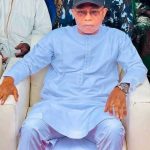





Yusuf Fires Back at Ajileye, Says ‘Rotation Cannot Be Selective’
Ex-Lawmaker Defends Senate Ambition, Challenges 16-Year Ijumu Run • Says 12 Years in House Is Not a Bar • ‘I Am Not Anybody’s Project’ • Tells Kogi West: Let the People Decide
By Our Reporter
The battle for the soul of Kogi West politics has taken a fresh and fiery turn as former House of Representatives member, Hon. Tajudeen Ayo Yusuf, popularly known as Teejay Yusuf, fired back at Pastor Stanley Ajileye over calls for him to shelve his Senate ambition in the interest of political rotation.
Yusuf, in a strongly worded response to Ajileye’s open letter, rejected the argument that his 12 years in the House of Representatives should automatically disqualify him from seeking the Kogi West Senatorial seat, declaring that “equity cannot be selective” and “fairness cannot be convenient.”
The development is expected to further intensify political realignments ahead of the 2027 elections, particularly within the Okun political space, where the question of zoning, rotation and equitable distribution of elective offices has become a major subject of debate.
- Advertisement -
Ajileye had argued that having spent 12 years in the House, Yusuf should allow other parts of Kogi West to take their turn in the Senate.
But Yusuf rejected the premise, insisting that political rotation must be applied consistently across all strategic positions and not invoked only when it favours a particular political interest.
“If rotation is truly about equity and fairness, then it cannot be applied selectively or only when it supports a particular political argument,” Yusuf declared.
He challenged proponents of the rotation argument to extend the same principle to other political offices, including the Speakership, ministerial appointments, deputy governorship and other positions of representation.
The former federal lawmaker’s most pointed challenge centred on what he described as the 16 consecutive years of Senate representation by Ijumu.
Yusuf argued that any honest assessment of equity in Kogi West must consider the political history of all seven Local Government Areas in the senatorial district rather than reducing the debate to a contest among selected federal constituencies.
Kogi West comprises Ijumu, Kabba-Bunu, Lokoja, Kogi/Koton Karfe, Mopamuro, Yagba East and Yagba West.
According to Yusuf, Yagba West held the Senate seat from 1979 to 1983 and again from 2023 to 2027, while Mopamuro had about two and a half years and Kabba-Bunu about three months. He also pointed to eight years of representation by Lokoja.
He noted that Kogi/Koton Karfe and Yagba East had never produced a Senator.
But his central question was directed at the period during which Ijumu allegedly enjoyed 16 uninterrupted years in the Senate.
“During the sixteen consecutive years that Ijumu occupied the Senate seat, where was the open letter calling on Ijumu to yield the position to another LGA in the spirit of equity and fairness?”
Yusuf said he raised the issue not to attack Ijumu or any individual but to expose what he considered an inconsistent application of the principle of rotation.
Yusuf also pushed back strongly against the argument that his 12 years in the House had exhausted his opportunity to serve in the National Assembly.
He reminded his critics that he represented Kabba-Bunu/Ijumu Federal Constituency in the House of Representatives during a period when, according to him, Ijumu simultaneously maintained continuous representation in the Senate.
He therefore argued that his previous legislative service should not be presented as though he had already occupied the Senate seat.
“Twelve years of service should be a record of experience, not a sentence barring further service,” he said.
Yusuf further pointed out that the incumbent Senator had also served eight years in the House before spending four years in the Senate, amounting to 12 years of legislative service.
He stressed that he did not question the incumbent’s right to seek another mandate and therefore demanded that his own right to contest should receive the same respect.
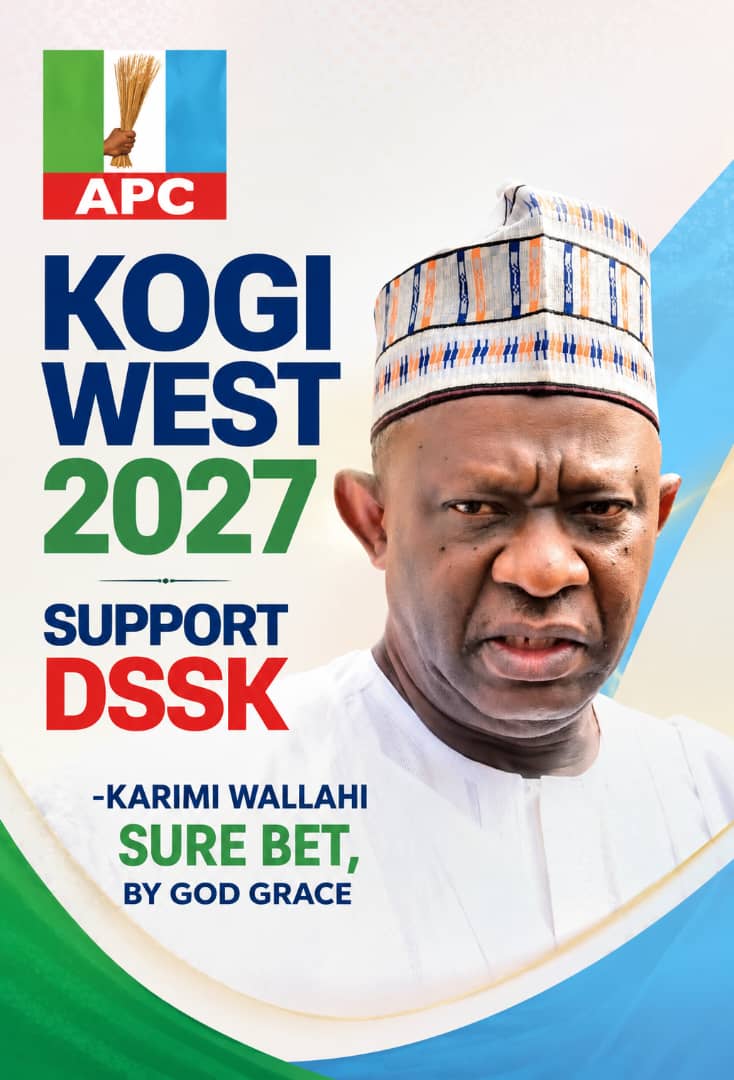
In another politically significant portion of his response, Yusuf dismissed suggestions that his Senate ambition was being promoted by powerful interests seeking to stop Senator Sunday Steve Karimi.
He described the insinuation as unfair and insulting, insisting that his Senate ambition was neither new nor externally imposed.
Yusuf pointed to his previous Senate aspirations in 2019 and 2023, asking whether the same alleged political forces were responsible for those attempts.
“I am not anybody’s project. I am not anybody’s weapon,” he declared.
According to him, his Senate ambition is driven by his personal convictions, political experience, capacity and desire to contribute to the development of Kogi West.
Yusuf also sought to reframe the contest, insisting that his ambition should not be viewed as an attempt by one LGA to take the Senate seat from another.
He declared that he was not contesting against Ijumu, Yagba, Kabba-Bunu, Lokoja, Kogi/Koton Karfe, Mopamuro or Yagba East.
Rather, he said he was offering himself to the entire Kogi West electorate.
“I am offering myself to the people of all seven LGAs of Kogi West,” he said.
The former lawmaker argued that voters should examine the records, competence, character, experience and vision of all aspirants before choosing their preferred candidate.
“That is democracy,” he added.
Yusuf also rejected advice that he should abandon the Senate race and wait for the governorship.
While appreciating the suggestion, he said the decision on the political office he seeks belongs to him.
He maintained that after considering his political journey, experience and capacity, he had chosen the Senate as the platform through which he could make his greatest contribution at this stage.
“For now, my aspiration is the Senate. It is not an ambition against anybody. It is an ambition to serve.”
Despite the sharp tone of his response, Yusuf called for the preservation of Okun unity, arguing that political disagreement should not destroy relationships.
He said Okun people could support different candidates, compete against one another and still remain brothers.
“Unity means that we can disagree, compete and still respect one another,” he said.
Yusuf urged political actors to compete with dignity, avoid hatred and preserve the bonds that unite the people irrespective of the outcome of the election.
Yusuf ended his response with what could become the defining message of his campaign: the people, rather than political arguments over zoning, should determine who represents Kogi West.
“I have served. I have experience. I have a record. I have a vision for Kogi West. And I believe I still have much more to contribute.”
He reiterated that his aspiration was not against any particular LGA or individual, but was, in his words, “an ambition for service.”
As the 2027 political contest gathers momentum, Yusuf’s response has opened a wider debate within Kogi West over the meaning of rotation, historical representation, political equity and the right of experienced politicians to seek higher office.
For now, Yusuf’s position is unequivocal: he wants the Senate, he intends to contest, and he wants the people of Kogi West to make the final decision.
DemocracyNewslineNewspaper, September 12 2026