

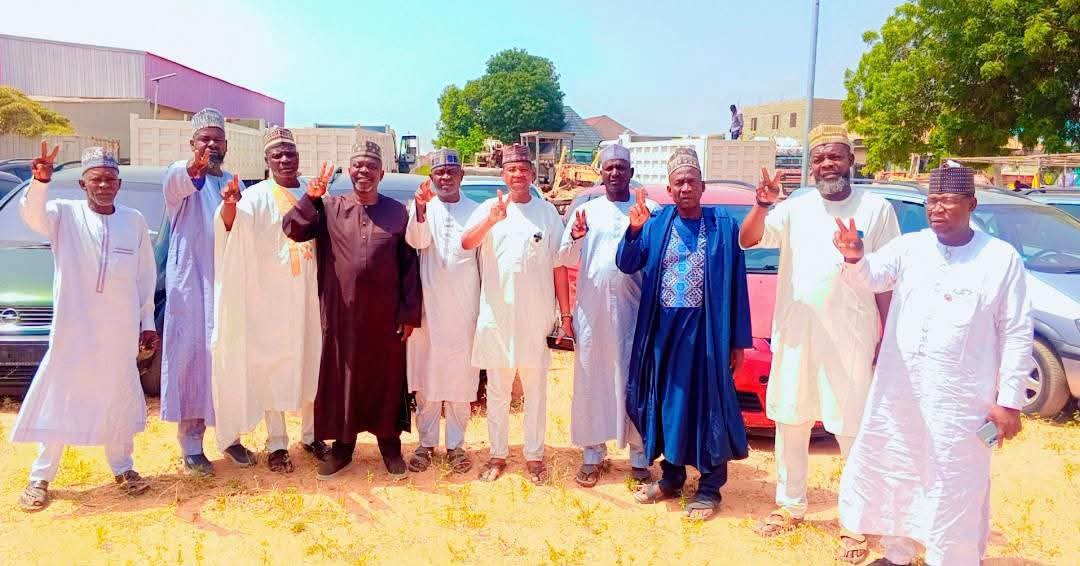

21 MAZDA BUSES IN A TIME OF HUNGER AND INSECURITY: IS APC LOSING TOUCH WITH THE PEOPLE OF KEBBI?
By Bala Salihu Dawakin Kudu
October 26, 2026.
The reported distribution of 21 Mazda vehicles to All Progressives Congress (APC) local government chairmen in Kebbi State, reportedly purchased by Governor Nasir Idris, popularly known as Kauran Gwandu, has raised serious questions about the administration’s spending priorities at a time when many residents are grappling with hunger, poverty, economic hardship and growing concerns over insecurity.
While the APC leadership may consider the vehicles an investment in party administration and grassroots mobilisation, the decision deserves public scrutiny, particularly regarding the source of funding, the cost of the vehicles and whether such expenditure represents the most urgent needs of the people of Kebbi State.
- Advertisement -
According to information provided about the distribution ceremony, the APC ALGON Chairman in Kebbi State and APC chairman of Augie Local Government Area, Hon. Bashir Yariman Mera, led the presentation of the 21 Mazda vehicles to the party chairmen representing the state’s 21 local government areas. The exercise was presented as a gesture intended to strengthen party activities and support grassroots mobilisation.
However, the central question remains: At a time when ordinary citizens are struggling to survive, should the priority be providing vehicles to party officials or addressing the pressing challenges confronting the people?
A Question of Priorities
Across Nigeria, households continue to face rising living costs, expensive food, transportation difficulties, unemployment and declining purchasing power. In communities affected by insecurity, the challenges are even more severe, as residents face threats to their livelihoods, farms, businesses and personal safety.
Kebbi State, with its substantial agricultural potential, depends heavily on farming and rural economic activities. Where insecurity disrupts farming and commercial movement, the consequences can include reduced agricultural output, higher food prices, lost income and increased hardship for vulnerable households.
Against this background, the reported allocation of 21 vehicles to party chairmen raises legitimate questions about the administration’s priorities. Could the resources involved have been directed towards improving security operations, supporting vulnerable families, strengthening rural healthcare, providing educational facilities or assisting farmers whose livelihoods are threatened by insecurity?
These questions are not necessarily an argument against providing transportation for public officials or political administrators. Rather, they are a demand for transparency, accountability and a clear demonstration that government spending reflects the immediate needs of the people.
Party Interests Versus Public Welfare
Political parties have legitimate administrative responsibilities, and their local government chairmen may require transportation to coordinate meetings, communicate with members and organise political activities. Nevertheless, there is an important distinction between supporting party structures and using public resources for partisan purposes.
If the vehicles were purchased with public funds, the government should clarify the expenditure, its legal basis, the budgetary provision and the public interest served by the transaction. If they were acquired through private or party funds, that should also be clearly stated to prevent unnecessary speculation.
The people of Kebbi State deserve answers to these questions. Transparency would help establish whether the expenditure was borne by the state government, the APC or another source. It would also enable citizens to assess the decision fairly rather than relying on political arguments or assumptions.
At a time when public confidence in political leadership depends increasingly on visible results, government decisions must be judged not merely by the intentions of those making them but also by their practical impact on the lives of ordinary citizens.
Of even greater concern is the need to strengthen security across vulnerable communities in Kebbi State. No political mobilisation programme can substitute for the protection of lives and property.
Residents need effective security responses, improved intelligence gathering, adequate support for security personnel, stronger cooperation with local communities and timely intervention in areas facing threats. Farmers must be able to access their farmlands without fear, traders must conduct business safely, and families must be confident that their communities are protected.
The government must therefore demonstrate that security remains a central priority through measurable action, adequate resources and sustained engagement with affected communities.
If the administration can provide vehicles for political coordination, citizens are entitled to ask what comparable measures are being taken to protect lives, relieve hunger and restore economic confidence. Such questions are part of democratic accountability, not an attack on any individual.
Is the APC Losing Touch With the People?
The distribution of the vehicles could become a political liability for the APC if residents perceive it as evidence that party interests are receiving greater attention than their daily struggles. However, it would be premature to conclude that the party has already suffered an irreversible political downfall based on this single development.
What is clear is that public perception matters. In a democratic society, political parties cannot depend indefinitely on internal loyalty, ceremonies and expressions of support. They must demonstrate that their policies and decisions improve the welfare of the people they seek to represent.
For the APC in Kebbi State, the challenge is to show that grassroots mobilisation goes hand in hand with tangible improvements in security, employment, agriculture, education, healthcare and social protection. The administration must also communicate clearly how its spending decisions serve the wider public interest.
Political loyalty is important to party members, but the welfare of citizens must remain the ultimate measure of responsible governance.
Governor Nasir Idris and the leadership of the APC in Kebbi State should treat the public reaction to the vehicle distribution as an opportunity to explain their decision and demonstrate responsiveness to the concerns of residents.
The government should provide clarity on the cost and funding of the vehicles, publish relevant information where appropriate, and show how its wider spending priorities address the urgent needs of the state. It should also intensify efforts to tackle insecurity, reduce the effects of economic hardship and support vulnerable communities.
Ultimately, the people of Kebbi State are entitled to expect a government that puts their safety, welfare and economic future first.
The 21 Mazda vehicles may strengthen the mobility of the party chairmen, but they cannot, by themselves, feed hungry families, secure threatened communities or restore the livelihoods of struggling citizens.
The real test of leadership is not the number of vehicles distributed to political allies, but the number of lives improved, communities secured and families lifted out of hardship.
As Kebbi State moves forward, the APC must recognise that its political future will depend not simply on the strength of its structures, but on whether the people believe that the government is genuinely working for them. If the administration fails to address their most pressing concerns, growing public dissatisfaction could become a serious challenge for the party in future elections.
The government has an opportunity to prove that the people, rather than partisan interests, remain at the centre of its priorities.
Write by Hon. Dantani Ango Yalo Special Assistant to Distinguish Senator Garba Musa Maidoki Representing Kebbi South Senatorial District.
DemocracyNewslineNewspaper October 27th, 2026