



Don’t Let Back-to-Back Fuel Subsidy Issues Distract from Atiku’s Vital Concerns
By Abba Dukawa
As we all know, the content, tone, and headlines of newspapers often lean towards sensationalism, largely driven by the quest for wider readership and public attention. However, as the media remains the fourth estate of the realm and a critical pillar of democracy, it has a responsibility to uphold fairness, objectivity, balance, and accuracy in its reportage.
Against this backdrop, one question deserves to be asked: Why have most media outlets focused almost exclusively on the recurring fuel subsidy debate while paying comparatively little attention to the broader and more fundamental concerns raised by Atiku Abubakar?
- Advertisement -
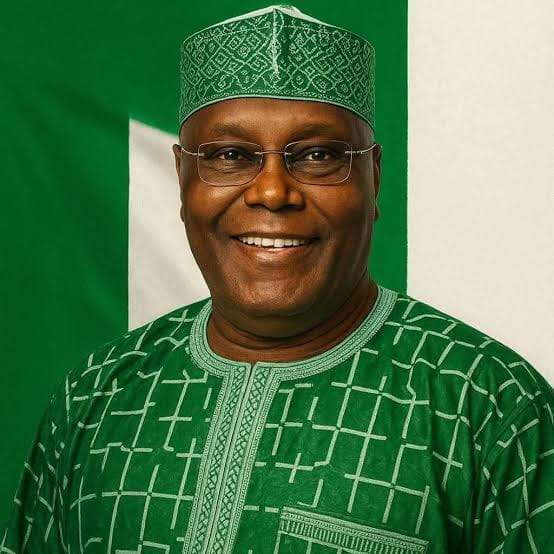
It is now a matter of public record that the presidential candidate of the African Democratic Congress (ADC), Atiku Abubakar, has promised to restore the fuel subsidy if elected president in the 2027 presidential election. His argument is that Nigerians have yet to see benefits commensurate with the economic pain caused by its removal.
The removal of the petrol subsidy resulted in a significant increase in fuel prices. This, in turn, raised transportation costs and pushed up the prices of food and other goods and services.
For millions of Nigerians already struggling with declining purchasing power, the reform has translated into a severe increase in the cost of living.
Nigeria reportedly generated an estimated ₦15.8 trillion in additional public resources from the removal of the petrol subsidy and the floating of the naira between June 2023 and December 2025.
These funds did not remain idle in government coffers. Rather, they were distributed among the three tiers of government through the Federation Account Allocation Committee (FAAC), providing additional resources amid mounting economic pressures on citizens.
According to the figures, state governments received approximately ₦6.52 trillion, while the Federal Government received ₦5.43 trillion. Local governments, meanwhile, received about ₦3.88 trillion.
The substantial increase in revenue was expected to help governments cushion the effects of rising inflation, worsening living conditions, and other economic difficulties associated with the reforms.
Yet, despite the resources made available, fundamental questions remain about how effectively the funds have been utilised.
This is where the conversation should move beyond the recurring question of whether the fuel subsidy should be restored.
There are legitimate concerns he raised about transparency, accountability, prudent management of public resources, and measurable outcomes.
Nigerians have every right to ask what has been achieved with the additional revenue accruing to the three tiers of government.
Atiku has argued that the increased allocations have not translated into improvements commensurate with the scale of the resources made available.
The lack of sufficiently clear and comprehensive public reporting on how the additional funds have been spent has further fuelled concerns about whether the revenue generated by the reforms is achieving its intended purpose.
The ADC presidential candidate also vowed that anyone responsible for looting or mismanaging funds saved from the fuel subsidy should be made to account for their actions and, where necessary, make full restitution. “If I win the presidential election, I will restore the subsidy. And anyone who stole Nigeria’s subsidy funds must return the money,” he declared.
More importantly, he questioned what has become of the savings generated by the removal of the subsidy, asking where the funds have gone and why Nigerians have not seen corresponding improvements in their living conditions.
According to his argument, if the money saved from subsidy reforms had been transparently invested in critical sectors such as healthcare, education, security, infrastructure, and youth empowerment, Nigeria would be in a far better position today.
Whether one agrees with Atiku’s proposal to restore the subsidy or not, should these questions not be given serious consideration? The debate should not be reduced to a simple contest between those who support subsidy removal and those who favour its restoration.
The more fundamental issue is how public resources are managed and whether Nigerians are receiving tangible value from the revenues available to government.
If subsidy removal was necessary to save public funds, Nigerians deserve to know precisely how those savings have been deployed.
If the additional revenues have been distributed to the Federal, state, and local governments, citizens should be able to assess what those resources have delivered in terms of better healthcare, education, security, infrastructure, transportation, employment opportunities, and social protection.
This is precisely why the media has a responsibility to broaden the conversation. While headlines about Atiku’s promise to restore the fuel subsidy may attract attention, focusing exclusively on that aspect risks overlooking the deeper issues embedded in his argument.
The media should interrogate both sides of the debate. It should ask whether subsidy removal has achieved its intended economic objectives, but it should equally examine how the resulting revenues have been utilised and whether citizens have received commensurate benefits.
Accountability must not be selective or politically convenient. Those entrusted with public resources have an obligation to demonstrate how those resources are being spent. Where there is evidence of diversion, mismanagement, corruption, or a breach of public trust, those responsible should be held accountable in accordance with the law and, where appropriate, required to make full restitution.
Atiku’s position may be politically contentious, but Nigerians are free to agree or disagree with his proposal. But the questions he has raised about the management of public funds following subsidy removal are too important to be drowned out by repetitive headlines.
The real issue is not merely, “Should Nigeria restore the fuel subsidy?”
The bigger question is: What happened to the resources generated by its removal, and why have millions of Nigerians yet to feel the benefits? That is a question worthy of serious public debate, rigorous journalism, and transparent answers from those entrusted with the nation’s resources.
Dukawa writes from Abuja and can be reached at abbahydukawa@gmail.com.
(DEMOCRACY NEWSLINE NEWSPAPER 21ST AUGUST, 2026)