






Enone 2027: Zoning, Power and the Politics of Turn
By Nelson Ogbu
If Enone politics were a chessboard, the 2027 House of Representatives race has already moved far beyond the opening gambit. The pawns are restless, the knights are charging recklessly, and the kings—those who should provide direction—are hesitating. At the centre of this unfolding drama is a familiar but unresolved fault line: zoning, a principle repeatedly invoked, selectively obeyed, and conveniently abandoned whenever power beckons.
Enone, made up of Ado, Okpokwu and Ogbadibo Local Government Areas, has never lacked political pedigree. This is a constituency that has produced a former Senate President, deputy governor, senators, ministers, ambassadors, national party leaders and senior public office holders. It is a political furnace where ambition is forged hot, and elections are rarely gentle affairs. That is precisely why the zoning question has once again returned, not as a unifying compass, but as a battlefield.
- Advertisement -

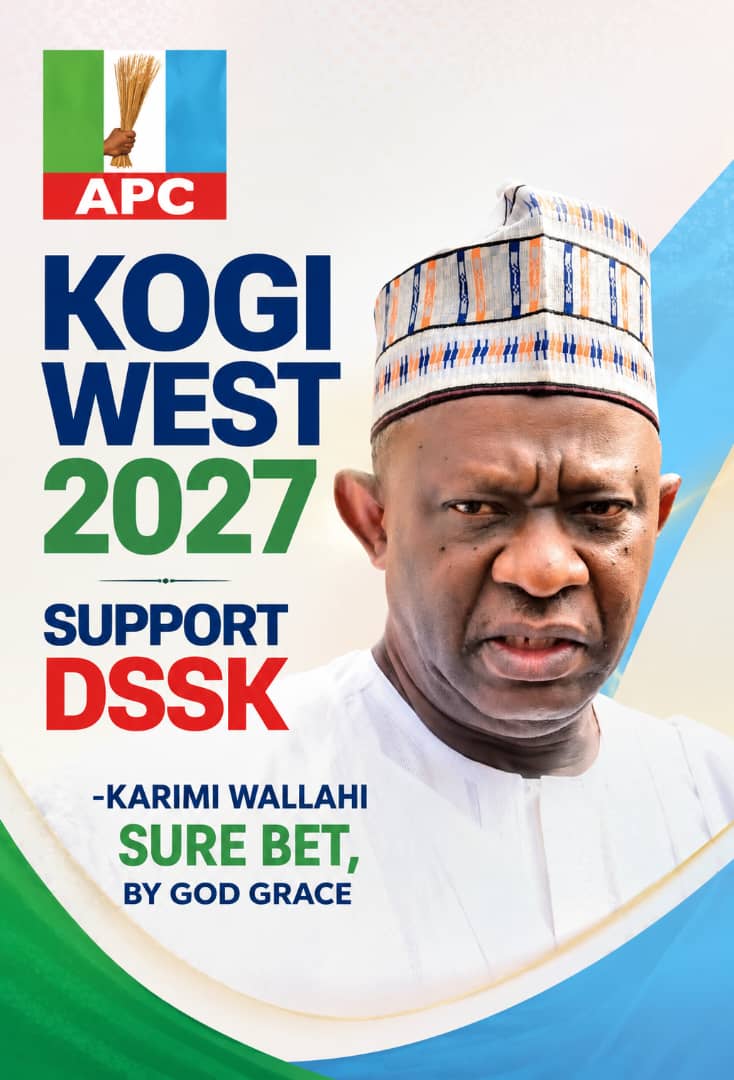
As 2027 approaches, aspirants are multiplying at an alarming rate. Some are credible contenders with structure and reach; others are political tourists driven by momentary excitement. Yet, across party lines, one argument keeps resurfacing like an unresolved ghost: who owns the turn?
Ado, Okpokwu and Ogbadibo are each staking claims, not merely with sentiment but with carefully curated interpretations of history. Ogbadibo advocates argue from the standpoint of balance, pointing to the Senate seat currently occupied by an Okpokwu indigene and the perception that Ado has held the House seat for too long. Okpokwu voices whisper similar grievances. Ado, on the other hand, arrives armed with chronology and arithmetic.
And the numbers, inconvenient as they may be to some, tell a story that cannot simply be shouted down.
Since the dawn of the Fourth Republic in 1999, the Enone House seat began in Ado with Hon. Sam Obande, who served a single term. It then moved to Okpokwu, where Rt. Hon. David Idoko held the position for two full terms. From there, the baton passed to Ogbadibo, where Rt. Hon. Hassan Sale also enjoyed two terms. The cycle then returned to Ado—first with Hon. Ottah Agbo for one term, and subsequently with Hon. Philip Agbese, who currently occupies the seat.
From this lens, Ado’s argument is blunt: Ottah Agbo merely completed Ado’s first outing, while Agbese represents the first term of a fresh rotation. Anything else, they insist, is political revisionism.
But politics is rarely a courtroom where facts alone win the case. It is more often a marketplace, where truth competes with convenience. And this is where the zoning debate in Enone begins to unravel.
For all the moral weight zoning is said to carry, its track record tells a less noble story. Time and again, when zoning was “agreed” behind closed doors, aspirants from supposedly sidelined local governments still stormed the field. They campaigned. They mobilised. They spent. They contested. In some cases, decisively altered outcomes. Zoning, it turns out, has often been more of a gentleman’s suggestion than a binding covenant.
This hypocrisy is the real elephant in the room.
As 2027 draws closer, Enone faces a choice that calls for restraint and statesmanship. Zoning should remain a moral guide informed by fairness and good faith, not a weapon to delegitimise political participation. Equally, ambition must be pursued with sensitivity to history and respect for the collective interest of the constituency.
Ultimately, the verdict will rest with the electorate. What matters most is that the journey to that decision strengthens, rather than weakens, the bonds among Ado, Okpokwu and Ogbadibo. Enone has produced leaders of national consequence; it must also demonstrate the political maturity worthy of that legacy—remembering always that while power may rotate, unity must endure.
(DEMOCRACY NEWSLINE NEWSPAPER, JANUARY 26TH 2026)