




Flooding: CPI, HBS, Arctic Infrastructure Advocate Improved Welfare, Healthcare for Ganaja IDPs
A coalition of non-governmental organisations Challenged Parenthood Initiative (CPI), in collaboration with Heinrich Böll Stiftung (HBS) and Arctic Infrastructure (AI) has intensified advocacy for improved welfare and healthcare services for Internally Displaced Persons (IDPs) affected by recurring flooding in Ganaja community, Ajaokuta Local Government Area of Kogi State.
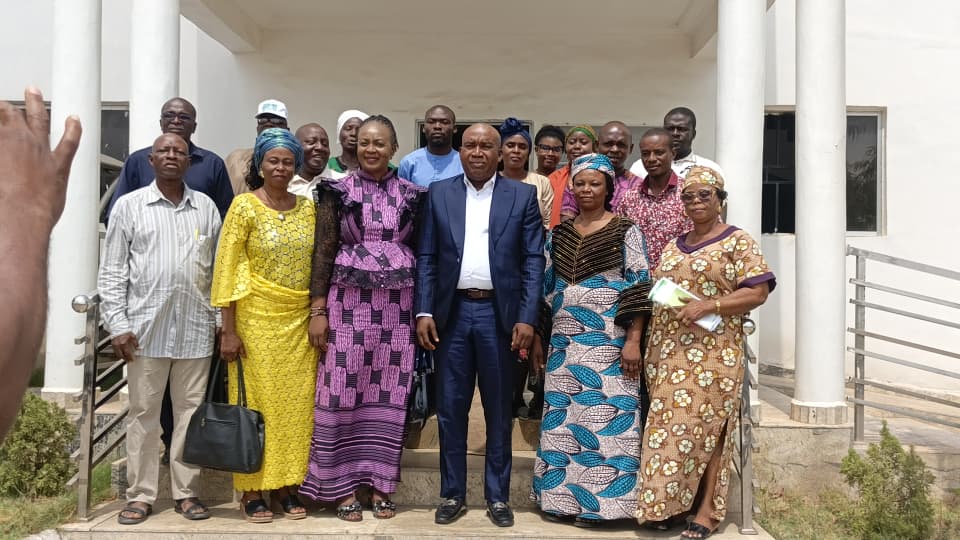
The organisations, which are leading five priority working groups under the Gananja Charter of Demand, led the working groups on Improved Welfare of Internally Displaced Persons and Provision of a Primary Healthcare Centre, on an advocacy visit to the Kogi State Ministry of Health to seek urgent government intervention on pressing health and humanitarian needs in the community.
Speaking during the engagement, Executive Director of CPI, Eunice Abimbola Agbogun, described Ganaja as a vibrant riverside community along the River Niger, serving as a major residential and economic hub for Lokoja and neighbouring settlements.
- Advertisement -

“Unfortunately, Ganaja’s proximity to the River Niger exposes it to recurring flood disasters that continue to destroy homes, livelihoods and public infrastructure,” Agbogun said.
“The low-lying terrain, inadequate drainage systems and unregulated development have further heightened flood risks, leaving the community highly vulnerable and overstretched.”
She explained that in response to these challenges, the Ganaja community, with technical support from HBS, Arctic Infrastructure and CPI, embarked on an inclusive, community-led engagement process to identify priority development needs.
“This participatory process resulted in the formulation of the Ganaja Charter of Demand and a Flood Resilience Action Plan, which is informed by extensive community consultations and technical assessments,” she noted.
“The action plan provides a clear roadmap for sustainable development, flood mitigation and improved quality of life for residents.”
According to Agbogun, five priority working groups were subsequently established to drive implementation of the action plan. These include: Rehabilitation of Nyama Nyama through the 500-Unit Housing Route; Provision of a Primary Healthcare Centre; Improved Welfare for Internally Displaced Persons; Dredging and Construction of Additional Dams; and Provision of Portable Clean Water.
“These working groups are critical to ensuring that the community’s development agenda is translated into concrete action,*” she added.
Presenting the advocacy briefs, Chairperson of the Primary Healthcare Working Group, Hon. Blessed Egbunu, and Chairperson of the IDPs’ Welfare Working Group, Mrs. Achor Joy Achile, outlined key demands to the ministry.
They called for the establishment of a functional primary healthcare centre in Ganaja to provide essential curative, preventive and promotive health services.
“*Access to primary healthcare will significantly improve the quality of life of residents and reduce preventable deaths, particularly among children, pregnant women and other vulnerable groups,” Egbunu said.
On IDPs’ welfare, Achile stressed the need for safe and organised shelters, provision of food and non-food items, effective water transportation systems, and safety equipment such as life jackets and speedboats.
“There is also an urgent need for post-flood livelihood support, economic empowerment programmes and an inclusive monitoring framework involving community leaders, civil society and the media to ensure transparency and accountability,” she stated.
The groups highlighted that Ganaja has continued to suffer since the destruction of its primary healthcare facility during the 2012 floods, leaving residents and displaced persons with limited access to essential health services, potable water, sanitation and hygiene materials.
They further noted that Ganaja’s strategic position as a gateway linking nine states makes improved infrastructure and social services imperative.
Responding, a Director at the Ministry of Health acknowledged the legitimacy of the demands, describing them as reflective of the community’s genuine needs. He urged the Permanent Secretary to escalate the issues for appropriate action, noting his personal ties to the area and firsthand knowledge of the flood impacts.
In his remarks, Permanent Secretary, Kogi State Ministry of Health, Mr. Steven Momoh Aziz, expressed appreciation for the advocacy visit, describing it as timely and purposeful.
“Your presence here today demonstrates a deep commitment to the health and well-being of the people,” Aziz said.
“The vision of Challenged Parenthood Initiative aligns strongly with the mandate of the Ministry of Health, and as an indigene of Ajaokuta Local Government Area, I am personally committed to ensuring that these concerns receive the attention they deserve.”
He pledged to brief the Commissioner for Health on the visit and facilitate further discussions towards addressing the demands.
At the end of the meeting, both parties agreed that the Kogi State Ministry of Health would continue to collaborate with CPI and its partners on health-related interventions, with assurances that steps would be taken to address the advocacy requests to safeguard the health of Ganaja residents.
The advocacy visit was described as a major milestone in strengthening partnerships and advancing concrete interventions to improve healthcare delivery and living conditions for the Ganaja community and its displaced population.
(DEMOCRACY NEWSLINE NEWSPAPER, FEBRUARY 11TH 2026)