





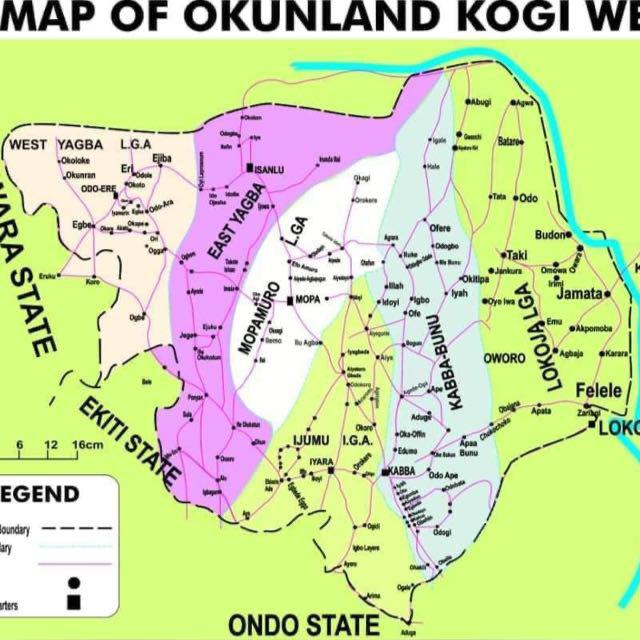

“How Would Bandits Not Take Over Our Forest When We Can No Longer Uphold the Truth?” – Okunland at a Crossroads
…Insecurity, fractured politics, and a call for Okunland to speak with one voice
By Temiloluwa Samuel
In market squares, school gates, and farm roads across Okunland, one question is being asked with increasing urgency: “How would bandits not take over our forest when we can no longer uphold the truth in Okunland?” For residents of Kabba, Bunu, Yagba, Ijumu, Oworo, and Mopa-Muro, the question links two crises they say are feeding each other: worsening insecurity and a breakdown of trust in public processes, including party politics.
- Advertisement -


The security situation in the entire Okunland including Oworo land has become a daily concern for families. Parents in Bunu land report they are keeping children home, citing fear of attacks on schools. Incidents cited in community accounts include killings and abductions reported in Ikoyi-Ijumu, the murder of a civil defense officer and abduction of his daughter in Odo-Ere, Yagba West, and the attempted mass abduction of WAEC candidates in Iluke-Bunu that was reportedly foiled by the Nigerian military. Residents also point to recent kidnappings reported between Egbe, Okunran, and Okoloke in Yagba West.
The impact, locals say, extends beyond fear. With farm roads unsafe, farmers in Yagba, Kabba , Bunu and Ijumu report they can no longer access their fields regularly.
Traders describe slower commercial activity as transport risks rise. It is on record that the security agencies have responded to several incidents, and the military’s intervention in Iluke-Bunu has been acknowledged by residents. Authorities have also issued statements on security operations in Kogi West, though community members say gaps between official reports and lived experience remain a source of tension.
However, alongside the security challenge, Okunland’s political space has faced its own test of credibility. The recent APC Kogi West senatorial primary became controversial after allegations of “third party” interference who tried to manipulate the out come of the election in favor of someone who did not participate in the process. An aspirant publicly cited “presidential intervention” as reason for withdrawing, is being toast to be the winner, where is the credibility?
That dispute has spilled into community conversations about representation. Elders and commentators argue that the same principle at stake in the forest — the ability to agree on facts and follow agreed procedures — is being tested in party halls. “If anyone who aspires to represent the people failed to follow the proper channel to secure victory, then what kind of representation would he give?” one community voice asked.
The debate also touches on zoning/rotation. Rotation is described by many in Okunland as a political understanding rather than a constitutional requirement. The constitutional position remains that any candidate who wins an election, regardless of origin within the senatorial district, is declared winner. That reality has created competing views:
`Yagba stakeholders should know that if they fail to manage themselves at this critical point, the importance of managing internal unity to sustain influence must be stressed, while others emphasize that voters, not origin, ultimately decide.
For many residents, the link between the forest and the ballot is simple: both require trust and a shared commitment to process.
On security: Community leaders say intelligence sharing breaks down when trust is low. Vigilante groups, hunters, and farmers need to believe information will be acted on and that agreements will be honored. When that trust frays, response time slows and ungoverned spaces expand.
On politics: Observers note that primaries are “rehearsals” for public accountability. If a party cannot follow its own guidelines, skeptics ask how the same leaders will insist on transparency in public office.
Defenders of the party process argue that disputes are part of competitive politics and that internal mechanisms exist to resolve them, but not an act that has already been carried out during the primary election in which a winner has emerged.`
Amid the tension, a recurring theme in Okunland discourse is self-reflection and unity. “If no one is talking to us, we should talk to ourselves,” was the refrain in one public message. The call is for Okun people to come together not only on security but across education, agriculture, and politics.
Concrete suggestions from community discussions include:
Security: Strengthening verified information channels between communities, vigilantes, and security agencies. Farmers and schools need safe corridors.
Politics: Returning to documented processes in party affairs. Aspirants, delegates, and party officials face pressure to show records, follow guidelines, and accept verifiable outcomes.
Unity: Acknowledging that a community that cannot present a single voice on process risks being exploited, whether by criminals in the forest or by political “divide and rule” tactics at the ballot.
Okunland’s present situation is described by many residents as critical. The education of children, the livelihood of farmers, and the integrity of political representation are all being tested. Whether the challenge is bandits in the forest or disputes over a party ticket, the underlying demand from the community is the same: verifiable truth, adherence to process, and unity of purpose.
As one elder put it: the forest and the ballot are different terrains, but both require the same compass. Without it, both become vulnerable.
(DEMOCRACY NEWSLINE NEWSPAPER, JUNE 17TH 2026)