



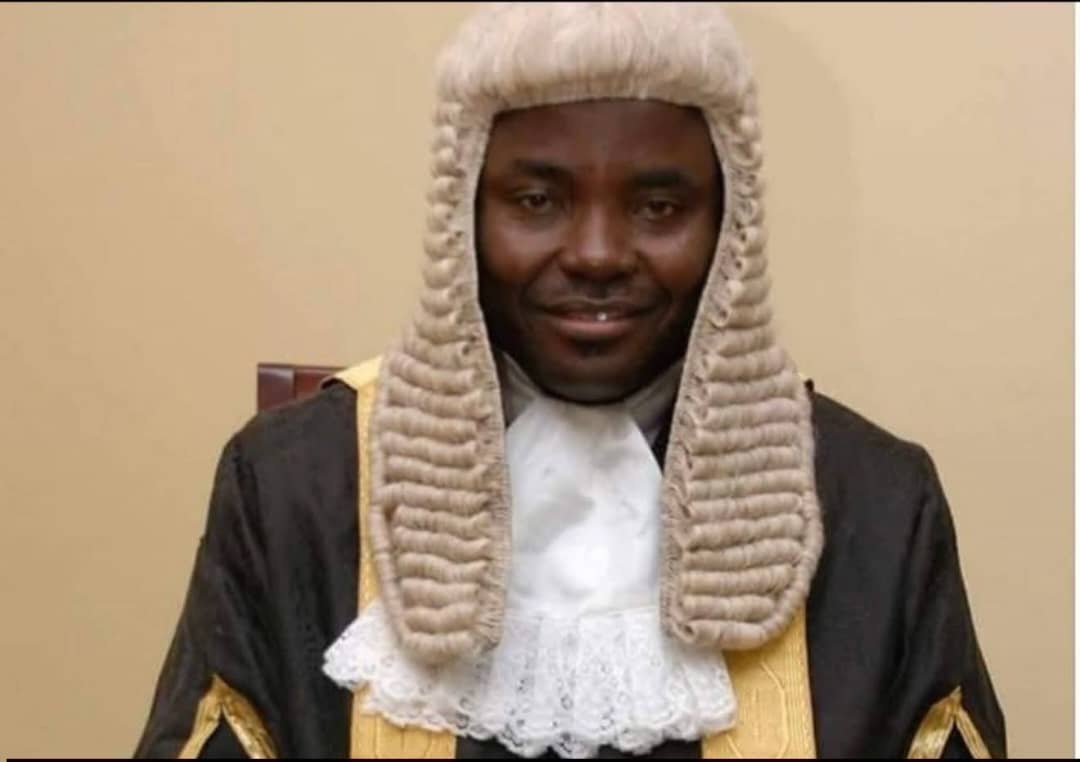

JUST IN: Senior Advocate Jibrin Samuel Okutepa Declares FCT Council Elections a “Democratic Sabotage,” Warns 2027 Polls May Be Worse.
By Bala Salihu Dawakin Kudu Democracy Newsline February 24, 2026.
A fresh storm has erupted over the credibility of the February 21 Federal Capital Territory (FCT) Area Council elections, following a scathing condemnation by Senior Advocate of Nigeria (SAN), Jibrin Samuel Okutepa.
In a strongly worded statement posted on his verified X (formerly Twitter) account, Okutepa described the election as nothing short of a “democratic sabotage” and a “predetermined selection,” arguing that the process fell far below the constitutional threshold for free, fair, and credible polls.
- Advertisement -
The senior lawyer’s remarks have since ignited nationwide debate, placing the spotlight once again on Nigeria’s electoral integrity and the future of democratic governance.
“Sovereignty Belongs to the People”
Okutepa alleged that key elements surrounding the polls raised red flags about the exercise’s transparency. He questioned the timing of the declaration of a work-free day ahead of the elections and cited reports of movement restrictions across parts of the FCT, arguing that such measures limited voter participation and public scrutiny.
More troubling, he said, were viral images circulating online of allegedly altered EC8A result forms—official polling unit result sheets used by the Independent National Electoral Commission (INEC).
According to Okutepa, the images appeared to show vote additions, cancellations, and other visible alterations.
“These acts,” he argued, “strike at the heart of constitutional democracy.” He emphasized that under Nigeria’s constitutional framework, sovereignty belongs to the people, and any manipulation of their mandate amounts to an assault on the republic itself.
Legal analysts note that the EC8A form is a foundational document in Nigeria’s electoral process. Any confirmed tampering would carry serious legal and political consequences. However, as of press time, electoral authorities have yet to issue a comprehensive response to the specific allegations circulating online.
A Warning for 2027
Perhaps the most consequential part of Okutepa’s intervention was his warning about the 2027 general elections.
“If these patterns are not urgently addressed,” he cautioned, “the 2027 elections may face even greater credibility challenges.”
Nigeria’s next general election cycle is widely seen as pivotal. With economic pressures, youth political awakening, and growing digital activism shaping public discourse, confidence in electoral institutions remains a fragile but crucial pillar of national stability.
An end to manual vote collation processes
Cancellation of results with visible alterations
Full adoption of digital electoral transmission and collation systems
Stronger accountability mechanisms for electoral officials
His reform proposals align with longstanding calls from civil society organizations advocating technological safeguards to reduce human interference in vote management.
Beyond institutional reforms, Okutepa also turned his attention to Nigeria’s opposition parties, accusing them of fragmentation and ineffectiveness.
He argued that a divided opposition weakens democratic oversight and diminishes the ability to mount coordinated legal and political challenges to alleged irregularities. According to him, democracy cannot thrive where accountability structures—both institutional and partisan—are weak.
Political observers say this criticism reflects a broader concern within Nigeria’s political space: that without cohesive opposition engagement, electoral grievances often dissipate without systemic correction.
A Legal Voice with Influence
As founder of J.S. Okutepa SAN & Company, Okutepa has built a reputation as an outspoken constitutional lawyer and public affairs commentator. His interventions in electoral matters carry weight within legal and political circles, often shaping public narratives beyond the courtroom.
Over the years, he has consistently advocated judicial independence, constitutional supremacy, and adherence to due process in electoral disputes.
His latest comments, therefore, are not viewed merely as partisan rhetoric but as part of a broader pattern of legal activism centered on institutional reform.
Across social media platforms and political forums, reactions have been swift and divided. While some Nigerians echo Okutepa’s concerns and call for immediate reform, others urge caution, emphasizing the need for verified evidence and formal legal challenges rather than online speculation.
The FCT elections, though local in scope, are symbolically significant. As the nation’s capital territory, developments there often carry outsized political implications.
What remains clear is that the debate extends far beyond one election cycle. At stake is public trust—arguably the most critical currency in any democracy.
As Nigeria inches toward 2027, the questions raised by Okutepa may well shape the trajectory of electoral reform discussions in the months and years ahead.
For now, the country watches, debates, and waits—hopeful that its democratic institutions will rise to meet the test.
(DEMOCRACY NEWSLINE NEWSPAPER, FEBRUARY 24TH 2026)