



Kano Deputy Governor Resigns Amid Political Tensions.
By Bala Salihu Dawakin Kudu
Northern Bureau Chief
March 27, 2026.
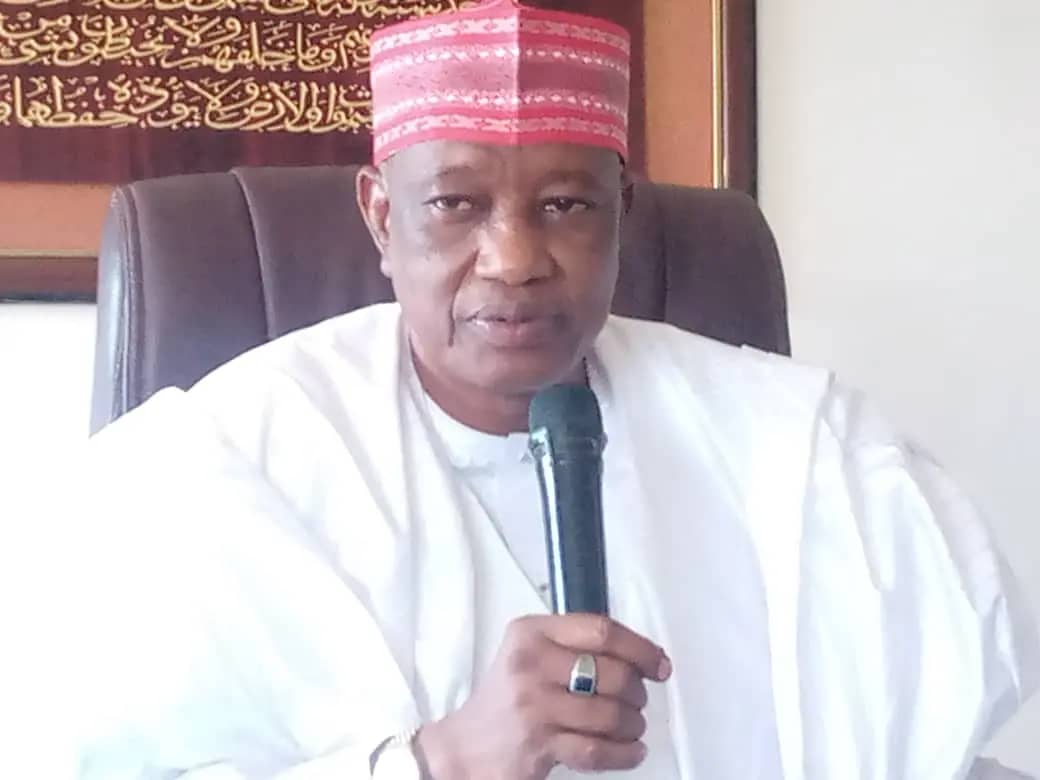
KANO — In a development that has sent ripples across Nigeria’s political landscape, the Deputy Governor of Kano State, Comrade Aminu Abdulsalam Gwarzo, has officially resigned from office, bringing to a dramatic close weeks of mounting political tension and uncertainty within the state’s leadership.
The announcement was made public on Friday through a statement issued by the Kwankwasiyya Movement and signed by its spokesperson, Dr. Habibu Sale Mohammed. According to the statement, the resignation was taken “in the overall interest of the people and the stability of governance,” signaling what the movement described as a difficult but necessary decision at a critical moment in Kano’s political trajectory.
- Advertisement -

The statement revealed that recent developments had significantly constrained the Deputy Governor’s ability to effectively perform the duties of his office. While it did not elaborate extensively on those developments, political observers point to a deepening rift within the state’s political hierarchy as a central factor.
At the heart of the crisis lies a widening political divide between the Deputy Governor and his principal, Governor Abba Kabir Yusuf. The situation escalated following the governor’s controversial defection to the All Progressives Congress (APC), a move that reportedly did not receive the endorsement of the national leader of the New Nigeria Peoples Party (NNPP), Senator Rabiu Musa Kwankwaso. The fallout from that decision fractured political loyalties within the state and intensified factional alignments within the ruling structure.
Compounding the crisis, the Kano State House of Assembly recently issued an impeachment notice against Gwarzo, citing allegations of corruption. However, the Kwankwasiyya Movement firmly rejected any suggestion that the resignation amounted to an admission of guilt. The statement emphasized that the former Deputy Governor continues to maintain his innocence and is prepared to clear his name through due process if necessary.
Describing the resignation as an act of “statesmanship,” the movement noted that the decision was intended to de-escalate political tensions and prevent further disruptions to governance. “This step reflects a commitment to peace, democratic values, and the long-term stability of Kano State,” the statement read.
Political analysts say the move may help calm the charged atmosphere in Kano, which has witnessed growing uncertainty in recent weeks. There have been concerns among residents and stakeholders about the potential impact of the crisis on governance, public service delivery, and ongoing development projects in the state.
Beyond the immediate implications, the resignation is also seen as a strategic recalibration by the Kwankwasiyya Movement. The group hinted at plans to refocus its efforts on strengthening party structures, rebuilding alliances, and pursuing what it described as people-oriented leadership anchored on social justice and sustainable development.
“This is not a retreat but a repositioning,” a political analyst based in Kano remarked. “The movement appears to be preparing for the next phase of political engagement, both within the state and at the national level.”
Residents of Kano have reacted with mixed feelings. While some view the resignation as a necessary step to restore stability, others remain concerned about the underlying issues that led to the crisis. Civil society groups have called for transparency and adherence to democratic processes, particularly in addressing the allegations that surfaced during the dispute.
Meanwhile, the Kwankwasiyya Movement has urged its supporters and the general public to remain calm, law-abiding, and committed to democratic ideals. It assured that further details regarding the resignation and the movement’s next steps would be communicated in due course.
As Kano navigates this period of political transition, attention now turns to how the state government will manage the aftermath of the resignation and whether the move will indeed usher in a new phase of stability and cooperation within its political leadership.
For many observers, the episode underscores the complex and often volatile nature of Nigerian politics, where shifting alliances, party dynamics, and personal loyalties continue to shape the course of governance.
(DEMOCRACY NEWSLINE NEWSPAPER, MARCH 27TH 2026)