




Makinde Crowns 14 Oyo Chiefs as Obas Despite Alaafin’s Supreme Court Motion.
By Bala Salihu Dawakin Kudu | Democracy Newsline Feb 14, 2026.
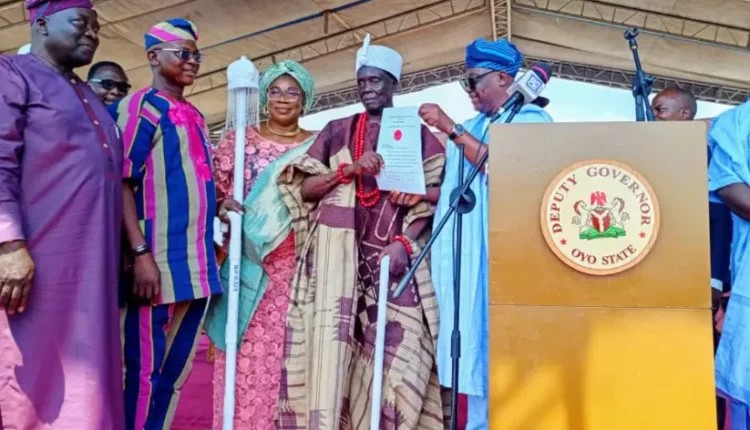
Under the bright Oyo sky at Olivet Heights, history unfolded in defiance of legal uncertainty. Though a motion lay pending before the apex court in Abuja, Governor Seyi Makinde pressed ahead with the coronation of 14 traditional rulers, elevating them from high chiefs and Baales to crown-wearing Obas in a ceremony rich with culture, symbolism, and controversy.
Represented by his deputy, Bayo Lawal, the governor presented staffs of office and certificates—symbols of authority deeply rooted in Yoruba tradition. The rhythmic beats of talking drums echoed as chiefs bowed, rose, and emerged as monarchs, their crowns gleaming under the ceremonial canopy.
- Advertisement -


The exercise proceeded despite a motion filed at the Supreme Court of Nigeria in Appeal No. SC/404/2018. The suit was originally instituted by the late Lamidi Adeyemi III, who challenged the creation and elevation of the Baale Ago-Oja stool, arguing it had been declared non-existent by the Oyo State High Court in 2007—a decision upheld by the Court of Appeal in 2017.
Through his counsel, the Alaafin’s camp warned that proceeding with the coronation—particularly the elevation of Alhaji Ganiyu Busari as Alago-Oja—could amount to contempt of court. The motion also seeks to nullify aspects of the 2025 Oyo State Gazette that recognized the upgraded stool.
In a speech delivered on his behalf, Governor Makinde described the elevation as a reaffirmation of Oyo’s rich heritage and a strategic move to strengthen grassroots governance.
According to him, traditional rulers remain indispensable partners in tackling insecurity and fostering development.
Fourteen monarchs were crowned, including Oba David Oyediran (Alaaguo of Aguoland), Oba Afonja Mukaila (Baba Eyaji of Oyo), Oba Samuel Odurinde (Alajagba of Oyo), Oba Isiaka Tella-Titiloye (Ona-Isokun of Oyo), Oba Fakayode Alowonle (Onimileke of Imileke Oyo), Oba Salawu Oyeniran (Onigbudugbu of Gbudugbu Oyo), Oba Olaniyi Adegboye (Oloodu of Ojongbodu), Oba Tijani Ajeigbe (Alapa-Ara of Apa-Ara), Oba Oyeleke Yusuff (Onidode of Idodeland), Oba Lamidi Jimoh (Iba Samu of Oyo Empire), Oba Ganiyu Busari (Alago-Oja of Ago-Oja Land), Oba Asimiyu Jimoh (Agbaaki of Oyo), Oba Jimoh Oyeleye (Alakeitan of Akeitan), and Oba Abel Oyekan (Elepe of Iseke).
Dignitaries present included representatives of the Olubadan of Ibadanland, political leaders, and members of the Oyo State Assembly, underscoring the weight of the occasion.
As the newly crowned Obas pledged loyalty and service, the drums of tradition seemed to compete with the ticking clock of the judiciary.
The appeal remains pending, and the Supreme Court has yet to fix a hearing date.
For now, the crowns sit firmly on royal heads—symbols of authority granted by the state, even as the final word rests with the court.
(DEMOCRACY NEWSLINE NEWSPAPER, FEBRUARY 14TH 2026)