





PAAU VICE-CHANCELLOR CONTINUES FAMILIARISATION TOUR WITH VISIT TO FACULTY OF NATURAL SCIENCES AND COMPUTING
…Emphasises Mentorship, Research Development and Collective Responsibility
The Vice-Chancellor of Prince Abubakar Audu University (PAAU), Anyigba, Professor Salisu Ogbo Usman, has continued his familiarisation tour of academic faculties with a visit to the Faculty of Natural Sciences and Computing, where he reaffirmed his administration’s commitment to research advancement, staff development and institutional growth.
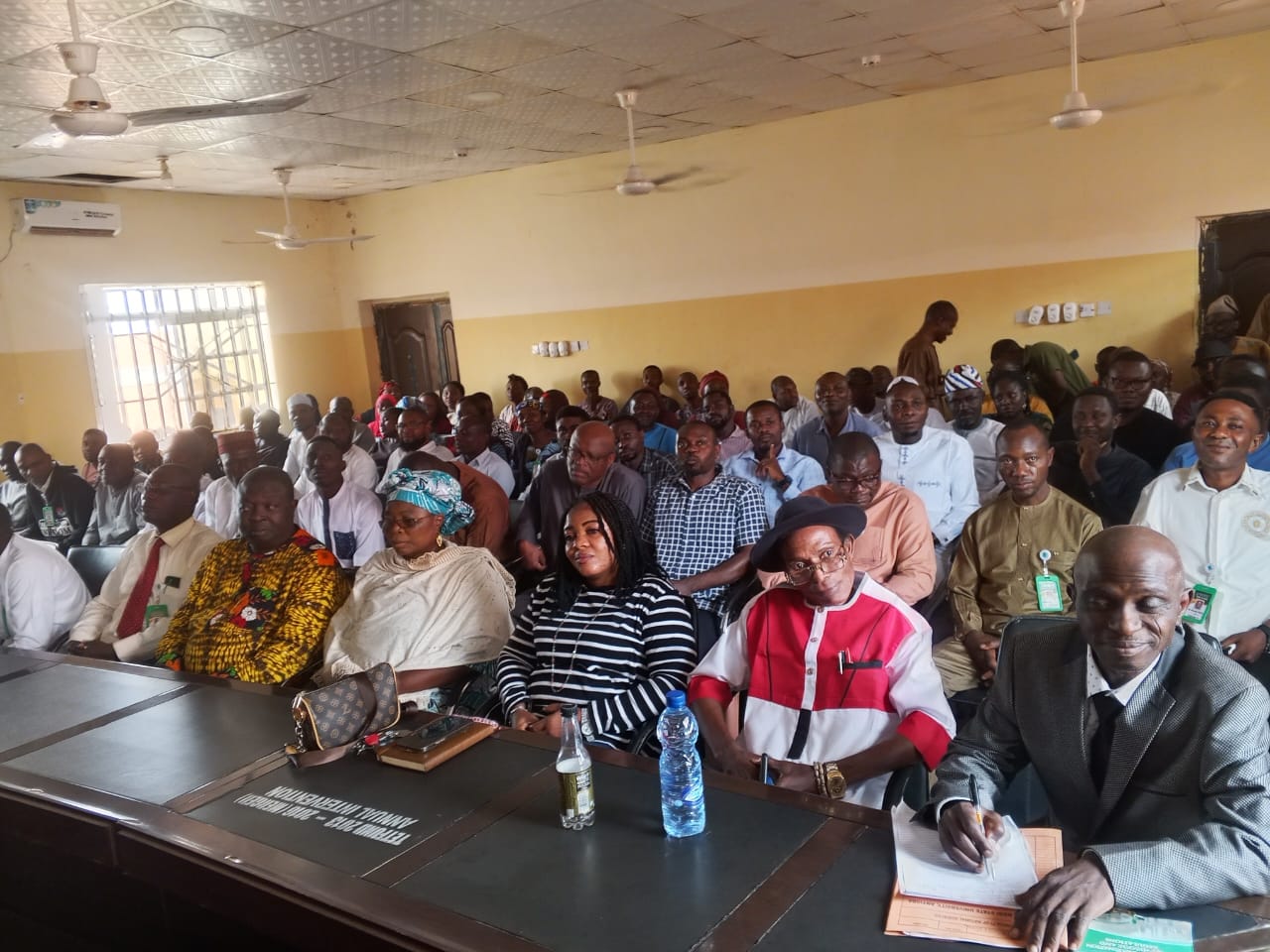
Welcoming the Vice-Chancellor and members of Management, the Dean of the Faculty, Professor A. O. Omali, congratulated Prof. Usman on his appointment as the sixth Vice-Chancellor of the University and described the visit as a significant moment for staff and students of the Faculty.
- Advertisement -


The Dean disclosed that the Faculty currently hosts nine departments, with seven additional academic programmes recently introduced following a successful resource verification exercise by the National Universities Commission (NUC). He noted that more than half of the academic staff possess doctoral degrees, reflecting the Faculty’s strong academic foundation.
Highlighting research achievements, Prof. Omali commended several staff members who have attracted prestigious international grants and collaborations.
He cited the achievements of Dr. Kizito Eneye of the Department of Microbiology, who won the Food and Agriculture Organization Global One Health Prize and is currently collaborating with international scientists on diagnostic kits and cancer research.
He added that the researcher also secured a Kingdom of Saudi Arabia international grant on nanotechnology and Streptomyces therapeutics involving global partners.
The Dean further acknowledged Dr. Emmanuel Amlabu of the Department of Biochemistry for winning multiple international research grants, including the African Research Initiative for Scientific Excellence (ARISE) grant funded by the Carnegie Foundation of New York, valued at $205,000, aimed at developing novel antimalarial therapeutics.
He listed key achievements to include installation of solar power systems powering sections of the Faculty buildings and computer laboratories, launch of the Faculty’s academic journal, provision of common student waiting areas and facilitation of academic excellence awards sponsored by external foundations for outstanding students.
Despite these successes, Prof. Omali outlined major challenges confronting the Faculty, including inadequate lecture spaces due to rising student population, shortage of academic and technical staff, epileptic power supply affecting laboratory activities, insufficient water supply, security breaches resulting in burglary incidents, lack of laboratory equipment and reagents and shortage of support staff such as secretaries, messengers and cleaners.
He appealed for Management’s intervention to create a more conducive environment capable of sustaining teaching, research and innovation within the Faculty.
Responding, the Vice-Chancellor expressed appreciation for the warm reception and described his appointment as a personal homecoming.
He noted his special attachment to the Faculty, acknowledging its historical contributions to the University, including producing the institution’s first inaugural lecture and first indigenous professor.
Prof. Usman commended the Faculty for its resilience, self-development initiatives and commitment to academic excellence, assuring staff that Management would continue to support and encourage their efforts.
He emphasised the critical role of mentorship in institutional development, stating that academic relationships extend beyond classrooms and noting that he himself is a product of mentorship.
The Vice-Chancellor disclosed that his administration would prioritise research endowment, institutional partnerships and collaborative frameworks aimed at improving global research visibility at affordable costs.
He charged academic staff to remain productive and indispensable while leveraging professional networks to attract development opportunities to the University.
Prof. Usman described His Excellency Alhaji Ahmed Usman ododo,the executive Governor of Kogi State as compassionate and committed to supporting the growth of the institution, provided that requests presented to the government are genuine and well justified.
He added that the University would continue to support government initiatives while demonstrating measurable results.
He further stressed that institutional transformation requires collective responsibility, noting that every member of staff must be accountable for their actions and professional responsibilities.
The Vice-Chancellor commended the Dean and Faculty for their proactive efforts in installing solar power infrastructure and encouraged them to develop sustainable solutions to lingering electricity challenges through collaboration and innovation.
He also called for continued support, cooperation and prayers from staff and students as he administers the affairs of the University, assuring the Faculty that staff welfare and institutional progress remain central to his administration.
The visit concluded with interactive discussions between Management and Faculty members on strategies for improving academic productivity research output and infrastructural development.
The Vice-Chancellor was accompanied by principal officers of the University, including the Deputy Vice-Chancellor (Administration), Prof. J. J. Orugun; Deputy Vice-Chancellor (Academic), Prof. Ojah Paul Egwemi; Registrar, Barr. Yahaya S. Alilu; Bursar, Dr. (Mrs.) Amina Amuhi; Acting University Librarian, Dr. Oladimeji Yemi-Peters; and Director of Academic Planning and Development, Prof. Abayomi Ajayi, amongst others.
— Abdulkadir Bin ABDULMALIK
Dependent Writer
19/02/26
(DEMOCRACY NEWSLINE NEWSPAPER, FEBRUARY 19TH 2026)