




PDP in Free Fall: Courtroom Wars, Factional Power Plays and the Unraveling of Nigeria’s Former Ruling Party.
By Bala Salihu Dawakin Kudu
Democracy Newsline
January 16, 2026.
The Peoples Democratic Party (PDP), once Africa’s largest political party and Nigeria’s dominant political force for 16 uninterrupted years, is today trapped in one of the gravest existential crises in its history. What began as internal disagreements over leadership succession has snowballed into a full-blown institutional breakdown—played out simultaneously in courtrooms, party secretariats and the national political arena.
The latest twist in the crisis came with the announcement by the Kabiru Turaki-led faction of the party that it had appointed caretaker committees in five strategic states—Delta, Enugu, Imo, Rivers and Osun. The move, made despite a subsisting court order and an unresolved leadership tussle, has further exposed the depth of disunity tearing through the PDP’s fragile structure.
A Party at War With Itself
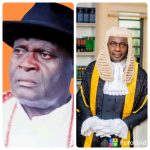
At the heart of the crisis is a bitter struggle for control of the PDP’s national machinery. Two powerful blocs—one aligned with former Attorney-General of the Federation, Kabiru Turaki, and the other loyal to the Minister of the Federal Capital Territory, Nyesom Wike—are locked in a zero-sum battle for legitimacy.
- Advertisement -
While the Turaki-led faction insists it represents the authentic National Working Committee (NWC) acting on the authority of the National Executive Committee (NEC), the Wike-aligned faction disputes this claim and has taken the matter to court. The legal confrontation has now reached a dangerous stage, with conflicting court applications, appeals, and accusations of judicial bias.
The Federal High Court’s order directing parties to maintain the status quo was meant to calm tensions. Instead, it appears to have emboldened rival camps to entrench themselves further. The appointment of caretaker committees—especially in politically sensitive states—has been widely interpreted as a calculated attempt to seize control of grassroots party structures ahead of future congresses and primaries.
Caretaker committees, by design, are temporary conflict-resolution mechanisms. In the PDP’s current crisis, however, they have become weapons of factional dominance. Dissolving existing state executives while the national leadership itself remains disputed sends a troubling signal: that rules, processes and even court orders are secondary to raw political power.
Party insiders warn that the five affected states are not coincidental choices. Delta and Rivers have historically been PDP strongholds, Enugu remains symbolically vital in the South-East, while Imo and Osun are battleground states crucial to any national revival strategy. By installing loyalists as caretakers, the Turaki-led faction is effectively redrawing the internal political map of the party—without consensus and without legal clarity.
Perhaps the most damaging aspect of the PDP crisis is the migration of party governance from constitutional organs to the judiciary. Almost every major decision—leadership recognition, access to the national secretariat, communication with INEC—has become the subject of litigation.
The ongoing suit before Justice Joyce Abdulmalik, the interlocutory appeal, the motion for stay of proceedings, and the demand for the judge’s recusal all point to a party that can no longer resolve disputes internally. Instead of the NEC, National Caucus or Board of Trustees acting as stabilizing forces, lawyers and judges now shape the party’s direction.
Political analysts warn that this judicialization of party politics weakens the PDP’s moral authority as an opposition party. “A party that cannot obey its own constitution or respect internal dispute mechanisms will struggle to convince Nigerians it can govern a complex country,” one observer noted.
The leadership crisis has coincided with, and partly fueled, the steady exit of prominent PDP figures. Governors, senators, former ministers and grassroots leaders have either defected to rival parties or withdrawn into political limbo. For many, the PDP no longer offers certainty, protection or a clear pathway to relevance.
Defections are not merely about ideology; they are about survival. In a party where leadership is contested, congresses are uncertain, and court orders can nullify months of political planning, ambitious politicians are unwilling to gamble their futures. Each defection further weakens the PDP’s bargaining power, deepens internal suspicion and accelerates its decline.
Loss of Public Trust and Opposition Credibility
Beyond internal damage, the PDP’s crisis has eroded public confidence. As Nigeria grapples with economic hardship, insecurity and governance challenges, many citizens expect the opposition to provide clarity, alternatives and disciplined leadership. Instead, the PDP appears consumed by infighting.
The ruling party has capitalized on this disarray, portraying the PDP as unfit to manage national affairs when it cannot manage itself. Civil society groups and youth movements, once sympathetic to the PDP as a counterweight to power, are increasingly disengaged.
The appointment of caretaker committees amid an unresolved court battle is not just another episode in the PDP’s troubles—it is a symptom of a deeper structural failure. The party is caught between ego-driven leadership struggles, weak conflict-resolution mechanisms and a fading ideological core.
Unless the PDP’s elders, stakeholders and institutional organs rise above factional loyalties to enforce discipline, respect the rule of law and rebuild internal trust, the crisis may become irreversible.
What is at stake is not merely who controls Wadata Plaza, but whether the PDP can survive as a credible national political force.
As January 23 approaches and the courts weigh the next phase of the legal battle, one reality is already clear: the PDP is no longer just losing members—it is losing time, cohesion and relevance. Whether it can arrest this free fall remains one of the most pressing questions in Nigeria’s political landscape today.
(DEMOCRACY NEWSLINE NEWSPAPER, JANUARY 16TH 2026)