






PROF JIBRIN EXPLORES STYLOLINGUISTIC DOMESTICATION AND NIGERIAN APPROACH TO UNDERSTANDING LITERATURE
By Bello Rukayyat Bisola
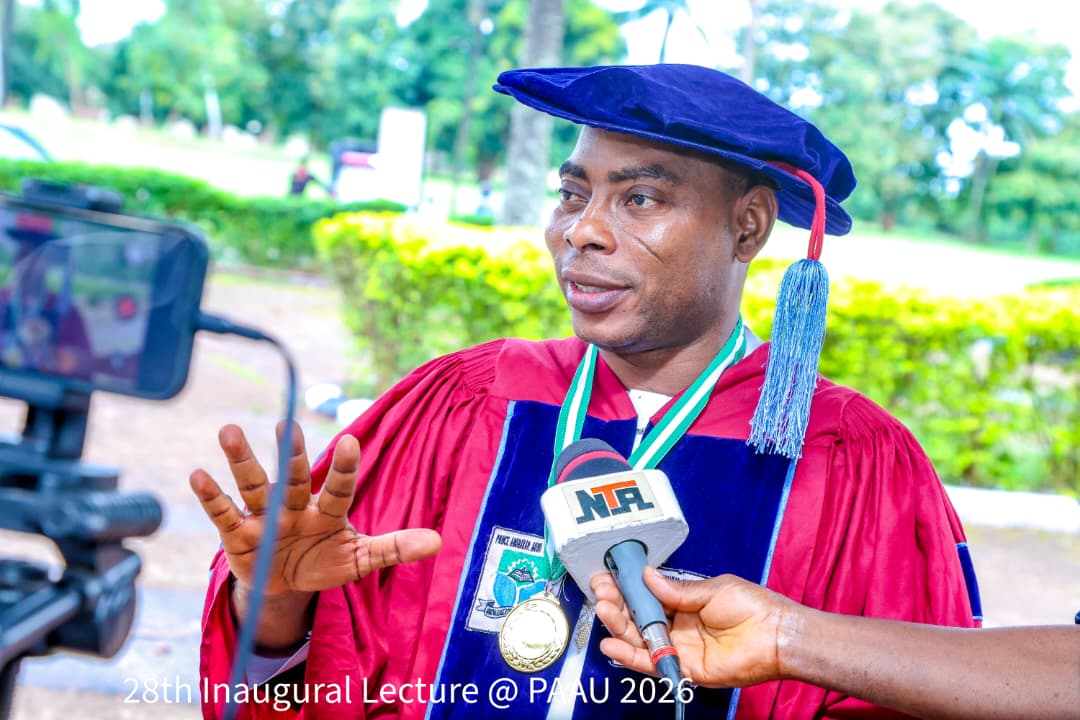
Professor of Stylistics and Text Linguistics, Professor Muhammad Badar Salihu Jibrin, has called for literary analysis that reflects Nigeria’s linguistic, cultural and social realities.
He made the call while delivering the 28th Professorial Inaugural Lecture of Prince Abubakar Audu University, Anyigba, titled “From Stylolinguistic Domestication, Not Systemic Text Linguistics: A Journey Through the Sphere of Nigerian Literary Text Analysis.”
- Advertisement -

Prof. Jibrin explained that stylolinguistics examines how writers use language and style, while domestication relates such choices to Nigerian realities, including indigenous languages, proverbs, names, cultural beliefs, politics and social relationships.
He noted that literary analysis should move beyond theories developed largely in other cultural environments, stressing that the Nigerian context in which a literary work is produced is essential to its interpretation.
The Inaugural Lecturer contrasted stylolinguistic domestication with Systemic Text Linguistics, which focuses on how cohesion, coherence, syntax and lexis work together to produce meaning.
Using Our Children Are Coming as a case study, Prof. Jibrin demonstrated how linguistic choices can reveal issues of corruption, hypocrisy, morality, ethnicity, religion, politics and gender.
He identified human hypocrisy and moral failure as central themes in the text, describing the condition as “human apostasy,” while noting the relationship between the younger and older generations and the question of parental responsibility.
Tracing his analytical journey, Prof. Jibrin identified nine stages: Style, Linguistics, Stylolinguistics, Nigerian English, Nigerian Literary Language, Systemic Text Linguistics, Domestication, Application and Interpretation.
He noted that Nigerian English and Nigerian Literary Language are important because Nigerian writers have adapted English to express indigenous experiences, identities and ways of thinking.
Prof. Jibrin maintained that seemingly ordinary linguistic choices in Nigerian literary texts can carry significant cultural and social meanings, stressing that effective literary analysis must consider both how a text is written and the realities that inform its language.
The Inaugural Lecturer submitted that stylolinguistic domestication provides a context-sensitive framework for interpreting Nigerian literature by connecting language, literary style, culture and lived experience.
DemocracyNewslineNewspaper, September 26, 2026