


RMAFC Vows Fair Resolution of Oil, Gas Wells Disputes.
By Bala Salihu Dawakin Kudu
Democracy Newsline
- Advertisement -
January 27, 2026.
The Revenue Mobilisation Allocation and Fiscal Commission (RMAFC) has reaffirmed its commitment to justice, equity and transparency in resolving long-standing disputes over the location and ownership of oil and gas wells across Nigeria’s oil-producing states.
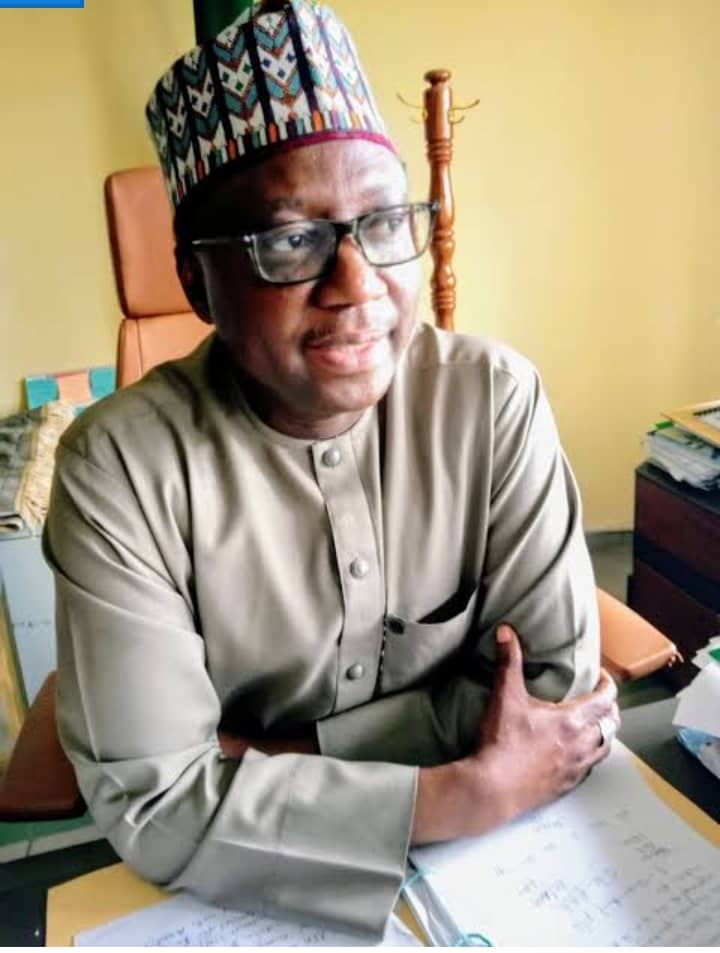
The Chairman of the Commission, Dr. Mohammed Shehu, gave the assurance on Monday in Abuja while briefing journalists on the ongoing process of plotting coordinates for disputed and newly drilled oil and gas wells. The exercise, he said, is critical to ensuring fairness in revenue allocation, particularly in the distribution of the constitutionally guaranteed 13 per cent derivation fund.
According to Dr. Shehu, the disputed oil and gas locations span several producing states, including Akwa Ibom, Cross River, Bayelsa, Edo, Ondo, Rivers and Delta, as well as offshore areas. He stressed that the commission would act as a neutral arbiter throughout the exercise.
“I want to assure the affected parties that the commission will be an unbiased umpire and will deploy justice, equity and fairness for which it is known,” Shehu said. “The process will be conducted without fear or favour, and the outcome will be based strictly on verified facts.”
He explained that the plotting of coordinates, which is expected to last several days, forms part of RMAFC’s constitutional mandate to monitor accruals into and disbursements from the Federation Account. Central to this responsibility is ensuring that revenues from crude oil and gas production are shared equitably among entitled states.
Dr. Shehu noted that the verification exercise was triggered by a formal request from the Nigerian Upstream Petroleum Regulatory Commission (NUPRC), which wrote to the RMAFC to verify the coordinates of newly discovered and disputed oil wells. In response, the commission inaugurated an Inter-Agency Technical Committee (IATC) in July 2025.
The committee comprises representatives of the NUPRC, the Office of the Surveyor-General of the Federation and the National Boundary Commission. Surveyors-General from the affected oil-producing states were also involved as witnesses to enhance transparency and confidence in the process.
“The committee carried out extensive fieldwork between September and October 2025,” Shehu explained. “The team visited creeks, offshore locations and even high seas. The field exercise has now been concluded, and the reports have been submitted. The next step is the plotting of the verified coordinates.”
He described the exercise as a continuation of efforts to resolve long-standing boundary and ownership disputes that have, over the years, generated tension among oil-producing states. According to him, the ultimate objective is to determine the rightful beneficiaries of the 13 per cent derivation whenever new oil fields come on stream.
Dr. Shehu disclosed that advanced technology, including drones, would be deployed during the coordinate plotting to access difficult terrains and ensure accuracy. He added that data analysis would be carried out in the presence of representatives from the affected states to promote openness and collective ownership of the outcome.
He dismissed suggestions of open conflict among the states, noting that competing claims were natural in the absence of established facts.
“No state is currently at loggerheads,” he said. “Claims are normal until facts are established. Where oil fields fall between states, resources can be shared based on verified facts.”
The RMAFC chairman expressed optimism that the final report, expected to be ready within a week, would significantly reduce disputes among oil-producing states, provided the process is not disrupted by litigation.
He commended the affected states for their cooperation, diligence and active participation throughout the exercise, adding that the commission remains committed to strengthening fiscal justice and national cohesion through fair revenue allocation.
Analysts say the outcome of theh exercise could have far-reaching implications for intergovernmental relations and revenue distribution in Nigeria, particularly at a time when oil and gas revenues remain a major pillar of the national economy.
(DEMOCRACY NEWSLINE NEWSPAPER, JANUARY 27TH 2026)