



The £746m Question: Growth Engine or Debt Trap? Ports, Promises, and Pounds: A Nation at a Crossroads.
By Bala Salihu Dawakin Kudu Democracy Newsline Northern Bureau Chief of
March 21, 2026.
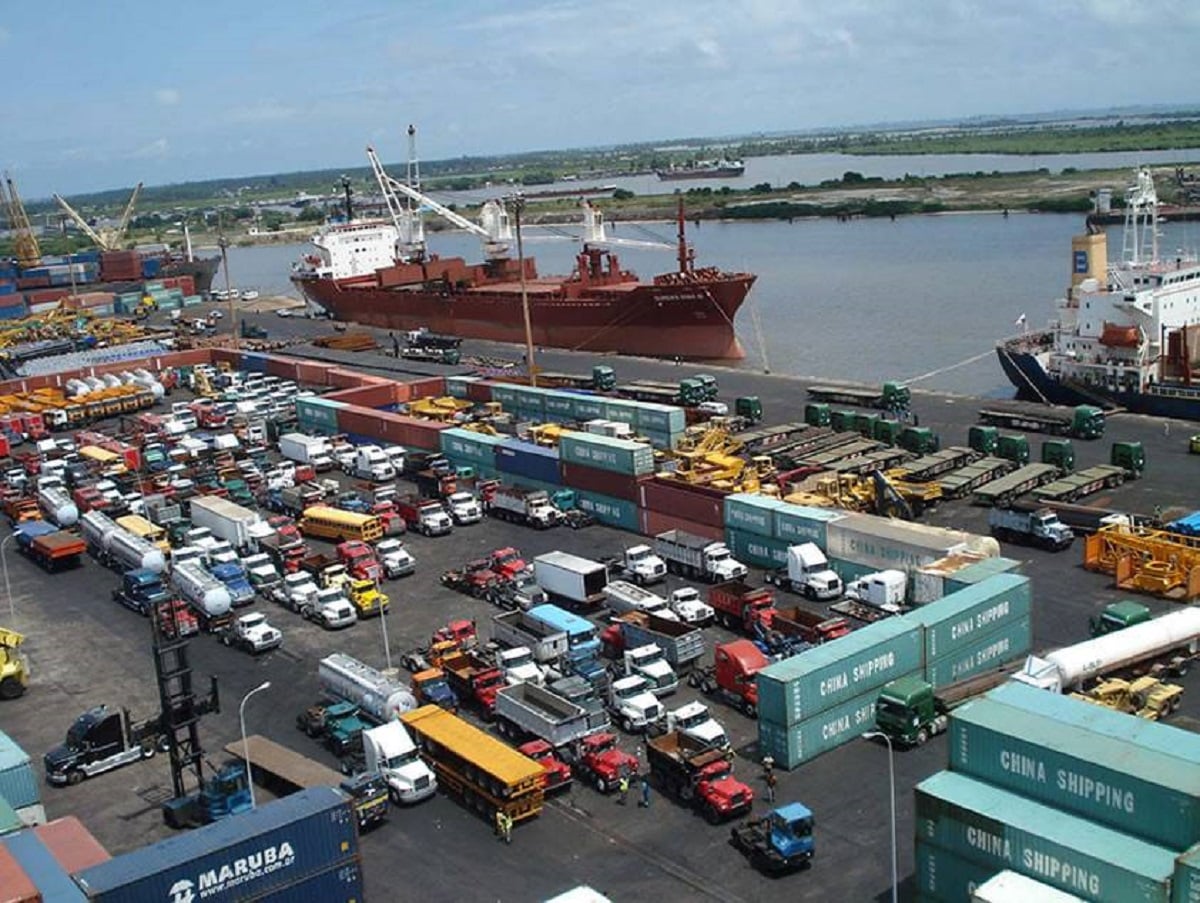
On a humid morning in Lagos, the Apapa port tells the story of Nigeria’s economic reality. Trucks stretch for miles. Containers sit idle for weeks. Importers grumble. Exporters lose money. Time—Nigeria’s most valuable currency—is wasted in traffic and bureaucracy.
This is the problem President Bola Ahmed Tinubu hopes to fix with a £746 million port rehabilitation deal backed by UK Export Finance.
On paper, the deal sounds like progress. Two major Lagos ports will be refurbished. Efficiency will improve. Trade will move faster. Nigeria, long constrained by outdated infrastructure, may finally unlock one of its biggest economic bottlenecks.
But beneath the promise lies a more complicated story—one of opportunity, obligation, and uneasy trade-offs.
- Advertisement -
This is not just a loan. It is an export credit arrangement, a structured deal where financing is tied to the lender’s economic interests. At least 20 percent of the contracts must go to UK firms. About £236 million will return to British suppliers. And £70 million is specifically earmarked for British steel.
In simple terms, part of the money Nigeria is borrowing will not stay in Nigeria.
Yet, this is not unusual. Countries around the world use such financing to build infrastructure they cannot immediately afford. The real question is not whether Nigeria should borrow—but whether it can turn borrowed money into real development.
For decades, Nigeria’s ports have symbolized inefficiency. Ships wait longer. Costs rise higher. Businesses suffer. Neighboring countries quietly take advantage, attracting trade that should pass through Nigerian shores.
A modern port system would reduce delays, cut costs, and improve Nigeria’s competitiveness—especially under the African Continental Free Trade Area. It could increase government revenue, stimulate non-oil exports, and create jobs across logistics and supply chains.
But the risks are just as real.
Nigeria’s debt burden is already heavy. Servicing loans consumes a significant portion of government revenue. Adding another large external loan—especially one tied to foreign suppliers—raises concerns about long-term sustainability.
There is also the issue of local participation. When contracts are tied abroad, Nigerian companies lose opportunities. Skills transfer is limited. Economic benefits leak out of the country.
And then there is the question Nigerians have asked for decades: will the project be delivered efficiently—or will it follow the familiar pattern of delays, inflated costs, and incomplete execution?
Because ultimately, the success of this deal will not be determined in London—but in Abuja.
For ordinary Nigerians, the impact will be gradual. If successful, goods may become cheaper. Jobs may increase. Businesses may grow. But if mismanaged, the burden will be felt through higher taxes, tighter government spending, and another generation paying for yesterday’s decisions.
There is no doubt that Nigeria’s ports require modernization. Inefficiency at Lagos ports costs the economy billions and undermines competitiveness. In that sense, investment is not optional—it is necessary.
However, the structure of this deal raises legitimate concerns. With significant portions tied to British suppliers through UK Export Finance, the economic benefits are partly redirected abroad. This limits local participation and reduces the broader impact on Nigeria’s economy.
More importantly, Nigeria must confront its debt reality. Borrowing is not the problem—unproductive borrowing is.
If this project is executed transparently, efficiently, and with clear economic returns, it could justify its cost. If not, it risks becoming another entry in Nigeria’s long history of loans that failed to deliver lasting value. The responsibility lies squarely with the administration of Bola Ahmed Tinubu to ensure that this is not just another expensive promise.
The £746 million UK ports deal is the latest example.
Yes, the ports need fixing. Anyone who has seen Apapa traffic knows that. But here’s the uncomfortable truth: Nigeria is not just borrowing money—it is borrowing with conditions that benefit the lender first.
Through UK Export Finance, Britain has secured jobs for its companies, demand for its steel, and returns on its capital. That is smart policy.
The question is: where is Nigeria’s own strategy?
Because infrastructure alone does not create development. Governance does.
If corruption inflates costs, if projects are delayed, if local industries are sidelined—then this loan will simply follow a familiar path: debt without transformation.
President Bola Ahmed Tinubu has an opportunity to prove that this time is different.
And until those results are visible, every new loan will be met with the same question.
(DEMOCRACY NEWSLINE NEWSPAPER, MARCH 21ST 2026)