

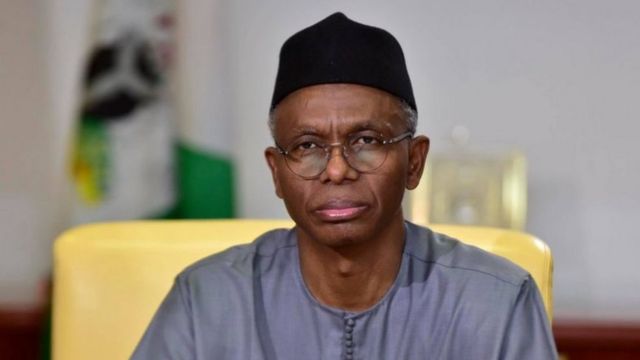

The Unfolding Storm Around Nasir El-Rufai: Power, Prosecution, and the Battle for Due Process.
By Bala Salihu Dawakin Kudu
Democracy Newsline
February 19, 2026.
Nigeria’s political landscape has once again been thrust into intense national debate following the arrest and investigation of former Kaduna State Governor, Nasir El-Rufai, in a case that intertwines allegations of financial misconduct, cybercrime accusations, and high-level institutional scrutiny involving the Economic and Financial Crimes Commission (EFCC), the Independent Corrupt Practices Commission (ICPC), and the Department of State Services (DSS).
What began as a financial investigation has since evolved into a complex legal and political saga—one that many observers say could reshape conversations about accountability, influence, and institutional independence in Nigeria.
- Advertisement -
Former Governor El-Rufai reportedly spent four days in the custody of the EFCC over allegations of financial misappropriation and diversion of more than ₦433 billion during his tenure from 2015 to 2023. The anti-graft agency is said to be examining contracts, public expenditure records, and financial transactions executed under his administration.
Sources familiar with the matter indicate that the EFCC granted him conditional administrative bail. However, the conditions attached were notably stringent: a serving Permanent Secretary in the federal civil service and a director in a federal ministry were required to stand as sureties.
The Withdrawal That Sparked Controversy
According to multiple sources, the Permanent Secretary reportedly arrived at the EFCC office to complete the bail documentation but later withdrew from standing as surety. The abrupt reversal has fueled speculation across political and legal circles.
Allegations have surfaced suggesting that the official may have faced pressure or threats, prompting the withdrawal. While these claims remain unverified, they have triggered broader concerns about possible interference and intimidation in high-profile judicial processes.
As of the time of filing this report, the EFCC has not issued a detailed official statement clarifying the circumstances surrounding the withdrawal.
In a parallel development, the ICPC had reportedly scheduled El-Rufai to appear before it for questioning over additional allegations. However, uncertainty surrounds whether he will honor that invitation while still under EFCC custody.
His legal team has formally written to the ICPC, informing the commission of his current detention status and requesting procedural clarity. Legal analysts note that inter-agency coordination becomes critical in such scenarios to avoid procedural conflicts that may later affect prosecutorial outcomes.
The matter grew even more intricate when the DSS filed criminal charges at the Federal High Court in Abuja. The security agency accuses El-Rufai of involvement in matters relating to the alleged hacking of the mobile phone of Nuhu Ribadu, Nigeria’s National Security Adviser.
Court filings reportedly reference statements made by El-Rufai during an interview on Arise TV, in which he allegedly acknowledged awareness of individuals linked to the hacking incident. The DSS contends that his failure to report such knowledge to security authorities constitutes an offense.
The charge sheet, identified as FHC/CR/99/2026, reportedly includes three counts under Nigeria’s Cybercrime Act 2024 and the Communications Act 2003. If convicted, the penalties under these statutes may include significant prison terms.
Legal experts observe that cybercrime-related prosecutions involving high-ranking political figures are rare and could set precedent depending on judicial interpretation.
A Nation Watching
The unfolding case has deepened political divides. Supporters of the former governor argue that the prosecution reflects selective justice or political vendetta. Critics insist that public office holders must answer for their stewardship without invoking political victimhood.
Can Nigeria’s anti-corruption institutions operate free of political influence?
Will due process be protected amid intense public scrutiny?
And what precedent will this case establish for future administrations?
For now, Nigerians watch closely as events continue to evolve. The courtroom—not public opinion—will ultimately determine the outcome. Yet regardless of the verdict, the case has already become a defining chapter in the nation’s ongoing struggle between power and accountability.
As proceedings unfold, the stakes extend far beyond one former governor. They touch the credibility of institutions, the resilience of democratic norms, and the delicate balance between justice and politics in Africa’s largest democracy.
(DEMOCRACY NEWSLINE NEWSPAPER, FEBRUARY 19TH 2026)