



WHEN SCHOOL FEES BECOME A RANSOM
Beyond “God Will Provide”: Why Nigerian Parents Must Balance Ambition, Affordability, Responsibility and Family Support
By Dr. Aiyeku Olufemi Samuel Adeyinka
Policy & Political Analyst | Development Economist
There is an uncomfortable conversation Nigeria desperately needs to have before every school resumption: who is actually responsible for educating our children?
- Advertisement -

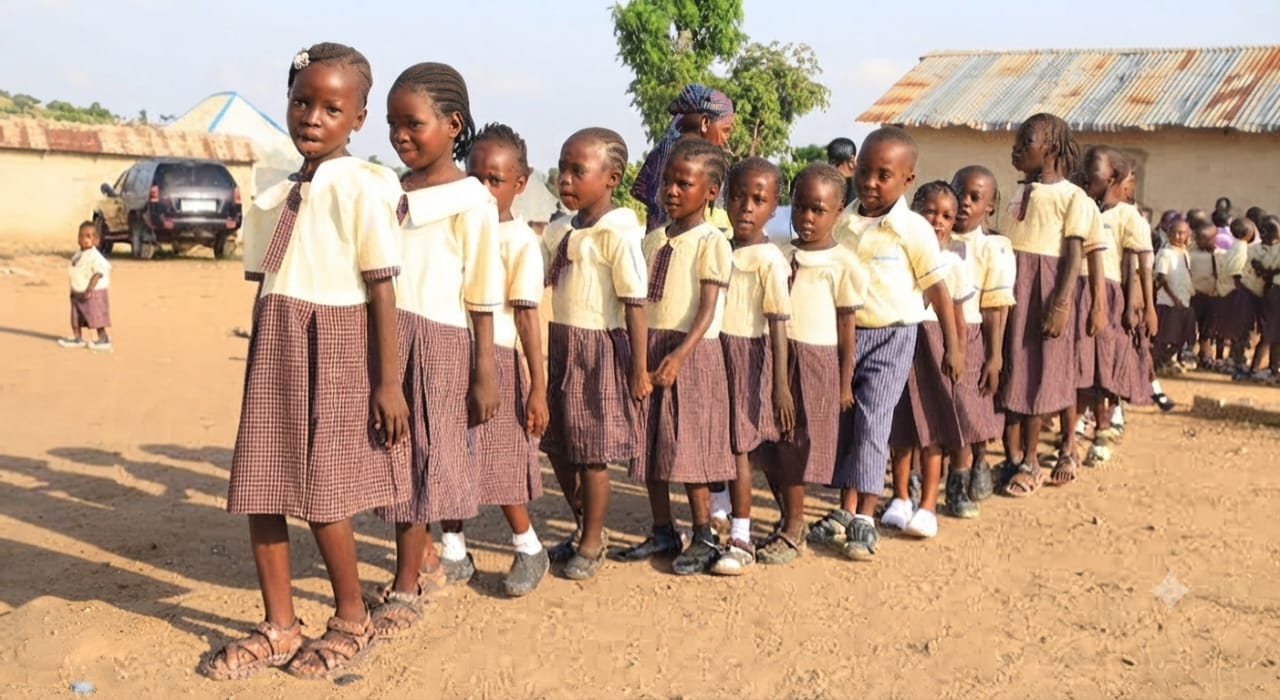
The answer should be obvious: parents, government and society — and ultimately, every adult who has voluntarily assumed responsibility for bringing a child into the world.
Yet every academic session, whether January or September, a familiar drama unfolds. Schools announce resumption dates. Fees are communicated. Uniforms, books, transport, accommodation and other expenses become due. Then, almost on cue, the social-media appeals begin: “Please assist.” “My children are resuming next week.” “I need school fees urgently.” “Anything you can do will be appreciated.”
There are, unquestionably, genuine cases of hardship. Nigeria’s economic realities are brutal for millions of families. Inflation, job losses, unstable businesses, insecurity and declining purchasing power can turn yesterday’s manageable school bill into today’s mountain. Such families deserve compassion and, where possible, structured assistance.
But there is another category we must be courageous enough to confront: avoidable financial emergencies created by poor planning, lifestyle competition, parental irresponsibility and the quiet assumption that somebody else will always rescue the family.
This is not an argument against Nigeria’s culture of communal support. Friends, siblings, uncles, aunts, religious bodies, community associations and philanthropists have saved countless families from devastating circumstances, and that remains one of our greatest social strengths. The problem begins when temporary assistance becomes a permanent financial strategy. That is where sympathy must meet responsibility.
IS IT REALLY A SCHOOL-FEE CRISIS OR A PLANNING CRISIS?
Consider the question. If a child’s school fees are due every September, why does the financial emergency begin in September? Did the school suddenly announce that children would resume? Was the academic calendar a secret? Did the parent not know that books, uniforms, transport and other educational expenses would be required? Why wait until three days before resumption to begin looking for hundreds of thousands — or even millions — of naira?
Sometimes there is a legitimate answer. A parent may have lost a job, a business may have collapsed, a medical emergency may have consumed the family’s resources, or some other unexpected event may have disrupted the household budget.
Poverty is not a moral failure and no parent should be ridiculed for genuine hardship.
But where none of those circumstances exist, we must call the problem what it is: financial indiscipline.
There is nothing wrong with being poor. There is something profoundly dangerous about pretending to be wealthy while being unable to meet basic obligations.
THE NUMBERS TELL A SOBERING STORY
Nigeria’s education crisis is already enormous. UNICEF estimates that about 10.5 million Nigerian children aged 5–14 are out of school, despite primary education being officially free and compulsory, while only about 61 percent of children aged 6–11 regularly attend primary school. The Federal Government/UNICEF 2024 Situation Analysis similarly reported roughly 10 million primary-age and 8 million secondary-age children out of school, alongside widespread learning deficiencies among those who do attend.
On the financing side, UNICEF’s public-finance analysis shows education’s share of total government expenditure sliding from 9.3 percent in 2015 to just 3.6 percent in 2023 — far below the internationally referenced benchmark of 15–20 percent.
The burden on families is, therefore, playing out inside a much larger structural crisis, not despite it.
Meanwhile, the cost of private education has risen sharply. A 2025 report in The Guardian Nigeria cited increases of between 25 and 100 percent across some private schools, with mid-tier private primary fees reportedly climbing from around ₦40,000 per term in 2020 to about ₦120,000 by 2025, while some premium schools charge millions of naira per term.
UNICEF’s 2025 child-poverty report adds another layer to the crisis: two out of every three Nigerian children experience multidimensional poverty — deprivation that extends beyond income into healthcare, nutrition, protection and access to basic services.
So yes, parents are under genuine pressure. But precisely because money is scarce, financial discipline becomes more — not less — important.
“TAKE YOUR CHILDREN TO A SCHOOL YOU CAN AFFORD”
A statement circulating under the name of the Education Information Society of Nigeria puts it bluntly: “Any school fees you struggle to pay are no longer school fees, but a RANSOM! Take your children to a school you can afford.”
The word “ransom” is deliberately provocative, and it may sound unnecessarily harsh. But its underlying principle deserves serious consideration.
It is not saying poor children should not receive quality education. It is not saying parents should abandon ambition. Nor is it suggesting that private schools are inherently bad.
It is a call for financial realism.
If a family can sustainably afford School A but insists on School C because School C is more prestigious, what exactly are they buying — education or status?
If the answer is status, the child may eventually pay the price for the parent’s social ambition.
Parents should aspire to give their children the best education possible, but “best” should not be defined solely by prestige, social pressure or what other families appear to be doing. The real issue is never simply whether a child attends an expensive school; it is whether that education can be sustained without repeatedly destabilising the family.
THE DANGEROUS CULTURE OF “LOOKING SUCCESSFUL”
There is a growing Nigerian phenomenon in which appearance competes with reality.
A family may struggle with rent, school fees and healthcare, yet still feel compelled to organise an extravagant birthday party — borrowing heavily, wearing expensive clothing, hiring elaborate decorations and projecting affluence on social media — only to begin appealing for school fees shortly afterwards.
This is not an indictment of any individual. It is a broader social pattern worth examining.
What should come first: three hours of social applause or three months of a child’s education?
A birthday is important; education is foundational. A celebration creates memories; education creates possibilities. A party ends in a day. The consequences of educational deprivation can follow a child for decades.
This is why financial priorities matter.
“BUT PEOPLE HELP ME”
Indeed, they do — and God bless the people who help others.
Nigeria’s communal culture, in which friends, relatives, religious organisations, colleagues, alumni associations and philanthropists rally around struggling families, is one of our greatest strengths. There is no shame in receiving help when life genuinely overwhelms you.
But assistance should function as a safety net, not a permanent financial model.
The question should not always be, “Who will help me this term?”
The better question is: “What happens when everyone who has been helping me also encounters their own crisis?”
Your friend has children. Your sibling has school fees. Your colleague has rent. Your uncle has medical bills. Your religious leader has responsibilities of his own.
Nobody can permanently become another family’s treasury.
FAITH IS NOT A SUBSTITUTE FOR PLANNING
There is also a theological point worth correcting.
“God will provide” is a legitimate statement of faith, and nobody should be ridiculed for trusting in God. But faith should encourage responsibility, not replace it.
Pray, yes. Believe, yes. Trust God, yes.
But budget too. Save too. Plan too. Reduce unnecessary expenditure. Seek legitimate additional income. Choose a school that can be sustained.
Prayer without planning can become wishful thinking; planning without faith can become anxiety. Prayer and planning were never meant to be opposites.
Healthy parenting requires both wisdom and responsibility.
BUT LET US NOT BLAME EVERY STRUGGLING PARENT
Objectivity requires balance.
Not every parent asking for help is financially irresponsible. A widow may be struggling. A single mother may be carrying several children alone. A father may have lost his job. A business owner may have suffered catastrophic losses. A previously comfortable household may suddenly become financially distressed.
Such families deserve understanding, not blanket accusations of irresponsibility.
The objective is not to shame poor parents. It is to challenge avoidable irresponsibility while defending genuine vulnerability.
FATHERS, MOTHERS AND THE CHILD IN THE MIDDLE
Nigerian society has traditionally placed heavy expectations on fathers as providers, while mothers have often carried much of the burden of day-to-day care. Modern economic realities have complicated these roles, and responsible parenting today must be understood as a shared obligation rather than a competition between men and women.
If a man has children, why should the end of his relationship with their mother terminate his responsibility to them?
It should not.
A broken relationship is not a broken bloodline. Divorce does not dissolve fatherhood. Separation does not terminate it. An argument with an ex-partner does not cancel school fees, and remarriage does not erase previous children.
A man may stop being a husband; he does not stop being a father.
Where paternity is established, responsibility remains — a principle reinforced by the UN Convention on the Rights of the Child, which Nigeria has ratified, and which recognises that both parents share common responsibility for a child’s upbringing, within their abilities and financial capacities.
At the same time, fairness cuts both ways.
Some mothers restrict a father’s access out of unresolved anger or bitterness after separation, sometimes denying him information about school, health or his child’s daily life. That is unhealthy.
But where there are credible allegations of violence, abuse or genuine danger, access cannot simply be demanded in the name of “father’s rights”. Child safety must come first.
Where no such concern exists, however, children should never become weapons in adult disagreements.
The child is not a divorce settlement, not emotional property and not a bargaining chip.
Equally, a father who says, “I won’t pay school fees because her mother won’t let me see my children,” is punishing the wrong person.
The child did not cause the conflict, did not choose the separation and did not write the custody arrangements. The child should not lose an education because two adults cannot resolve their differences.
The proper response to such a standoff is mediation, structured co-parenting or appropriate legal intervention — never financial abandonment or weaponised access.
Nigeria’s legal framework, including the Child Rights Act 2003, domesticated by many though not all states, together with the broader international framework, makes clear that parents carry primary responsibility for a child’s upbringing and development, while children have rights relating to an adequate standard of living and education.
This is not merely a moral slogan; it carries legal and human-rights weight.
Where custody, maintenance or access disputes can not be resolved amicably, parents should seek competent legal advice or mediation rather than allow the child to be caught in the crossfire.
The standard should be the same for everyone: responsibility according to capacity and circumstance, with the child’s best interests at the centre.
There are irresponsible fathers and responsible fathers. There are irresponsible mothers and responsible mothers.
Gender should never become a shield for irresponsibility.
THE MENTAL-HEALTH DAMAGE WE RARELY DISCUSS
Financial instability does not stop at the bank account. It enters the marriage, the classroom and eventually the mind of the child.
A child who repeatedly hears, “We don’t have money,” “Your father has refused to pay,” “Your mother is the reason you cannot go,” or “Wait until someone sends money,” may begin to internalise anxiety, shame and insecurity.
Imagine a child watching classmates return to school while staying home because fees were never planned for — or repeatedly being told that an education depends on somebody else’s generosity.
That can quietly erode a child’s confidence and emotional wellbeing, even as financial stress on the parent produces its own toll of anxiety, marital conflict and exhaustion.
Responsible financial planning is therefore not merely an economic issue. It is also a form of emotional protection for children and part of responsible parenting itself.
WHAT SHOULD PARENTS ACTUALLY DO?
The practical solution begins with realism.
First, calculate the true annual cost of educating each child — not tuition alone, but books, uniforms, transport, feeding, boarding, examination charges, technology, extracurricular activities, medical needs and other miscellaneous expenses.
The NBS General Household Survey’s education module itself recognises that education spending extends well beyond tuition.
Second, divide that annual figure into monthly savings targets.
If education will cost ₦1.2 million a year, saving ₦100,000 monthly is far more rational than discovering in September that ₦1.2 million is suddenly required.
Third, build an education emergency fund.
Fourth, choose schools according to sustainable income rather than social pressure. Quality is measured by teaching, safety, learning environment and outcomes, not by fees alone.
Fifth, review school choices annually. If income falls substantially, moving to a less expensive but respectable school is not failure; it is financial intelligence.
Sixth, separate necessities from lifestyle expenditure. If school fees are unpaid, the extravagant birthday can wait. If rent is overdue, the luxury purchase can wait.
Parents should also have honest conversations with their children about financial limitations.
There is no shame in telling a child, “We can not afford that school at the moment, but we will provide you with the best education we can sustain.”
That is far better than promising an expensive education and repeatedly creating crises around it.
WHAT SHOULD SEPARATED PARENTS DO?
Separated parents should create a written parenting plan covering school fees, books and uniforms, healthcare, transport, accommodation where relevant, extracurricular expenses, visitation, school events, communication with teachers, emergency expenses and a mechanism for resolving disputes.
Where agreement is impossible, professional mediation or appropriate legal processes should be considered.
The goal is never, “How do I defeat my ex?”
It should be, “How do we prevent our disagreement from damaging our child?”
That is mature co-parenting.
AND WHAT SHOULD SCHOOLS, COMMUNITIES AND GOVERNMENT DO?
Schools should communicate fees early, provide transparent billing and, where practicable, offer structured instalment arrangements for genuinely distressed families.
Nigeria’s extended-family culture should also evolve without losing its communal values.
Instead of merely paying school fees every year, relatives, philanthropists and community organisations could support vocational training, small businesses, scholarships and educational savings plans — interventions that build long-term financial capacity rather than permanent dependency.
Government, too, can not escape responsibility.
With millions of Nigerian children out of school and education financing already inadequate, the burden cannot be transferred entirely to individual parents.
Stronger public schools, better teachers, improved infrastructure, targeted scholarships, social protection and transparent education financing are essential if Nigeria is serious about human-capital development.
THE MOST IMPORTANT FINANCIAL LESSON FOR A CHILD
Perhaps the most important lesson a parent can teach a child is not mathematics. It is financial discipline.
A child who watches a parent budget learns budgeting.
A child who watches a parent save learns patience.
A child who watches a parent live within their means learns contentment.
A child who watches a parent constantly borrow to impress others may learn that appearance matters more than sustainability.
What, exactly, are we teaching the next generation?
That success is the most expensive birthday, the most expensive school and the most impressive photograph?
Or that success is building a stable life within one’s means?
THE HARD QUESTIONS
Should parents put their children in schools they can not sustainably afford?
No.
Should poor parents be condemned for needing help?
No.
Should parents deliberately create avoidable financial crises because they expect friends and relatives to rescue them?
No.
Should fathers abandon their children because they have separated from the children’s mother?
Absolutely not.
Should mothers deny responsible fathers access merely because the relationship ended badly?
No — unless legitimate safety or legal considerations require it.
Should fathers withhold financial support to punish a former partner?
No.
Should government leave families to carry the entire education burden alone?
No.
Should society help vulnerable families?
Yes — but assistance should empower, not institutionalise dependency.
A NEW SOCIAL CONTRACT FOR PARENTING
Perhaps Nigeria needs a new culture of parenting built around four words:
Plan. Provide. Protect. Prioritise.
Plan for the child.
Provide within your capacity.
Protect the child’s emotional and physical wellbeing.
Prioritise the child’s future over adult ego.
Parents do not need to be wealthy to be responsible.
A low-income parent who plans carefully can often provide more stability than a high-income parent who spends recklessly.
A modest school with committed parents can produce an exceptional child. An expensive school cannot compensate for irresponsible parenting, and a lavish lifestyle can not replace emotional security.
CONCLUSION: CHILDREN SHOULD NOT PAY FOR ADULT MISTAKES
Before every school resumption, every parent should ask a brutally honest question:
“If nobody sends me a naira, can my children still go to school?”
If the answer is yes, there is some financial resilience.
If the answer is no, the next question should not only be, “Who can I call?” It should also be, “What can I change?”
Can I change the school?
Can I reduce unnecessary expenditure?
Can I save earlier?
Can I increase my income?
Can the father contribute more?
Can the mother stop obstructing access?
Can both parents put the child’s interests first?
Can family support become a bridge rather than a permanent foundation?
These are the questions that matter because children are not emergency projects. They are not status symbols. They are not weapons in broken relationships or bargaining chips in adult disputes.
They did not choose their family’s financial circumstances. They did not cause their parents’ disputes. They did not create the economy.
And they should not bear the consequences of adult irresponsibility.
They are human beings entrusted to adults, and their welfare must remain the true measure of responsible parenting — not the most expensive school, the biggest party or the most impressive social-media photograph, but whether a parent can provide stability, education, care and emotional security without constantly placing the family at the mercy of financial emergencies.
God may provide, but parents must prepare.
Friends may help, but parents must take responsibility.
Love may be unconditional, but parenting can not be responsibility-free.
Relationships may end, but parenthood does not.
And when school resumes, the most important question should not be, “Who will rescue us?”
It should be:
“How did we prepare — and did we choose the child, every time?”
NOTE: we don’t have the copyright of the image used. It’s only for narrative purposes, please.
DemocracyNewslineNewspaper, September 12, 2026