





Why FG Bans Road Taxes, Checkpoints and Stickers.
By Bala Salihu Dawakin Kudu – Democracy Newsline
February 15, 2026.
At dawn along the ever-busy highway connecting Abuja to Kaduna, commercial driver Musa Ibrahim tightened his grip on the steering wheel. For nearly twenty years, this road had meant more than potholes and traffic—it meant checkpoints. It meant stickers. It meant unpredictable “road taxes” collected under different names by different hands.
For the first time in decades, Musa drove past a dismantled checkpoint where faded wooden barricades once stood. No uniformed officer waved him down. No demand for a levy. No sticker to paste on his windscreen.
- Advertisement -
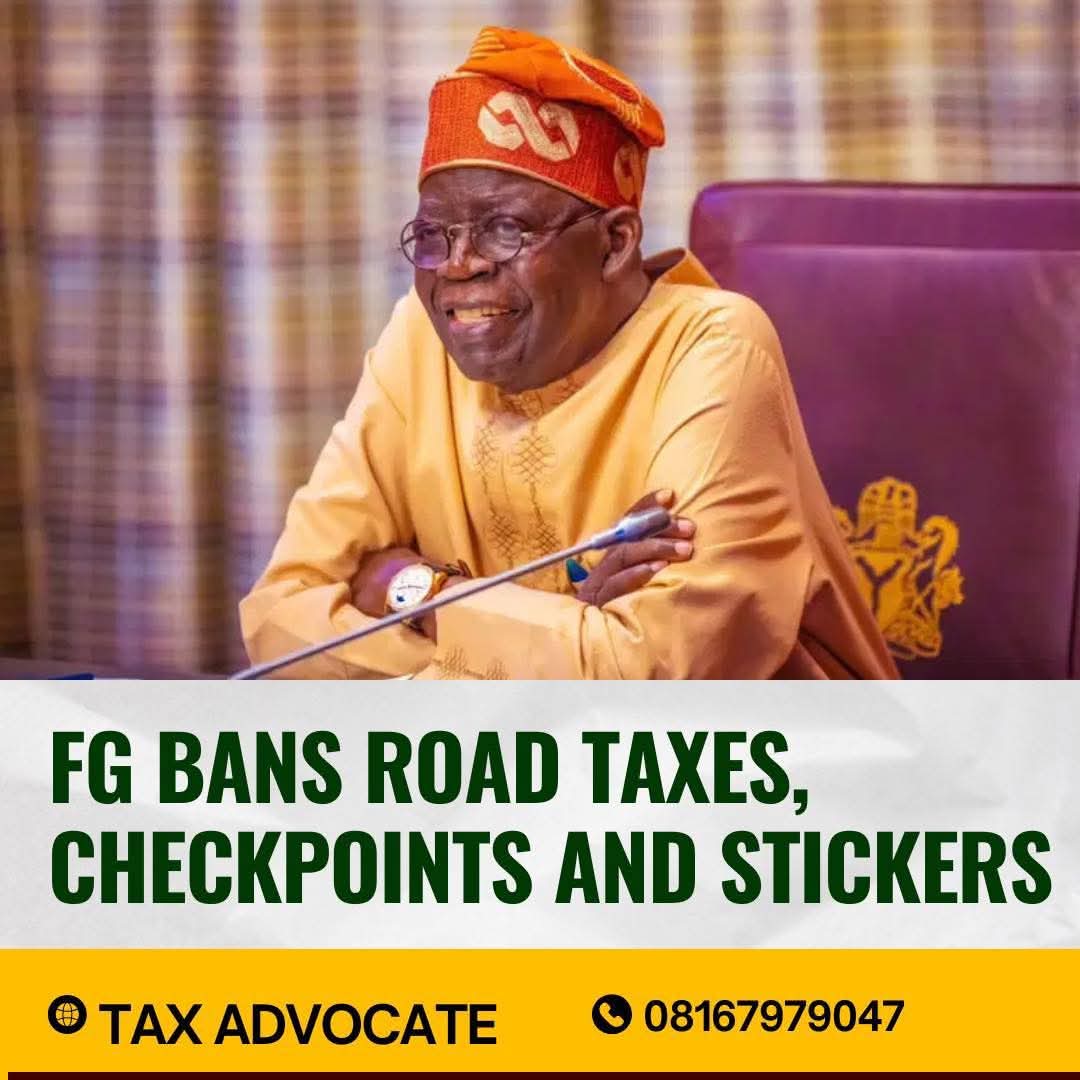
In a sweeping reform announced by the Federal Government under the leadership of Bola Ahmed Tinubu, the collection of road taxes through roadside checkpoints and stickers has been officially banned nationwide. The reform, implemented as part of the 2026 tax modernization agenda, marks one of the most decisive moves in the country’s fiscal history.
At the center of this reform is the Joint Revenue Board, which declared all roadside levies illegal. From now on, no motorist is required to stop at any checkpoint to pay road-related taxes. No stickers. No spontaneous collections. No roadside negotiations.
“This is a major win for motorists and a step toward transparent taxation,” the Board announced.
For years, Nigerian drivers endured a maze of levies—haulage fees, environmental charges, vehicle permits, and road improvement dues. Each state, and sometimes local government councils, operated its own system. Motorists traveling across multiple states could be stopped repeatedly within short distances.
In some cases, the same vehicle might pay similar fees under different names before reaching its destination. The lack of standardization created confusion and, unfortunately, opportunities for corruption.
Transport unions often complained. Logistics companies passed additional costs to consumers. Farmers transporting produce to markets in cities like Kano and Lagos saw profits shrink due to cumulative levies.
Economists warned that the system was not only inefficient but economically damaging. Roadside collections slowed traffic, increased transportation costs, and discouraged interstate trade—contradicting Nigeria’s broader economic integration goals.
The 2026 tax reform aims to modernize Nigeria’s revenue system through digitization, transparency, and central coordination. Under the new framework: All legitimate taxes must be paid through approved digital platforms.
Revenue collection is centralized and traceable.
State and federal authorities operate within clearly defined tax jurisdictions.
Informal roadside taxation is eliminated.
Security agencies have been instructed to dismantle illegal checkpoints and enforce compliance. The directive is clear: no agency, union, or local authority is permitted to collect road taxes outside the approved system.
By removing physical checkpoints tied to revenue collection, the government intends is to Protect motorists from harassment and illegal collections
Reduce corruption opportunities, Improve the ease of doing business
Encourage voluntary tax compliance through clarity and fairness and The reform also aligns with Nigeria’s drive to improve its business environment rankings and attract investment.
Democracy Newsline spoke to a drivers like Musa, the change is immediate and personal. “Sometimes I spent more at checkpoints than on fuel,” he recalled. “You couldn’t argue. If you did, you wasted time or risked trouble.” Now, his journey is smoother. Fewer stops mean faster deliveries.
For commercial transporters, even small savings per trip can significantly improve livelihoods over time.
Passengers benefit too. Transport fares may stabilize as operators no longer factor unpredictable roadside charges into pricing. Small-scale traders transporting goods between states report renewed optimism. A tomato seller traveling from northern farms to southern markets can now calculate costs more accurately.
Under the new law, previously issued road tax stickers are no longer valid. Motorists are not required to display or purchase any roadside tax sticker. Any demand for such payments is considered illegal.
Enforcement agencies are monitoring highways to ensure full implementation. Citizens are encouraged to report unauthorized checkpoints or collections.
The ban is not merely about removing checkpoints. It reflects a deeper shift in governance philosophy.
For decades, fragmented tax practices weakened public trust. By centralizing and digitizing tax administration, the Federal Government aims to build a system where citizens understand what they owe, why they owe it, and how it is used.
Experts believe that when taxpayers see fairness and accountability, compliance increases naturally.
As the sun rose fully over the highway, Musa’s bus continued its uninterrupted journey. The empty roadside where a checkpoint once stood symbolized more than policy change—it represented relief.
Nigeria’s bold step in banning roadside road taxes may well mark the beginning of a more transparent era—one where the road ahead is clearer, not just for motorists, but for governance itself.
(DEMOCRACY NEWSLINE NEWSPAPER, FEBRUARY 15TH 2026)