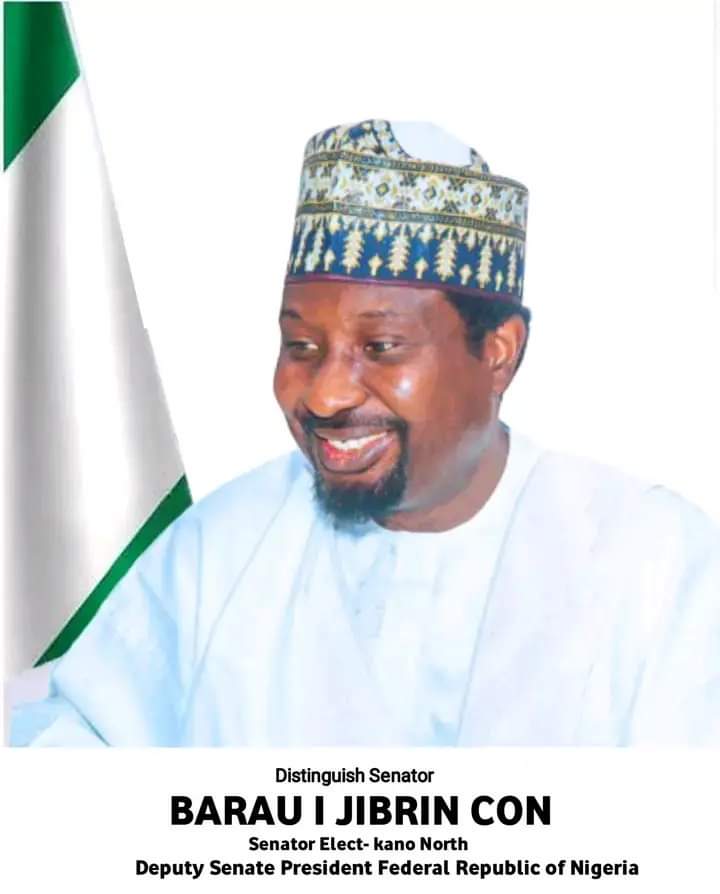

WHY KANO NORTH NEEDS BARAU JIBRIN AGAIN IN 2027: A RECORD OF REPRESENTATION, DEVELOPMENT AND NATIONAL INFLUENCE.
By Bala Salihu Dawakin Kudu
October 20, 2026
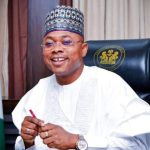
As the 2027 general elections approach, the people of Kano State, particularly Kano North Senatorial District, have an important opportunity to assess their political representation and determine the kind of leadership that can best advance their collective interests. At the centre of this discussion is Senator Barau I. Jibrin, the Deputy President of the Nigerian Senate, whose legislative experience, national influence and development initiatives have become significant issues in Kano’s political landscape.
Popularly known as Maliya, Senator Barau has represented Kano North in the Senate since 2015. His political journey also includes service in the House of Representatives, where he represented Tarauni Federal Constituency from 1999 to 2003. His experience in legislative affairs, public administration and business has contributed to his position as one of Kano’s prominent political figures.
- Advertisement -
One of Senator Barau’s most important contributions is his sponsorship of legislation intended to address educational, economic and developmental challenges. Among the notable milestones associated with his legislative efforts are the establishment of the North West Development Commission and the Federal University of Science and Technology, Kabo. These initiatives have the potential to expand development opportunities, improve access to education and strengthen the economic prospects of Kano State and the wider North-West region.
His legislative agenda has also included proposals relating to teacher education, healthcare, agriculture, economic regulation and institutional accountability. By June 2026, reports indicated that he had sponsored 42 bills since the inauguration of the 10th National Assembly, with five having been passed into law at that point. This record provides a basis for assessing his legislative productivity and the extent to which his proposals translate into tangible benefits for Nigerians.
As Deputy President of the Senate, Senator Barau occupies a strategic position in national decision-making. His office provides opportunities to advocate for federal projects, institutional investment and policies that address the needs of Kano North and Kano State. However, the true measure of this influence must ultimately be reflected in improved public services, employment opportunities and sustainable development.
Education, Youth Empowerment and Economic Development
Education remains one of the most important areas in which Senator Barau’s interventions deserve attention. His scholarship initiatives, including postgraduate opportunities in specialised fields such as artificial intelligence, cybersecurity and related technological disciplines, seek to equip young Nigerians with skills relevant to the modern economy.
His support for educational institutions and scholarship programmes can help reduce the financial barriers confronting students from disadvantaged backgrounds. For a state with a large population of young people, sustained investment in education is essential to reducing unemployment, encouraging innovation and building a skilled workforce.
Economic empowerment is another important aspect of his constituency interventions.
In January 2026, reports announced a programme targeting 15,600 beneficiaries across Kano North over 12 months, with proposed grants of ₦100,000 per beneficiary. Plans also included vehicles, motorcycles and other support intended to strengthen livelihoods and commercial activities
Such programmes can provide meaningful assistance when beneficiaries are selected transparently and the support is used productively. Nevertheless, the long-term success of empowerment initiatives should be measured by the businesses created, jobs sustained and families lifted towards economic independence.
Senator Barau’s constituency interventions have also covered transportation, water supply, electricity, roads and other community needs. The Kano North Transport Service, launched with 107 buses in 2024, was designed to improve mobility and support commercial activities within the district. Earlier reports also documented interventions involving solar-powered streetlights, boreholes, road projects and educational facilities in different communities.
Security is equally important to Kano’s social and economic development. In 2024, a reported intervention involving 1,000 motorcycles for the Kano State Police Command was intended to improve operational mobility across the state’s 44 local government areas. While security remains a collective responsibility involving federal, state and local authorities, such logistical support can contribute to efforts to protect lives and property.
It is important to distinguish between projects directly executed by a senator, those facilitated through federal agencies, and programmes announced but not yet completed. This distinction will enable the public to make a fair assessment of the actual impact of every intervention.
The argument for Senator Barau’s re-election rests principally on continuity, experience, legislative influence and the opportunity to consolidate ongoing development initiatives. Having served in the National Assembly for several years and now occupying the office of Deputy President of the Senate, he possesses institutional experience that supporters believe can be used to attract further opportunities for Kano North.
Returning an experienced representative to the Senate could help sustain advocacy for federal educational institutions, healthcare facilities, infrastructure, agricultural development and youth employment. It could also allow existing programmes to be evaluated, improved and expanded where they have demonstrated measurable results.
For Kano State, the wider objective should be to secure a stronger voice in national affairs and ensure that federal policies and investments respond to the needs of its citizens. Senator Barau’s supporters can reasonably argue that his current position offers a platform for pursuing these objectives, provided that the opportunities are translated into concrete public benefits.
However, re-election should not be treated as an automatic reward. It should be based on an honest assessment of performance, accessibility, accountability and the needs that remain unmet. The people of Kano North deserve regular updates on projects, transparent information about beneficiaries and evidence that public resources are producing lasting results.
Senator Barau I. Jibrin’s political record combines legislative activity, national leadership responsibilities and constituency development initiatives. These provide important grounds for supporters to make their case ahead of the 2027 elections.
For the people of Kano North and the wider Kano State, the central question is not merely who holds political office, but who can most effectively turn representation into better schools, stronger healthcare, safer communities, productive agriculture, sustainable employment and improved living standards.
If Senator Barau can consolidate his achievements, address outstanding community needs and maintain a strong commitment to accountability, his supporters will have a compelling case for continuity in 2027.
Ultimately, Kano’s progress must remain the overriding objective. Political leadership should be judged by its contribution to the people, and every mandate should represent a renewed commitment to service, development and a better future for the next generation.
Bala Salihu Dawakin Kudu 08060017934.
DemocracyNewslineNewspaper October 20th, 2026