




A Defection That Could Reshape Kano Politics
Barring a dramatic.
By Bala Salihu Dawakin Kudu
Democracy Newsline
30th December 2025.
last-minute rethink, Kano State Governor Abba Kabir Yusuf is set to defect from the New Nigeria Peoples Party (NNPP) to the ruling All Progressives Congress (APC) in early January 2026.
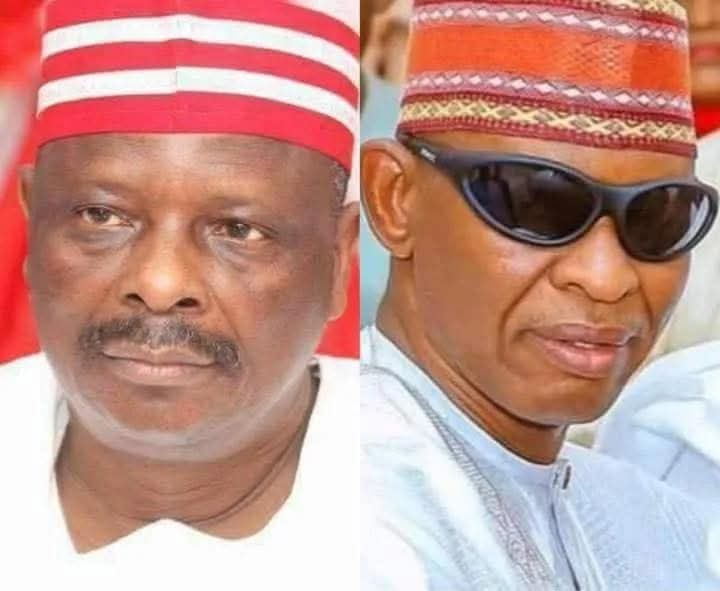
If it happens, the move will not only mark the end of Mr Yusuf’s long-standing political relationship with his mentor, Senator Rabiu Musa Kwankwaso, but also signal the effective collapse of the NNPP as a party with executive control at the state level.
- Advertisement -

For Kano — one of Nigeria’s most politically influential states — the implications are profound. For national politics, the defection would reinforce the APC’s dominance ahead of the 2027 general elections and weaken the opposition’s ability to present a united front.
Governor Yusuf’s political rise has been inseparable from Rabiu Kwankwaso. For nearly four decades, Kwankwaso has been the defining figure in Kano politics, building a loyal grassroots structure — the famous Kwankwasiyya movement — and nurturing protégés, including Yusuf, who served as commissioner during Kwankwaso’s governorship.
Yusuf’s emergence as governor in 2023 on the NNPP platform was widely seen as Kwankwaso’s greatest political triumph since leaving the APC. It gave the NNPP relevance overnight and positioned Kwankwaso as a potential national opposition powerbroker.
A defection by Yusuf, therefore, would be more than a routine party switch. It would be a symbolic rupture — a protégé stepping out of his godfather’s long shadow.
Why APC, and Why Now?
Several factors are believed to be driving Yusuf’s calculations.
As the only NNPP governor in the country, Yusuf stands politically isolated. Without other governors, senators, or a strong national structure, the NNPP offers limited protection or bargaining power. By contrast, the APC controls the federal government and most states, giving it enormous institutional leverage.
APC Congresses as a Strategic Entry Point
With APC congresses scheduled for February 2026, Yusuf’s timing appears deliberate. Defecting before the congress would allow him to influence party leadership in Kano, potentially taking control of the APC structure in the state rather than entering as a marginal figure.
Kano politics has long revolved around Kwankwaso’s personal authority. Yusuf’s reported efforts to line up lawmakers and local government chairmen suggest a strategy aimed at dismantling that control by moving en masse — leaving Kwankwaso politically stranded.
Lawmakers, Chairmen, and the Numbers Game
Insider accounts suggest that the governor has been quietly consolidating support across all tiers of government.
State House of Assembly:
At least 25 of the 27 NNPP lawmakers (with two now deceased), including Speaker Yusuf Falgore, are said to have endorsed Yusuf’s defection plan. If accurate, this gives the governor near-total legislative backing and removes one of the biggest risks associated with defection — impeachment threats.
While Kwankwaso’s son-in-law, representing Tarauni Federal Constituency, is believed to be firmly loyal to him, other NNPP House of Representatives members from Kano — including those from Nassarawa, Ungogo, and Kumbotso — are reportedly undecided and watching how events unfold.
Local Government Chairmen.
Though some chairmen remain loyal to Kwankwaso, sources say most are likely to follow the governor once the move becomes official, reflecting a familiar Nigerian political pattern: power gravitates toward incumbency.
Taken together, these alignments suggest Yusuf is not planning a lonely defection, but a coordinated political migration.
Kwankwaso’s Countermove — and Its Limits
Sensing the shifting ground, Kwankwaso reportedly summoned NNPP members of the Kano State House of Assembly to his Miller Road residence. There, he is said to have acknowledged that Yusuf was on his way out and told lawmakers they were free to follow the governor if they wished.
Kwankwaso’s rhetorical question — “Will the God that gave us power in 2023 not be around in 2027?” — reflects both defiance and frustration.
It underscores his belief that political success does not depend on federal power or ruling-party affiliation, but on grassroots support and divine providence.
Yet Nigerian political history suggests that ideology and loyalty often struggle against the realities of power, access to resources, and control of state machinery.
Its only sitting governor
Its strongest political base
Much of its relevance as a national party
The party would likely revert to being a regional or personality-driven platform centered almost entirely around Kwankwaso. While he remains influential, especially in Kano, leading a party without executive power significantly limits political leverage.
Kano’s massive voting population would tilt more firmly toward the ruling party.
The defection would weaken the opposition’s morale and bargaining power.
It could trigger further defections from smaller parties ahead of 2027.
However, integrating Yusuf into the APC will not be frictionless. Existing APC power blocs in Kano — some of whom were displaced in 2023 — may resist ceding control, setting the stage for internal struggles.
A High-Stakes Gamble
Governor Abba Yusuf’s reported plan to dump the NNPP and join the APC is a high-stakes political gamble. If successful, it could secure his political future and redefine Kano’s power structure. If mishandled, it could provoke backlash from Kwankwaso’s still-formidable grassroots network.
What is clear is that Kano politics is once again at a turning point — and the outcome will reverberate far beyond the state, shaping alliances, ambitions, and calculations ahead of the 2027 general elections.
Writer can be reach via 08060017934
(Democracy Newsline Newspaper, December 30TH 2025)