

A Response to “Tinubu’s Silent War on the Muslim North, Revisited”
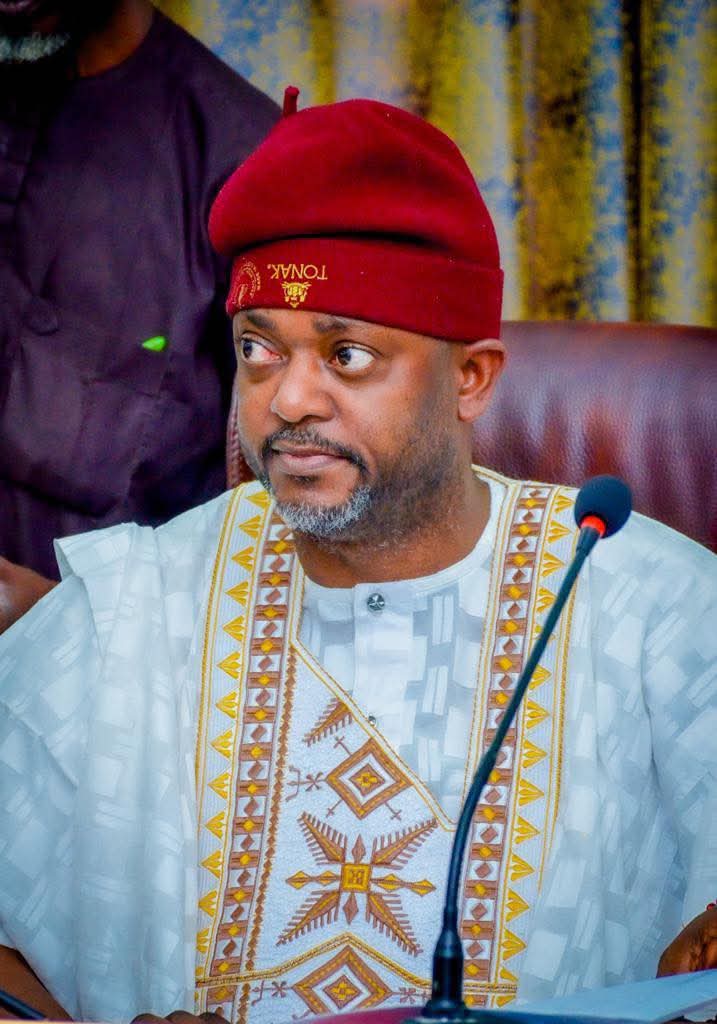
By Chief Edward David Onoja.
I have read Mohammed Bello Doka’s follow up essay carefully and with the seriousness it deserves. In a country as complex as Nigeria, asking difficult questions is not a crime. However, how those questions are framed matters just as much as what is being asked, especially when the framing risks deepening fault lines in an already fragile polity.
My response rests on one firm position.
There is no such thing as a “Muslim North” and a “Christian North” as separate political entities. There is only Northern Nigeria, plural, diverse, and interdependent. Any attempt to subdivide it along religious lines may appear clever, but it is ultimately dangerous and deeply misleading.
- Advertisement -
QUESTIONING POWER SHIFTS IS LEGITIMATE, BUT CORRELATION IS NOT CAUSATION
The article presents a list of political and institutional changes involving individuals from the North who happen to be Muslim and implies a deliberate pattern. But listing events does not automatically establish motive.
In every administration, particularly one undertaking structural reforms, there will be exits, replacements, reshuffles, and investigations. These developments must be assessed on constitutional authority, performance, tenure cycles, and institutional needs, not reduced to a religious narrative simply because of the personal faith of officeholders.
If religion were truly the guiding determinant, Northern Christians would never lose office, Southern Muslims would never face scrutiny, and political outcomes would follow neat religious lines. That is not, and has never been, Nigeria’s reality.
NIGERIA’S POWER STRUCTURE HAS ALWAYS SHIFTED
The suggestion that political power was once stable and has suddenly been tilted ignores Nigeria’s history. From the military era to successive civilian governments, power has shifted between regions, institutions have been reorganized and restructured, and individuals across all regions and faiths have risen and fallen.
What we are witnessing today is centralized governance and institutional consolidation, not a religiously motivated purge.
MEDIA ACCUSATIONS AND ANTI CORRUPTION: IDENTITY IS NOT EVIDENCE
Yes, media accusations involving Northern Muslim figures have surfaced. Two facts must be clearly stated. Accusation is not conviction. Anti corruption processes are driven by petitions, audits, and intelligence, not religious identity.
There are unresolved allegations involving Southern Christians, Southern Muslims, Northern Christians, and others. The real problem is institutional inconsistency and judicial delay, not selective religious persecution. Turning systemic justice challenges into sectarian grievance only weakens legitimate reform demands.
INSTITUTIONS, LAGOS, AND THE MISDIAGNOSIS OF POWER
Concerns about Lagos centric economic and institutional concentration are valid, but they are structural, not religious. This centralization affects Northern Christians, Middle Belt states, and even parts of the South East and South South. It is an economic governance issue, not evidence of a campaign against Northern Muslims.
It is also important to situate these decisions within practical economic and administrative realities. Lagos is Nigeria’s commercial nerve centre. Virtually all major commercial banks operating in Nigeria are headquartered in Lagos, and the Central Bank of Nigeria, as the apex regulatory and coordinating authority for the financial system, already maintains its strongest operational presence there. Locating certain regulatory and supervisory departments closer to the institutions they oversee reduces duplication, lowers logistics costs, shortens response times, and improves efficiency. This is administrative pragmatism, not regional favoritism.
The Bank of Industry’s expanded footprint in Lagos follows the same logic. Lagos hosts the largest concentration of industrial activity in Nigeria, ranging from manufacturing to services and export oriented enterprises. Positioning key BOI departments closer to the highest volume of industrial transactions enhances monitoring, financing turnaround, and sectoral impact. It does not diminish the relevance or access of industries in other regions, which remain beneficiaries of BOI interventions nationwide.
Similarly, FAAN’s operational emphasis on Lagos is hardly surprising. Murtala Mohammed International Airport is by far the busiest airport in Nigeria, handling the highest passenger traffic, cargo volume, and international connections. Concentrating aviation management and coordination capacity where activity is most intense is consistent with global best practice, not evidence of political bias.
As for NIMASA and the Nigerian Ports Authority, both institutions have long been headquartered in Lagos due to the city’s status as Nigeria’s primary maritime hub. The overwhelming majority of port activity, shipping traffic, and maritime services are anchored there. Any serious maritime economy would naturally situate its regulatory and operational core where the industry itself is concentrated.
These choices reflect efficiency, scale, and economic logic. They do not amount to an attempt to marginalize any region, nor can they reasonably be interpreted as a religious or sectional agenda. The real conversation Nigeria should be having is how to strengthen economic clusters across the country, not how to politicize administrative geography.
INSECURITY IN THE NORTH: A NATIONAL CHALLENGE, NOT A POLITICAL STRATEGY
Banditry, terrorism, and displacement in the North predate this administration. They affect Muslims and Christians alike and have devastated entire communities.
To suggest that insecurity is being tolerated or weaponized to politically weaken a religious bloc is a serious claim, one that demands evidence far stronger than proximity or timing. Insecurity thrives on weak institutions, not religious favoritism.
ON THE RUNNING MATE DEBATE AND THE DANGER OF SELECTIVE OUTRAGE
Recent media speculation about a possible Christian running mate in 2027 deserves calm and principled reflection. It is both the constitutional right and political prerogative of a party’s presidential candidate to choose a running mate based on multiple indices: character,competence,trust,loyalty,
leadership experience,electiral value, national balance, and the overriding interest of stability.
In 2023, when our current distinguished, cerebral, and deeply experienced Vice President, His Excellency Senator Kashim Shettima, was chosen, some of us from the North who are Christians did not resort to grievance politics. Instead, we engaged our communities, many of them predominantly Christian, made the case for our party, and delivered votes against all odds.
We sold President Tinubu’s persona to those communities: his liberal instincts, his inclusiveness, and his respect for diversity. Today, those same communities are beginning to see that reality play out.
It is therefore surprising that the conversation has shifted to questioning why Northerners of a particular faith should even be considered for service in certain capacities.
Our campaign logic in 2023 was clear and it remains valid today. The offices of President, Vice President, Governor, or Deputy are not meant to lead Sunday services or Juma’at prayers, but to secure lives, unite the nation, and deliver prosperity. Public service must not be reduced to religious leanings.
When former Governor Nasir El Rufai, a famously intelligent and calculating political strategist, decided that Kaduna State’s long standing Muslim Christian ticket convention no longer mattered, nobody described it as a silent war against Southern Kaduna citizens who happen to be predominantly Christians.That irony should not be lost on us.
THE MOST DANGEROUS ASSUMPTION: REDEFINING THE NORTH BY RELIGION
The North has never survived by religious purity. It has endured because of shared geography, interwoven families, economic interdependence, and political coalition.
To now speak of a “Muslim North” losing power to a “Christian North” is to erase lived realities and hand ammunition to extremists on all sides.
We are Northerners first.
Any narrative that breeds mistrust or suspicion between Northern Muslims and Northern Christians is not resistance.It is self-inflicted sabotage.
FINAL WORD: VIGILANCE WITHOUT DIVISION
Power must always be scrutinized. Governments must always be questioned. But scrutiny must be grounded in facts, not fear, and vigilance must never come at the expense of unity.
If we fracture the North internally,to push a divisive narrative. We will be whittling down the political value the north has consistently brought to national politics.
The North does not need new labels.It needs fairness, security, opportunity, and inclusion for all its people.
That struggle is shared. And it must remain so.
(DEMOCRACY NEWSLINE NEWSPAPER, JANUARY 19TH 2026)