
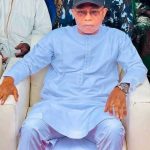





AT 74 AND 23 YEARS ON THE THRONE: CELEBRATING A LIFE OF SERVICE, WISDOM AND NATION-BUILDING
A Tribute to His Royal Highness, Alhaji (Dr.) Yahaya Abubakar, CFR, Etsu Nupe and Chairman, Niger State Council of Traditional Rulers
By Engr. Sani Ndanusa, FNSE, FNICE, FNIM, Marafan Nupe, Ubandoman Jiwa
There are birthdays that mark the passage of time, and there are birthdays that invite a people to pause, reflect and celebrate the uncommon life of a man whose years have become part of the history, identity and destiny of his people.
Today is one of such remarkable occasions.
I join the people of Nupeland, Niger State, Nigeria and friends of the Nupe Kingdom across the world in warmly congratulating His Royal Highness, Alhaji (Dr.) Yahaya Abubakar, CFR, Etsu Nupe and Chairman of the Niger State Council of Traditional Rulers, on the occasion of his 74th birthday and 23rd year on the throne of his forebears.
This is not merely a celebration of age.
It is a celebration of service, wisdom, dignity, courage, mentorship, philanthropy, peace, cultural preservation and nation-building.
It is also an occasion to celebrate a traditional institution that, under his leadership, has continued to demonstrate that the relevance of traditional leadership in contemporary Nigeria goes beyond ceremonial functions.
- Advertisement -

74 YEARS OF LIFE — 23 YEARS OF ROYAL SERVICE
His Royal Highness ascended the throne on 11 September 2003, succeeding the late Alhaji (Dr.) Umaru Sanda Ndayako as the 13th Etsu Nupe. Thus, 2026 marks 23 years of his reign. Contemporary records also identify him as the permanent Chairman of the Niger State Council of Traditional Rulers and as Chairman of the Coordinating Committee of the National Council of Traditional Rulers of Nigeria.
His journey to the throne was preceded by an equally distinguished career in the Nigerian Army, where he rose to the rank of Brigadier-General before retiring and assuming the traditional mantle of leadership.
That background is significant.
Military service taught him discipline.
Traditional leadership demanded wisdom.
Nation-building required tolerance.
And the human condition demanded compassion.
The remarkable feature of his leadership is the manner in which these attributes have converged in one personality.
He has carried the discipline of the soldier into the palace, the wisdom of the traditional institution into public discourse, and the compassion of a father into the lives of ordinary people.
A MONARCH WHO UNDERSTANDS THAT LEADERSHIP IS SERVICE
The true test of traditional leadership is not the magnificence of the palace, the splendour of the regalia or the number of people who bow before the throne.
The true test is what happens to the people beyond the palace walls.
Are they more united?
Are their children inspired?
Are their communities more peaceful?
Are their cultural values preserved?
Do the vulnerable find a listening ear?
Do young people see hope?
Does society benefit from the wisdom of the throne?
By these measures, the reign of Etsu Nupe Yahaya Abubakar deserves commendation.
In 2025, the Federal Ministry of Information described him as an “embodiment of peace and unity”, noting his sustained contribution to the development of Nupeland, Niger State and Nigeria. The same official statement credited him with guiding Nupeland through a period described as one of growth and development.
President Bola Ahmed Tinubu, in his 2025 birthday message to the monarch, similarly commended his contribution to nation-building and specifically praised his efforts in promoting unity, harmony, religious tolerance, peace and reconciliation.
These are not small descriptions.
In a country of more than 230 million people, with enormous ethnic, religious, cultural and political diversity, leadership that consistently advocates peace and reconciliation is an asset of national importance.
THE MENTOR: BUILDING PEOPLE, NOT JUST PRESERVING A THRONE
One of the qualities that has distinguished His Royal Highness in my personal estimation is mentorship.
A great leader does not merely accumulate followers.
A great leader creates other leaders.
He opens doors for the younger generation, counsels those who seek his wisdom, encourages excellence and provides an environment in which people can discover their own capacity to contribute to society.
This is particularly important at a time when Nigeria has a very large youthful population and faces the difficult task of transforming its demographic strength into economic productivity.
The Etsu’s leadership has therefore represented something bigger than the preservation of a traditional institution. It has demonstrated the possibility of using traditional authority as a platform for social cohesion, intergenerational dialogue, cultural continuity and human-capital development.
For those of us who have had the privilege of interacting with him, his counsel often carries the quality of an elder who has seen both sides of history: the Nigeria that was and the Nigeria that is still struggling to become.
His wisdom is therefore not simply academic.
It is experiential.
It is institutional.
It is historical.
And, importantly, it is humane.
PHILANTHROPY WITH PURPOSE
The word philanthropy is sometimes reduced to the act of giving money.
But genuine philanthropy is much deeper.
It is the capacity to identify human needs and respond to them with dignity.
It is supporting education because knowledge liberates.
It is supporting the vulnerable because society must not abandon its weakest members.
It is supporting culture because a people without memory can lose their identity.
It is supporting agriculture and enterprise because sustainable prosperity must ultimately be built around productive citizens.
The Etsu Nupe has repeatedly used the influence of his office to draw attention to issues affecting the welfare and development of his people.
Recent initiatives associated with his institution have included conversations around agriculture, education, health and economic development, including an agricultural colloquium and endowment initiative reported in 2025.
This is important because Nupeland possesses enormous agricultural, cultural and human-capital potential.
The challenge before the region is no longer merely how to preserve what previous generations handed down.
It is how to transform those assets into jobs, enterprises, education, food security, innovation and prosperity for the next generation.
PRESERVING NUPE IDENTITY IN A CHANGING WORLD
Another enduring contribution of His Royal Highness is his commitment to the preservation and promotion of Nupe identity.
The institution of Nupe Day, celebrated annually, has helped create a platform for celebrating Nupe history, culture, unity and the political economy of the people at home and in the diaspora.
The initiative was identified as one of the significant developments associated with his reign as early as the first decade of his tenure.
This is more than cultural celebration.
Culture is economic capital.
Language is heritage.
Traditional institutions are repositories of collective memory.
Festivals can become tourism assets.
Historical sites can become economic assets.
Traditional crafts can become export opportunities.
And cultural identity can become a powerful instrument of unity.
At a time when globalisation is rapidly changing the way young Africans understand themselves, the preservation of identity becomes even more important.
A people who know who they are are better positioned to determine where they are going.
A BRIDGE BETWEEN TRADITION AND MODERN GOVERNANCE
One of the most compelling aspects of Etsu Nupe’s leadership is his ability to operate across two worlds.
He represents an ancient institution, yet engages modern Nigeria.
He is a traditional ruler, yet has a distinguished military background.
He is deeply rooted in Nupe history, yet has consistently played national roles.
He is a custodian of culture, yet understands the demands of contemporary governance.
This bridging role has become increasingly important.
Traditional rulers may not exercise executive political power in Nigeria’s constitutional order, but their moral authority, social networks and proximity to communities remain significant.
They can mediate.
They can mobilise.
They can counsel.
They can preserve peace.
They can communicate government policies.
They can identify emerging social problems.
And they can provide leadership where formal institutions sometimes struggle to reach citizens.
President Tinubu’s 2025 tribute specifically recognised the Etsu’s role as Chairman of the Coordinating Committee of the National Council of Traditional Rulers of Nigeria and Chairman of the Abuja National Mosque.
That breadth of responsibility speaks to the confidence placed in his leadership beyond Nupeland.
A RECORD OF PEACE AND RECONCILIATION
Perhaps one of the most valuable contributions a traditional ruler can make in today’s Nigeria is to become a voice above partisan interests.
Our country is experiencing multiple pressures: insecurity, economic hardship, youth unemployment, communal tensions, ethnic suspicion and religious distrust.
In such an environment, the traditional institution must not become another battlefield.
It must become a sanctuary of wisdom.
Etsu Nupe’s repeated advocacy for peace, unity, tolerance and reconciliation is therefore worthy of emphasis.
The Federal Ministry of Information has described him as a leader who has worked tirelessly for peace and unity, while President Tinubu praised his promotion of religious tolerance, harmony and reconciliation.
These attributes are particularly important in a multi-religious and multi-ethnic society.
The greatest traditional ruler is not necessarily the one who commands the loudest applause.
It is the one who can calm a heated room.
The one who can reconcile opposing interests.
The one whose counsel is sought before disagreement becomes conflict.
The one who understands that peace is not weakness.
Peace is infrastructure.
FROM THE BATTLEFIELD TO THE PALACE: A LIFE OF DUTY
There is also a powerful symbolism in the personal history of His Royal Highness.
He served Nigeria as a military officer and rose to the rank of Brigadier-General.
Then came a different kind of command.
The battlefield was replaced by the palace.
The military uniform gave way to royal regalia.
But the fundamental principle remained the same:
Service to the people.
That transition is a remarkable metaphor for his life.
He exchanged command for counsel.
He exchanged military orders for traditional wisdom.
He exchanged the battlefield for the broader battlefield of development, peace and social cohesion.
And for 23 years, he has carried that responsibility with remarkable continuity.
A REIGN THAT HAS OUTLIVED POLITICAL CYCLES
Nigeria has witnessed numerous political administrations since 2003.
Governments have changed.
Political parties have changed.
Governors have changed.
Economic circumstances have changed.
National priorities have changed.
Yet the Etsu Nupe has remained a constant institution within Niger State’s traditional governance architecture.
His 23 years on the throne therefore represent more than longevity.
They represent institutional continuity.
They represent the accumulation of experience.
They represent an archive of historical memory.
And they represent a bridge across generations.
A young person born when he ascended the throne in 2003 would today be 23 years old.
That young Nigerian has spent his or her entire life under the reign of Etsu Yahaya Abubakar.
That is what 23 years means in human terms.
It is an entire generation.
THE ECONOMICS OF A STABLE KINGDOM
Leadership should ultimately be judged by its capacity to create an environment where people can prosper.
Peace and stability are therefore not merely moral ideals; they have economic value.
Investors require stability.
Farmers require security.
Businesses require predictability.
Parents require safe communities for their children.
Tourism requires confidence.
Education requires social stability.
And development requires cooperation.
This is why traditional leadership matters.
Where traditional institutions work constructively with government, civil society, business and communities, they can help reduce social friction and create the trust necessary for development.
The Etsu’s advocacy for agriculture, education, health and economic development therefore aligns with the broader challenge before Niger State and Nupeland: turning immense human and natural resources into sustainable prosperity.
A FATHER TO HIS PEOPLE
Beyond official titles and institutional responsibilities lies something much more personal.
The Etsu Nupe has become a father figure to many.
And fatherhood is not measured by biological relationships alone.
It is measured by the number of lives one influences positively.
By the number of young people one encourages.
By the number of people one reconciles.
By the number of vulnerable citizens who receive hope.
By the number of institutions one strengthens.
And by the legacy one leaves behind.
This is where his philanthropic qualities become particularly meaningful.
The greatest philanthropy is not always what is announced.
Some of the most consequential interventions of elders occur quietly—through advice, introductions, educational support, humanitarian assistance, mediation, encouragement and the opening of doors.
Such acts rarely make newspaper headlines.
But they change lives.
THE RESPONSIBILITY OF THE NEXT 23 YEARS
At 74, the celebration must not merely look backward.
It must also look forward.
The next chapter of Nupeland’s development should build upon the stability and social capital accumulated over the past 23 years.
The opportunities are enormous.
Agriculture can become a major economic engine.
The Nupe cultural economy can be developed into tourism and creative industries.
Young people can be equipped with digital and technical skills.
Traditional institutions can become stronger partners in peacebuilding.
Women and young people can be integrated more deliberately into development programmes.
Historical sites can be preserved and commercialised responsibly.
The Nupe diaspora can be mobilised for investment, knowledge transfer and philanthropy.
And the kingdom can continue to position itself as an important bridge across Niger, Kogi, Kwara and the broader North-Central economic space.
The question before the next generation is therefore not whether Nupeland possesses potential.
It does.
The question is whether that potential will be organised, financed, institutionalised and converted into measurable prosperity.
That is where the wisdom and influence of the Etsu will remain invaluable.
THE MEANING OF A LEGACY
A throne is inherited.
But a legacy is earned.
A title may be conferred.
But respect must be cultivated.
Power can compel obedience.
But only character can command genuine loyalty.
For 23 years, His Royal Highness has occupied one of Nigeria’s most distinguished traditional stools.
The historical record will ultimately judge his reign by what it contributed to the people.
But already, there are visible markers:
peace; unity; cultural consciousness; national engagement; mentorship; philanthropy; institutional continuity; and an enduring commitment to the development of Nupeland and Nigeria.
It is therefore appropriate to celebrate not simply the man, but the values represented by his reign.
HAPPY 74TH BIRTHDAY, YOUR ROYAL HIGHNESS
Your Royal Highness, at 74, you have earned the right to look back with gratitude.
At 23 years on the throne, you have earned the right to look back with satisfaction.
But the beauty of true leadership is that it never considers its work finished.
There are still children to inspire.
There are still communities to unite.
There are still young people to mentor.
There are still cultural treasures to preserve.
There are still economic opportunities to unlock.
There are still bridges to build.
And there is still a nation to serve.
On this auspicious occasion, I celebrate you as an elder statesman, a soldier of Nigeria, a custodian of Nupe heritage, a father, mentor, philanthropist and an enduring symbol of peaceful traditional leadership.
On behalf of myself, my family and the many people whose lives have been positively touched by your leadership, I extend my warmest congratulations to you.
Happy 74th Birthday, Your Royal Highness.
Congratulations on 23 remarkable years on the throne of your forebears.
May Almighty Allah continue to grant you good health, wisdom, strength and uncommon grace.
May He continue to preserve you for the people of Nupeland.
May your reign continue to be peaceful and prosperous.
May the years ahead bring even greater opportunities for Nupeland, Niger State and Nigeria.
And may history ultimately remember your reign not merely for how long you occupied the throne, but for how many lives you lifted, how many conflicts you prevented, how much culture you preserved, how many young people you inspired and how much peace you helped build.
Long live His Royal Highness, Alhaji (Dr.) Yahaya Abubakar, CFR.
Long live the Etsu Nupe.
Long live Nupeland.
Long live Niger State.
Long live the Federal Republic of Nigeria.
Congratulations, Your Royal Highness.
Happy 74th Birthday and Happy 23rd Anniversary on the Throne.
Engr. Sani Ndanusa, FNSE, FNICE, FNIM
Marafan Nupe | Ubandoman Jiwa
Former Minister of Sports | Elder Statesman | Engineer | Development Advocate
DemocracyNewslineNewspaper, September 12 2026