




DEATH SURGE, BORROWED TRILLIONS, AND SILENCE: NIGERIA’S SECURITY COLLAPSE, AND A GOVERNMENT PROTECTING ITSELF WHILE THE COUNTRY BURNS
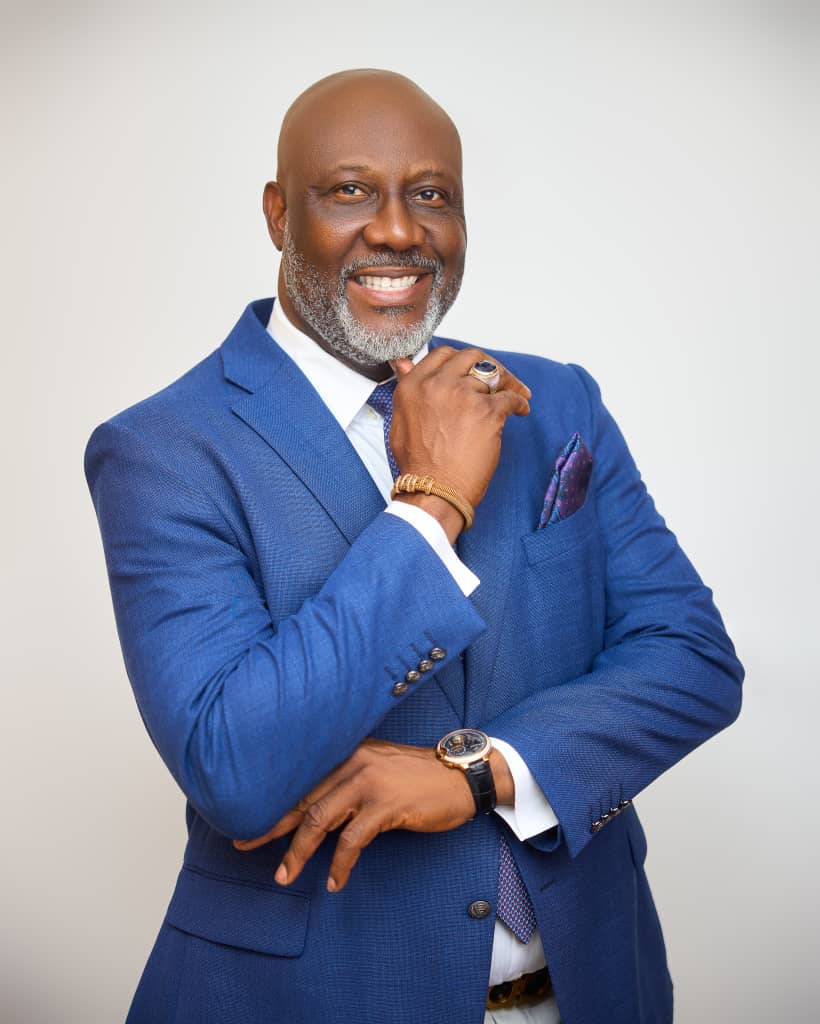
BY SENATOR DINO MELAYE MELAYE ESQ
There is a particular cruelty in the way Nigeria now counts its dead, not as a nation in shock, but as a nation keeping score and anticipating more. A general here. A schoolgirl there. A village erased between one news cycle and the next. By the time President Bola Tinubu marked his Democracy Day address this year by announcing an 81 percent reduction in terrorism-related deaths since 2015 and the surrender of more than 124,000 fighters, his own military had, within the same window, buried two more brigadier generals and watched a retired major general die in captivity. The numbers the presidency offers and the numbers the morgues offer no longer belong to the same country. And underneath both sets of numbers sits a third, quieter one: the trillions of naira spent, borrowed, and unaccounted for in the name of protecting a population that keeps getting buried anyway.
THE GENERALS NIGERIA COULD NOT PROTECT
Section 14(2)(b) of the Constitution of the Federal Republic of Nigeria 1999 (As Amended) makes the security and welfare of the people the primary purpose of government. It is worth holding that clause up against what has actually happened to the men entrusted with enforcing it.
In November 2025, Brigadier General Musa Uba, commander of the 25 Task Force Brigade in Damboa, survived an initial ISWAP ambush along the Damboa–Wajiroko axis, separated from his men, and spent three days trying to coordinate his own rescue by WhatsApp from a hideout inside insurgent territory. A helicopter searched for him and failed to find him. ISWAP found him first. The group later published photographs of his execution in its propaganda outlet, Amaq, after what it described as an interrogation.
Five months later, on April 9, 2026, Brigadier General Oseni Omoh Braimah, commander of the 29 Task Force Brigade, was killed when Boko Haram and ISWAP fighters overran a military formation at Benisheikh in Kaga local government area of Borno State, one of the most significant single assaults on a Nigerian base in recent years. And on June 13, 2026, the Katsina State government confirmed what families had feared for months: retired Major General Rabe Abubakar, a former Director of Defence Information, had died while in the custody of the bandits who abducted him. How his body made it home for burial has never been fully explained to the public.
Add the earlier roll call, Brigadier General Dzarma Zirkusu, killed in a 2021 car-bomb ambush in Askira Uba; Lieutenant Colonel Ibrahim Sakaba, killed in 2018 leading his men against ISWAP at Metele; Colonel Dahiru Chiroma Bako, ambushed near Wajiroko in 2020; Lieutenant Colonel Muhammad Abu Ali, a UN peacekeeping veteran killed after stepping out of his tank to assess an attack in Mallam Fatori, and a pattern emerges that goes well beyond bad luck. Security analysts now openly describe a deliberate insurgent strategy of targeting command structure itself: not just troops, but the officers who lead them, in order to break morale at the top.
Nigeria’s most senior soldier was not spared either. Army chief Lieutenant General Taoreed Lagbaja died in 2024 after a prolonged, officially unexplained illness, itself a small case study in how little the public is told about the condition of the people defending it.
- Advertisement -

A KIDNAPPING ECONOMY, NOT A SECURITY CRISIS
What is happening in Nigeria is no longer adequately described as “insecurity.” It has become an economy. The National Bureau of Statistics, in its 2024 Crime Experience and Security Perception Survey, found that between May 2023 and April 2024, Tinubu’s first year in office, over 614,000 Nigerians were killed and an estimated 2.2 million kidnapping incidents occurred nationwide, with households paying out roughly ₦2.2 trillion in ransom, an average of ₦2.67 million per incident. Independent conflict trackers using narrower, incident-based methodology report far lower absolute numbers, and the gap between household-survey estimates and event-based data is itself a sign of how poorly even the state understands the scale of what is happening to its own citizens. But every methodology, however conservative, tells the same story in the same direction: more kidnappings, more ransom, more dead, year on year, region after region, with the North-West, Katsina, Zamfara, and Kaduna bearing the worst of it.
This is the backdrop against which school children have become a renewable target.
THE CHILDREN THEY CAME FOR
On November 17, 2025, gunmen abducted 25 schoolgirls from the Government Girls’ Comprehensive Secondary School in Maga, Kebbi State. What turned a tragedy into a scandal was what Kebbi State Governor Nasir Idris revealed afterward: the state had received credible intelligence of an imminent attack, convened a security council meeting, and was assured protection was in place, only for the soldiers guarding the school to be withdrawn at roughly 3:00 a.m., with the bandits striking some thirty to forty-five minutes later. The governor publicly demanded to know who gave the order. The Defence Headquarters opened an investigation. As of this writing, no one has been named, charged, or held accountable for that withdrawal, and the girls’ abduction happened on the same night bandits also struck St Mary’s Catholic School in Papiri, Niger State, where 315 people, mostly children, were taken in a single raid.
Six months later, on May 15, 2026, the violence reached Oyo State, a part of the country the security establishment had long treated as relatively insulated from the northern insurgency. Gunmen stormed three schools in Oriire Local Government Area near Ogbomoso — Community Grammar School, Baptist Nursery and Primary School in Yawota, and L.A. Primary School in Esiele — abducting around 46 people, including 39 students and seven teachers. Among the captives was a two-year-old girl, Christianah Akanbi, taken not because she posed any threat to anyone but because she happened to be in a school the state could not defend. A mathematics teacher, Michael Oyedokun, was killed during the attack; disturbing video footage purporting to show his killing later circulated online, according to Guardian Nigeria reporting, sparking national outrage and a wave of protests by the Nigeria Union of Teachers, who suspended classes nationwide in solidarity. President Tinubu called the attack “barbaric” and dispatched his Chief of Staff, the National Security Adviser, the Inspector-General of Police, and the Chief of Defence Staff to the affected communities, the same delegation-and-condemnation choreography that now follows almost every mass abduction, regardless of whether it changes the outcome. Weeks later, as families waited in agony, a presidential adviser falsely claimed on social media that all the victims had been rescued, a claim the Oyo State Police Command was forced to publicly debunk, deepening the sense that the presidency was more interested in managing the narrative than managing the crisis.
These are not isolated horror stories. They are the predictable output of a security architecture that keeps failing in the same place: the gap between intelligence received and protection delivered.
WHAT CAPTIVITY ACTUALLY MEANS
Nigerians have grown almost numb to the word “abducted,” as though it describes a temporary inconvenience rather than what United Nations human rights bodies have repeatedly documented it to be. The CEDAW Committee, reviewing Nigeria’s record a decade after the Chibok abductions, found that survivors of ransom kidnappings face an extremely high risk of sexual and gender-based violence, with many reporting having been beaten and raped in captivity, in addition to forced labour, forced marriage, and prolonged chaining or confinement under armed guard. Human Rights Watch documented the same pattern years earlier among Boko Haram’s female captives. None of this is hypothetical or historical; researchers and journalists covering the current wave of banditry in the North-West continue to record fresh testimony of physical abuse and sexual violence inside bandit camps, even as the practice remains badly under-reported in a society where survivors are frequently shamed into silence rather than supported. A government that cannot keep its own soldiers’ bodies out of kidnappers’ camps has, by extension, failed to keep its civilians out of exactly these conditions, and has offered survivors strikingly little in the way of dedicated medical or psychological care once they make it home.
THE MONEY NOBODY CAN ACCOUNT FOR
It would be one thing if Nigeria were simply under-resourced. It is not. Nigeria’s security and defence budget has exploded over the Tinubu years: from roughly ₦2.41 trillion in 2022 to ₦2.98 trillion in 2023, then ₦4.91 trillion in 2024, peaking at ₦6.57 trillion in 2025, a cumulative ₦17.36 trillion poured into security between 2021 and 2025 alone, according to the budget transparency organization BudgIT. And yet the same period has produced the worst run of general-officer casualties, mass abductions, and household-level kidnapping exposure in the country’s recent history. BudgIT’s own analysis of the Office of the National Security Adviser found a capital budget utilization of 314.59 percent as of mid-2025, meaning the office spent more than three times its approved capital allocation, a level of overshoot that should trigger automatic scrutiny in any functioning public finance system but instead passed with barely a ripple of consequence.
Meanwhile, the people actually doing the fighting tell a different story about where the money is not going. During a 2025 budget defence session, the Minister of State for Defence made the extraordinary admission that soldiers’ group life insurance payments were in arrears, that families of personnel killed in action were owed money the government had not released, and that an additional ₦20 billion was urgently needed simply to settle death benefits already owed. He pointed out that barracks allocations in the 2024 budget had, for many facilities, been set at zero. Officers are dying in ambushes their own welfare budget cannot cover the cost of mourning.
GHOST RIFLES AND VANISHED AMMUNITION
Where, then, does the hardware go? Independent arms-tracking research gives a partial, troubling answer. Conflict Armament Research, the body that traces weapons recovered from jihadist and bandit groups across the Sahel, found that at least one-fifth of the ammunition seized from insurgents in the region had been diverted from Nigerian state custody alone, with roughly a fifth of all weapons examined across the wider Sahel traced back to national military stockpiles rather than foreign smuggling networks. In plainer terms: a meaningful share of the bullets fired at Nigerian soldiers and Nigerian schoolchildren started life inside a Nigerian armoury. Domestically, the picture is no less alarming in miniature, in 2025 the Army was forced to dismiss five soldiers after rifles and ammunition mysteriously disappeared during a single clearance operation in Ibadan, and the military has repeatedly had to issue public denials after reports of bandits overrunning checkpoints and making off with general-purpose machine guns and tens of thousands of rounds. Whether through battlefield capture, internal diversion, or simple administrative collapse, weapons bought with the public’s trillions are ending up in the hands of the people those trillions were meant to defeat.
AN ARMY FOR THE FEW: GUARDING THE POWERFUL WHILE ABANDONING THE NATION
Here is the number that should embarrass any government claiming it lacks the manpower to protect a single rural secondary school: of the Nigeria Police Force’s roughly 371,800 officers serving a population of more than 236 million, over 100,000, close to a third of the entire force, were, as of late 2025, assigned to guard politicians and other VIPs rather than ordinary communities. A presidential adviser on policy coordination, Hadiza Bala-Usman, herself complained publicly that officers trained for anti-terrorism work were instead carrying umbrellas and trailing convoys for the wealthy in Lagos’s most exclusive neighbourhoods while the places that actually needed protection went unattended. It took the Kebbi and Oyo abductions, and the accompanying national outrage, for President Tinubu to finally order, in November 2025, that 100,000 of these VIP-attached officers be redeployed to frontline security duty and that 30,000 new officers be recruited. The order was the right one. That it took mass child abductions to provoke it is precisely the problem: the imbalance between protecting the powerful and protecting the public was visible, documented, and complained about for years before the government pretended to act on it.
THE QUIET SCANDAL OF “REPENTANT” FIGHTERS
Layered on top of the killing, the kidnapping, and the misallocated manpower is a policy that many Nigerians experience as a standing insult: Operation Safe Corridor, the federal deradicalization programme that has processed and released hundreds of self-declared “repentant” Boko Haram fighters back into civilian life, sometimes within sight of the communities those same fighters once terrorized. Military officials insist, repeatedly and on the record, that none of these men are absorbed into the armed forces and that none are high-risk extremists, but those denials have not stopped the programme from becoming one of the most distrusted instruments of state policy in the north-east, with community leaders, soldiers themselves, and independent researchers all raising the same uncomfortable question: how does a state that cannot reliably protect a girls’ school forty-five minutes after a security briefing reliably vet the sincerity of a former insurgent’s repentance?
BORROWING WITHOUT BOUNTY
None of this carnage has come cheap, and the bill has been paid largely on credit. Nigeria’s total public debt climbed to roughly ₦159.28 trillion by the end of 2025, according to the Debt Management Office, a jump of over ₦14 trillion in a single year and a debt-to-GDP ratio that crossed 50 percent. Civil society voices have pointed out that the federal government borrowed nearly ₦66 trillion in roughly two years under this administration, more than five times what Nigeria accumulated in its first fifty-five years of independence combined. Debt servicing alone consumed an estimated 60 percent of federal revenue in 2024, a ratio that leaves vanishingly little room for the kind of barracks construction, death-benefit payments, or rural police stations that might actually translate the security budget into security. When challenged on the borrowing spree, the president dismissed the concern by insisting that “borrowing is not leprosy.” Whatever the merits of that as fiscal philosophy, the practical result is a country going deeper into debt to fund a security apparatus that keeps losing generals, losing schoolchildren, and losing weapons, and a population that will be repaying these loans long after the current insecurity, one hopes, has passed.
SOLAR AT ASO ROCK, DARKNESS EVERYWHERE ELSE
If there is a single image that captures the gap between the governing class and the governed, it might be this: while national grid collapses persisted through late 2025 and into 2026 and power generation continued to fluctuate in the 3,000 to 5,500 megawatt range nationally, the Federal Government approved a ₦10 billion solar mini-grid for the Presidential Villa, with further allocations earmarked in the 2026 budget to disconnect Aso Rock from the national grid entirely. The justification offered, that the Villa was spending roughly ₦47 billion a year on electricity bills, may well be true. But it sits awkwardly beside a 2023 campaign promise, repeated by candidate Tinubu himself, that Nigerians should withhold their vote for a second term if he failed to deliver steady electricity within four years. Opposition figures have made the point bluntly: when the seat of power quietly opts itself out of the very grid it promised to fix, while ordinary households and businesses remain captive to a system the government no longer trusts enough to power its own offices, the message to the public is unmistakable, even if no one in government intends to send it.
THE CLERIC WHO SAID THE UNSAYABLE
Perhaps the most damaging admission in this entire saga did not come from an opposition politician or a foreign news report. It came from Sheikh Ahmad Gumi, the Kaduna-based Islamic cleric long known for his controversial direct engagement with bandit leaders in the forests of the North-West. Defending himself in March 2026 against accusations that he was too close to the armed groups he negotiates with, Gumi stated flatly that the government knows every terrorist by name and location, and explained that his own forest visits to negotiate with bandit commanders are conducted alongside police and military personnel, not independently. Whatever one makes of Gumi’s broader role, the claim itself is the more troubling thread to follow: if the state’s own negotiating channels are escorted by state security agencies who can locate these men well enough to facilitate talks, the harder question is why that same locational knowledge so rarely translates into pre-emptive protection for the schools and villages those same commanders go on to attack.
A PRESIDENCY MEASURING THE WRONG THING
None of this is to say the government has done nothing. Troops have killed insurgent commanders, recovered weapons caches, and repelled attacks that would have been catastrophic. In May 2026, a joint US-Nigeria operation against ISWAP and Boko Haram killed a senior ISWAP leader and dozens of fighters. The presidency’s statistics on neutralized terrorists and surrendered fighters may even be accurate on their own terms. But a government can be technically correct about its kill counts, its trillions appropriated, and its diplomatic partnerships, and still be failing the only test that matters to a parent in Ogbomoso or Maga: can my child walk into a school building and walk back home again? Measured by that standard , the only standard ordinary Nigerians actually live inside, the last three years have delivered a steady, almost rhythmic erosion of basic safety, funded by record borrowing, defended by a police force a third of which is busy guarding the politically connected, and punctuated by funerals for the very generals meant to be reversing the trend.
Critics, including opposition figures and increasingly even allied state governors, go further: they accuse the presidency of treating security as a communications problem rather than an operational and fiscal one, of allowing political energy to flow toward the machinery of the 2027 election cycle while the machinery of state protection visibly rusts. That is a serious allegation, and it remains, properly speaking, an allegation rather than a proven fact, but it is an allegation the government’s own conduct keeps feeding and validating. When a presidential aide circulates a fabricated rescue story before the real rescue has happened, when a troop withdrawal forty-five minutes before a mass abduction goes unpunished for months, when an oversight agency can overspend its capital budget by more than 200 percent without consequence, and when the loudest public statements are about resilience and progress rather than the names of those still missing, the gap between official rhetoric and lived reality becomes the story itself.
WHAT ACCOUNTABILITY WOULD ACTUALLY LOOK LIKE
Nigeria does not lack constitutional language obligating its government to protect its people. What it lacks is the political consequence that should follow when that obligation is breached at scale, repeatedly, in front of cameras, and on credit. A serving brigadier general executed by the enemy after his own helicopter rescue failed. A retired major general dying in a kidnapper’s den. Forty-six schoolchildren and teachers, including a toddler, vanished into the forest near Ogbomoso. Twenty-five girls taken from a school the state had been warned about. Trillions appropriated for security while barracks allocations sit at zero and death benefits go unpaid. A third of the police force guarding politicians instead of villages. School children kidnapped from iluke community of Kabba-Bunu Loca Government Area of Kogi state while writing WAEC, Vice principal, 70 years old man and a 6 year old child killed last week. These are not abstractions for a quarterly security briefing. They are the measure of whether a government is governing or merely managing its own survival.
Whatever one’s view of resignation as the appropriate remedy, and that is a legitimate constitutional and political question reasonable people will answer differently, the more immediate and less contestable demands are concrete: a named answer to who ordered the Kebbi withdrawal; a public, audited account of how security trillions are actually spent and why agencies like the ONSA can overshoot capital budgets with impunity; an honest reckoning with where Nigerian military rifles and ammunition keep ending up; a permanent, not crisis-triggered, end to the diversion of a third of the police force to VIP protection; and full medical and psychological support, not just rescue press releases, for survivors of captivity. Until that accounting happens, the distance between the presidency’s statistics and the nation’s grief will keep widening, and it will keep being measured, as it has been all year, in coffins, ransom notes, and debt service obligations. President Tinubu you have failed completely as Commander in chief, you have demonstrated incompetence and incapacity. RESIGN NOW!!
(DEMOCRACY NEWSLINE NEWSPAPER, JUNE 18TH 2026)